












Cotonou at Dawn: A Memory, A Question, A Warning
My only encounter with Benin was brief, almost whispered. I was in transit through the Cotonou Cadjehoun International Airport on my way to Lagos. I was heading there to write two memoirs for the father of my former UNEP boss, Akpezi Ogbuigwe, as well as for her mother-in-law.
I remember leaning against a cool pane of glass in the departure lounge, watching the coastline dissolve into the morning haze. Benin, quiet and self-contained, seemed to stand still in time. Yet even then, something about that moment felt suspended, as if the country carried secrets beneath its calm surface.
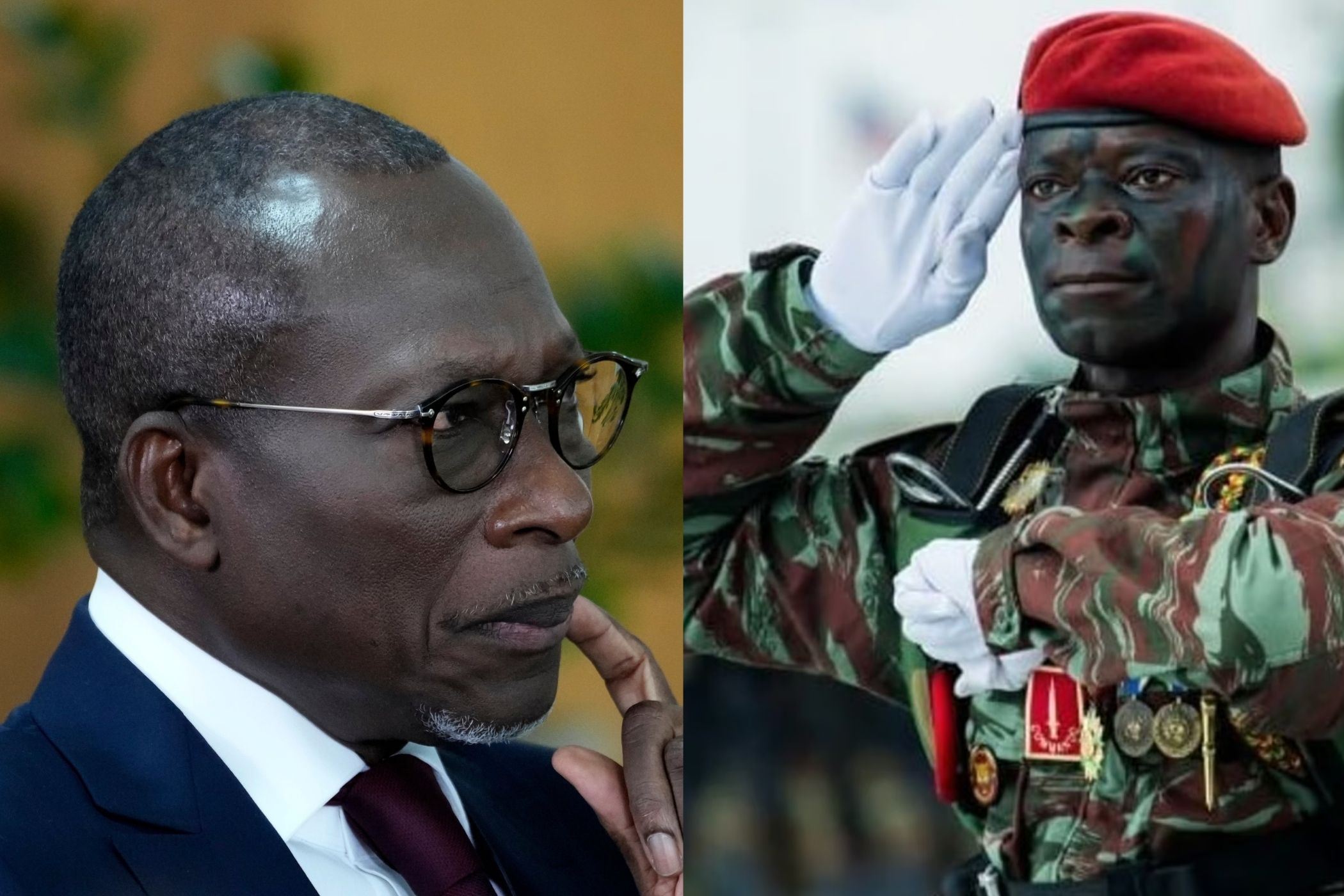
Years later, as I followed the events of December 7, that memory returned. The Cotonou I saw only from the airport window was once again at the center of a story. This time, not of quiet transitions but of a coup attempt unfolding in real time. A group of soldiers marched into the national broadcaster, declared President Patrice Talon deposed, and attempted to seize control before the day had properly begun. And just as swiftly as it emerged, the attempt collapsed. Not because the mutineers lacked resolve, but because the invisible scaffolding that upholds political power in Francophone West Africa shifted instantly into place.
France intervened. And when France intervenes, the plot is never about the stated crisis. It’s about the protectorate.
What Really Happened on December 7
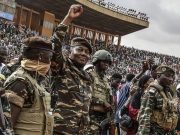
From the early hours of that Sunday morning, confusion and adrenaline crackled through Cotonou. Lieutenant Colonel Pascal Tigri and his faction, styling themselves as the Military Committee for Refoundation, appeared on state television to announce the dissolution of Talon’s government. Senior military officers were reportedly taken hostage. Fighting broke out at key installations. Armored vehicles rolled through the capital with a sense of purpose that suggested this was a carefully planned strike.
Talon appeared later in the day to assure the nation that everything was “completely under control.” He said little, but his calm was not the calm of a man who had weathered the storm alone. It was the calm of a man who knew that powerful friends were already circling above Cotonou’s skyline.
Within hours, reports confirmed that President Emmanuel Macron had been informed of the coup attempt as it began. Macron and Talon spoke on the phone while the mutineers still occupied the state broadcaster. French surveillance was activated. French Special Forces stationed in Cotonou were placed on high alert. And in coordination with Nigeria’s President Bola Tinubu, French officials helped assemble a rapid military response. Nigerian jets thundered into Cotonou’s airspace. Mutineers were flushed out. Hostages were released. Tigri fled, possibly into Togo. By nightfall, the government declared victory.
Talon survived, and the coup did not. But the political story of the day was not the collapse of Tigri’s effort. It was the speed and certainty with which France moved to defend its man in Cotonou.
Niger — The Coup That Rewrote France’s Playbook
To understand why France reacted so decisively in Benin, one must look back to Niger. In July 2023, the military overthrew President Mohamed Bazoum. It was a national crisis for Niger and a geopolitical disaster for Paris. France lost one of its last reliable partners in the Sahel. Anti-French sentiment surged across West Africa. Military governments in Mali and Burkina Faso celebrated a regional shift away from Paris. France’s bases were expelled. Its diplomats were trapped behind hostile lines. The postcolonial architecture that had protected French influence since the 1960s appeared to be crumbling.
Paris learned an unforgettable lesson: hesitation is fatal.
Thus, when instability erupted in Benin, a country smaller but strategically pivotal, sitting just below the now anti-French Niger, France refused to watch another ally fall. The contrast could not be sharper. In Niger, the coup succeeded largely because France was slow and unsure. In Benin, the French response was immediate and coordinated. France acted as if it were protecting Marseille’s security, not Benin’s sovereignty.
This is not the behavior of a neutral partner. It is the reflex of a power trying to preserve its last footholds in a region slipping from its grip.
Benin’s Troubled Dance with Coups and Power
Benin’s political history reads like a chronicle of instability. The country, then known as Dahomey, gained independence in 1960 and almost immediately plunged into a sequence of coups. Hubert Maga’s government fell in 1963. Sourou-Migan Apithy, Justin Ahomadégbé-Tomêtin, and Maga attempted a rotating presidency to stabilize the country, but factional struggles continued. General Christophe Soglo seized power in 1965. Then in 1972, Major Mathieu Kérékou launched another coup, declared a Marxist-Leninist state, and renamed the country Benin in 1975. Kérékou remained in power until 1990, when a National Conference reset the political order and ushered in multiparty democracy.
This instability was never just internal. It was shaped by ethnicity, by Cold War rivalries, by the architecture of French postcolonial influence, and by the fragility of young national institutions. The current crisis echoes these patterns. Beneath the surface, Benin remains divided along ethnic and political lines, with the army often reflecting those tensions.
Talon’s presidency, beginning in 2016, did not resolve these underlying fractures. Instead, Talon built a system centered on control, not consensus. Opposition parties were weakened. Prominent rivals were silenced or pushed into exile. Parliament and the judiciary aligned almost entirely with the executive. The main opposition, led by former President Boni Yayi, was barred from participating in key elections. Benin, long considered one of West Africa’s most stable democracies, began to resemble a managed republic where electoral outcomes were predictable and power was tightly curated.
A coup does not emerge in a political vacuum. It emerges in the silence created when democratic avenues are blocked.
France Did Not Save Democracy. It Saved Its Proxy
The official narrative from Paris framed the intervention as a defense of constitutional order. But constitutional order requires legitimacy. And legitimacy cannot exist where political competition has been throttled. France did not act in Benin because it is committed to Pan-African democracy. It acted because Talon is a partner who has consistently aligned Benin with French political and economic interests.
Benin is one of the last reliably pro-French governments in a region where Paris has been losing allies at remarkable speed. The anti-French wave that swept through Bamako, Ouagadougou, and Niamey signaled a regional realignment. For France, losing Cotonou would have meant losing one of the last docks of influence along the Gulf of Guinea. Thus, France responded not out of idealism, but out of necessity. It intervened because Talon is a useful node in France’s remaining architecture of power. He is a president who maintains cooperation agreements, supports French security initiatives, and strengthens the CFA franc zone that anchors Paris’s monetary influence in West Africa.
The coup leader, Pascal Tigri, specifically asked France not to interfere. Paris ignored him. It was a telling moment. In West Africa, sovereignty is often defended selectively. And when France feels threatened, sovereignty becomes negotiable.
Nigeria’s Role — A Regional Hegemon or a Subcontractor of French Interests?
Nigeria’s intervention raised a question that West Africa must confront honestly. Nigeria justified its action as part of ECOWAS’s mandate to preserve stability. But the swiftness with which Nigerian jets entered Benin’s airspace suggested coordination that went beyond regional solidarity. It reflected an alignment of interests between Paris and Abuja, particularly under President Bola Tinubu, who chairs ECOWAS and seeks to assert Nigeria’s leadership in a region where its influence has recently waned.
Nigeria is a giant in West Africa, yet it is also conscious of the fragile politics along its borders. With military regimes to its north and democratic backsliding to its west, Abuja fears a domino effect that could eventually reach its own political shores. But in acting so quickly, and in apparent consultation with France, Nigeria inadvertently played the role of enforcer for an external power, not guardian of a regional democratic ideal.
This is the challenge of West African geopolitics. ECOWAS, once a symbol of regional autonomy, now finds itself pulled between the interests of its members and the strategic anxieties of former colonial powers. When Nigeria defends a leader who has systematically dismantled democratic institutions, it becomes difficult to distinguish a defense of stability from a defense of neocolonial influence.
The Coup Failed, but the Crisis Remains
Benin has stepped back from the brink, but it has not stepped into clarity. There will almost certainly be a purge within the army. The state will tighten its grip on dissent. Talon’s preferred successor, Finance Minister Romuald Wadagni, will advance toward the presidency with little credible competition. The opposition will remain fragmented and marginalized. France will congratulate itself for saving another “democracy” while ignoring the democratic deficits that made the coup possible.
The deeper crisis is not the mutiny of soldiers. It is the mutiny of citizens who feel unrepresented, unheard, and unprotected by their own institutions. A nation cannot outsource its sovereignty to Paris and expect peace at home. Nor can it silence its opposition and expect legitimacy to prevail.
As I think back to that brief morning in Cotonou, to that soft light, that sense of a country holding its breath, I realize that Benin stands at the edge of two futures. One future is defined by continued dependence on external powers who prioritize stability over sovereignty. The other is shaped by citizens who refuse to accept a political order that excludes them.
Africa has seen enough coups to know that military takeovers don’t always deliver liberation. The Sahelian State of Burkina Faso, Niger and Mali are exceptions, not the norm. But Africa has also seen enough French interventions to know that foreign salvation is often another form of captivity.
The question now is whether Benin will choose a path that honors the aspirations of its people or one that continues to serve the anxieties of distant capitals. The coup failed. But the story of Benin’s struggle for genuine sovereignty is just beginning. And like so many African stories, its resolution will depend not on the strength of armies or the urgency of foreign phone calls, but on the determination of citizens who believe their country deserves both stability and sovereignty.
djbwakali@gmail.com