













I cannot stop seeing Uvira the way I see a tense football match when the crowd slowly realizes their team is in trouble. At first, it is disbelief. Then a kind of bargaining. Then anger. Then silence. You look at the pitch and you ask yourself a question that is both simple and brutal: how did we lose this match at home?
Uvira has fallen into the arms of M23. The stakes for Congo’s army were enormous, yet they still lost. This lakeside city on the Burundi border is a gateway on Lake Tanganyika and a rear corridor for troops and supplies. It took on the responsibilities of an administrative capital when Bukavu fell to M23 in mid-February 2025. Now, Uvira has also gone the Bukavu way.
Congo’s army is increasingly losing this war. What makes Uvira even more painful is that Forces Armées de la République Démocratique du Congo (FARDC) did not fight alone. Force de Défense Nationale du Burundi (FDNB), was present. Wazalendo militias were present. And yet Uvira still fell.
To understand how that happened, imagine two football teams. One has a clear coach, a clear system, and well-equipped players who understand their roles. The other has numbers and home advantage, yet the touchline is chaos, the players argue mid-match, and some of them do not even have boots. On paper, that second team looks big. On the pitch, it gets outplayed. That is what happened at Uvira.
Uvira sits where geography becomes strategy. Lake Tanganyika. Border proximity. Supply corridors. Political symbolism. When M23 took the city in early December 2025, it was not just a local loss. It was a message written in battlefield ink.
Who was involved? M23 as the attacking force. FARDC as the state defender. Wazalendo as auxiliary armed groups operating in the same battlespace. Burundi’s army as a neighboring state force whose own security calculations are tied to stability along the frontier.
A Useful Mirror: Cabo Delgado, Mozambique
There is an African comparison that clarifies Uvira without reducing it: Cabo Delgado in northern Mozambique.
Mozambique faced an insurgency that humiliated its state authority, threatened investment, displaced civilians, and turned towns into fear. The response eventually became a coalition mix. Mozambican forces. Regional forces. A deployed partner force. Local dynamics that were messy and sometimes contested.
But Cabo Delgado also showed a hard truth: coalitions can work when someone sets the system and enforces it. Clear command lanes matter. Intelligence sharing matters. Logistics matter. Civilian protection matters because legitimacy is oxygen. The minute the defending force becomes a threat to the very civilians it claims to protect, the war becomes a fog and the insurgent swims inside that fog.
Uvira exposes the opposite. Congo’s defense in the east has often looked like a coalition by necessity, not a coalition by design. That difference decides outcomes.
History Never Stops Talking in Eastern Congo
Eastern Congo has been trapped in a recurring pattern: armed movements rise, external interests seep in, state forces fracture, local militias multiply, and civilians learn to fear every uniform because every uniform comes with uncertainty.
Mobutu’s Zaire taught one lesson the region still pays for: patronage can build loyalty to individuals, yet it struggles to build institutions. When the center weakens, the periphery becomes a market. Armed groups become employers. Command becomes negotiable. Then a foreign-backed or foreign-enabled force arrives with a tighter chain, clearer incentives, and better tempo.
The Congo wars of the late 1990s and early 2000s entrenched another lesson: borders here are not lines, they are living corridors. The lake routes, the mountain passes, the trading paths, the refugee flows, and the ethnic maps all overlap. That means a battle for a town like Uvira is never only about that town. It is about supply routes, political leverage, bargaining power in negotiations, and the confidence of communities who decide who to warn, who to shelter, and who to expose.
M23 itself is not a new phenomenon in this landscape. Variations of the same script have returned because the underlying conditions remain: fragmented security architecture, contested citizenship and land questions, regional power games, and a state that often arrives as extraction before it arrives as protection.
Three Coaches, One Team
Uvira fell because the defenders were sharing space more than they were sharing a system.
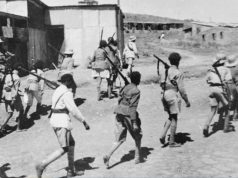
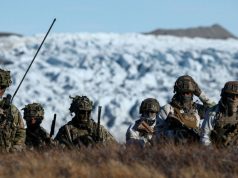
Congo’s army has its chain of command. Burundi’s army has its chain of command. Wazalendo is a constellation of armed groups with uneven training, uneven discipline, and different local interests. Under pressure, unity of command becomes survival. Yet this is the coalition that Congo was relying on to keep M23 at bay.
On a football pitch, this looks like multiple coaches on the touchline shouting different instructions. One demands long passes. Another orders shorter passes. Another wants maximum dribbling. Players hesitate. Shape collapses. A structured opponent does not need miracles. Just patience.
And here is the deeper point. When a coalition exists because the state needs bodies, it often inherits all the contradictions that made the state weak in the first place. Some allies fight for ideology. Some fight for protection. Some fight for profit. Some fight for revenge. Put them on one pitch in a high-stakes match and they can sabotage each other without even planning to.
When Allies Start Tackling Each Other
Militaries sometimes lose battles twice: once to the enemy and once to themselves.
When allied forces mistrust each other, everything vital breaks down. Information-sharing slows. Reinforcement becomes reluctant. Morale leaks. Rumors replace radios. The enemy starts to look stronger than it is because the defender is busy tearing itself apart.
Around the Uvira axis, reports have described deadly clashes among supposed allies, including incidents near Sange. There have also been recurring accounts in this war of friction between state forces and allied militia elements during withdrawals, redeployments, and moments of panic. Even when details vary across reporting, the pattern is consistent: coalition cohesion has been fragile.
On the pitch, it is the nightmare scenario. Your defenders slide-tackle your own striker. Your midfielders argue instead of tracking runners. Somebody under pressure clears the ball into their own net. The crowd sees one thing. The team has lost its mind. And when a team loses its mind, it loses its match.
Logistics: The Quiet Collapse Before the Loud Collapse
Frontlines do not only break from enemy fire. They break from hunger, exhaustion, and abandonment.
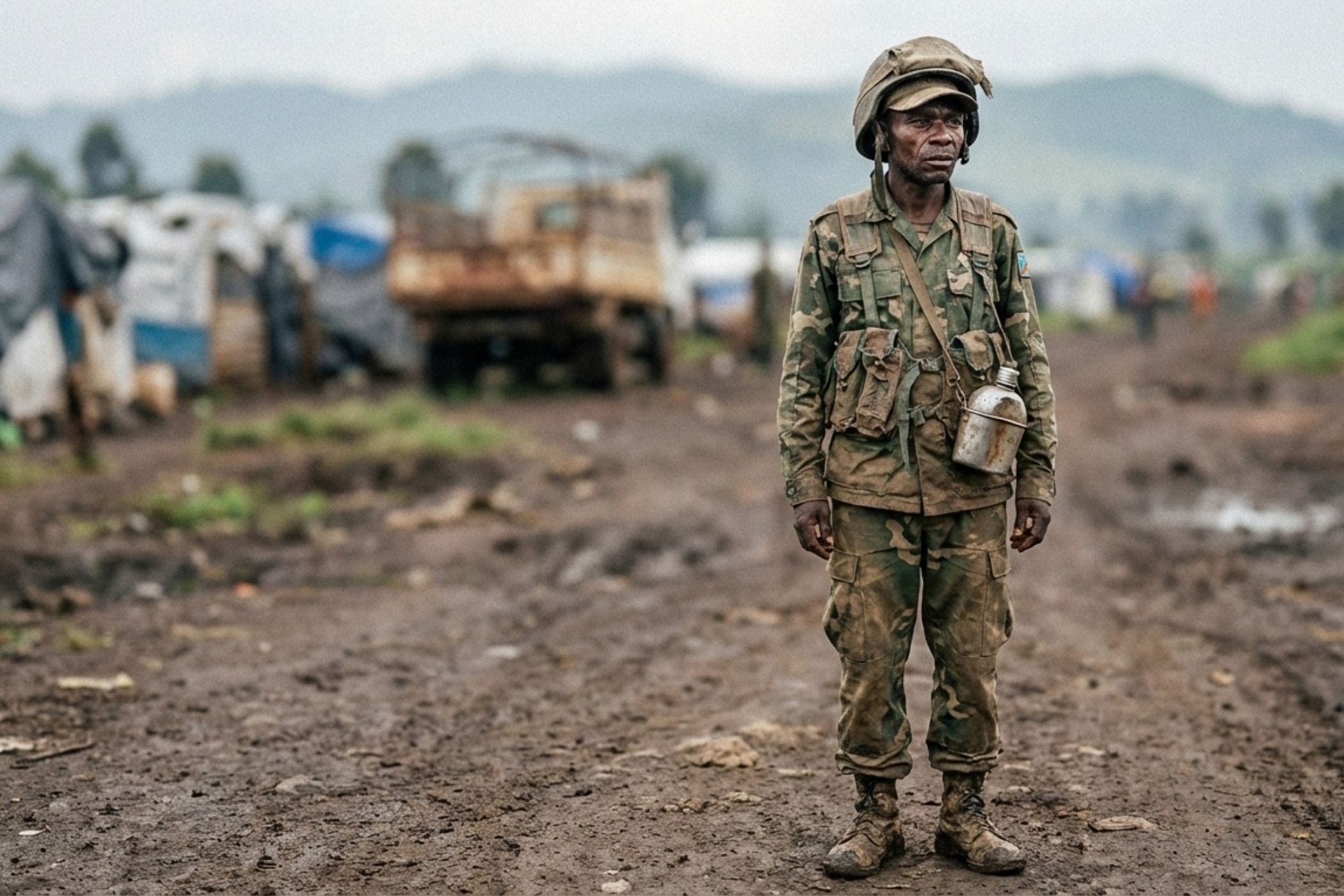
A unit collapses faster when ammunition resupply becomes uncertain, when food runs short, when fuel disappears, when evacuation becomes impossible, and when pay turns into rumor. Courage cannot replace bullets. Patriotism cannot replace rations.
Eastern Congo is a vast theater with brutal terrain, vulnerable routes, and complex local economies. When supply lines are shaky, soldiers start solving problems privately. That is where looting begins. That is where civilians stop cooperating. That is where the state begins to lose the war in the eyes of its own people, even before it loses it on the map.
On a football pitch, this is showing up with talent and passion, but your players have boots that cut their feet, no proper warm-up, no hydration, and no substitutes. For twenty minutes, adrenaline carries you. After that, legs go heavy. Minds go foggy. A well-organized opponent just keeps the tempo until you collapse.
Discipline and Legitimacy: When the Crowd Turns
Eastern Congo punishes any army that cannot enforce discipline. Civilians live close to front lines. Fear travels faster than orders. In that environment, discipline is not just morality. It is operational capability.
When units start drifting, the symptoms appear quickly: desertion, uncontrolled firing, predation, abuses. Trials and public warnings, when they happen, often reveal a force under institutional stress. The most damaging outcome is not the single incident. It is what follows after. Civilian trust collapses.
On the pitch, this is the moment a team loses composure. Players commit reckless fouls. They scream at the referee. The crowd turns hostile. And once the crowd turns on you, home advantage disappears.
In war, civilians are the stands, the scouts, the early-warning system. When civilians fear the state’s forces, they stop warning them about ambushes. They stop sharing information. The army goes blind in its own territory. Blindness is fatal against a coordinated opponent.
M23’s Edge: Tempo, Coordination, and External Enablers
Many still talk about M23 as if it is simply a local insurgency. Yet this war has behaved like a conflict where an armed group operates with state-grade assistance that changes what is possible on the battlefield.
The advantage is partly numbers and presence, including deeper benches and stronger rotations. The more decisive advantage is coordination. Professional operating habits. Planning discipline. Reliable sustainment. Intelligence that tightens decision cycles.
Then there is the technical edge that rarely shows up in a single photograph: communications disruption, navigation interference, and the broader electronic contest that compresses the defender’s decision time. When a force cannot trust its comms, it hesitates. When it hesitates, it loses initiative. When it loses initiative, it starts reacting to events instead of shaping them.
On the football pitch, it is playing a team that claims it is “just a neighborhood club,” yet somehow it has elite conditioning, perfect substitutions, and a bench that never gets tired. You might have heart. You might have numbers. They have structure, stamina, and a system.
What Uvira Really Exposed
Uvira did not fall because Congolese soldiers lack courage. It fell because courage cannot compensate for a defense architecture that struggles to unify command, prevent internal fractures, sustain forces, enforce discipline, and counter an opponent operating with powerful external enablers.
If Congo wants to stop losing strategic towns in moments of panic, the reforms are not glamorous, but they are decisive.
Command clarity by sector, with real authority and real accountability.
Reliable pay and logistics that remove the daily incentives for predation and desertion.
Military justice that is consistent, not theatrical.
A training pipeline that builds serious junior leadership, the kind that holds a line when the radios go quiet.
A political strategy that reduces the militia marketplace instead of feeding it.
And there is one more truth Congo must face without flinching: eastern towns do not only fall to bullets. They fall to dysfunction.
I keep thinking about Uvira at dawn, the lake breathing, the border close enough to feel, the city carrying that heavy quiet that follows defeat. The question is not whether Congo can win a battle. The question is whether Congo can build a system that deserves to win.
africanawakeningshow@gmail.com