






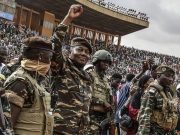





In eastern Congo, war does not only happen at the front. It also happens in meeting rooms, in decrees, in recruitment drives, and on the roads where armed men decide who passes and who pays.
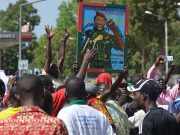
“Wazalendo” is often described as a grassroots patriotic response to the return of M23. That description is not wrong, but it is incomplete. The Wazalendo phenomenon is also the latest, most expansive version of a much older Congolese security habit: subcontracting state violence when the state cannot, or will not, carry the full burden of fighting.
This is the story of how a secret coalition formed in a remote village called Pinga became an official system, how politics and profit began to ride inside that system, and why the consequences will outlive the battles that created it.
Pinga, May 2022: When the Unthinkable Became a Plan
In May 2022, the alliance between the Congolese army and armed groups was formalized at a meeting in Pinga, a remote village between Walikalé and Masisi. These were not fresh friends shaking hands for the first time. Many of these actors had fought each other for years. Some militia leaders carried reputations, and in certain cases allegations, tied to grave abuses.
Yet in Pinga, a line was crossed.
A secret coalition was formed. Over time, it stopped being secret. It acquired procedures. It acquired a chain of intermediaries. It began to look less like an emergency improvisation and more like a model.
If you want a single phrase for what happened in Pinga, it is this: the outsourcing of violence was not an accident. It was a decision.
The Law That Made Proxy War Legitimate
A decision becomes a system when it gains legal cover.
In May 2023, Congo passed legislation creating an army reserve force intended to federate armed groups identifying as Wazalendo and supporting Congo’s Army. Whatever its official language and stated aims, the political meaning was clear: militias that had operated in the shadows were being invited toward the state, not to be dismantled, but to be organized and reused.
This matters because it shifts the conversation from “temporary alliances” to “institutional architecture.” Once a proxy force is granted a legal basis, it stops being a wartime improvisation and becomes a standing option. It becomes something future leaders can inherit, expand, or weaponize for political ends.
And that is precisely what has happened.
Tshisekedi’s Call, November 2022: Patriotism Meets Recruitment
In November 2022, as M23 threatened Goma, President Félix Tshisekedi publicly called for the formation of “vigilance groups” against “expansionist ambitions,” while encouraging youth to take up the uniform. Kinshasa has since claimed that tens of thousands of new recruits joined the army.
That call did two things at once.
First, it sanctified the idea that civilians could be mobilized into armed formations in the name of national defense.
Second, it created a wide open recruitment market in a region already crowded with armed actors. In North Kivu alone, many communities were not choosing between “army” and “civilian life.” They were choosing between the army and the roughly one hundred existing militias, each with its own ethnic base, patronage lines, survival logic, and local grievances.
So the Wazalendo surge did not replace militia politics. It amplified it.
The Generals Who Once Were Warlords: Recycling Armed Authority
A proxy system also needs managers.
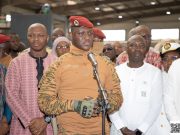
Two Army generals, David Padiri Bulenda and Janvier Mayanga wa Gishuba, were nominated to oversee the establishment of the reserve framework and coordinate Wazalendo factions on the ground. Incidently, some of these generals were themselves former armed-group leaders.
This detail is not a footnote. It is the blueprint.
When a state recycles commanders from non-state armed life into official security roles, it imports the habits of armed entrepreneurship into State military. It also sends a message that armed power can be a career path, not a deviation.
The consequences are structural: discipline becomes negotiable, command becomes plural, and loyalty becomes transactional.
Why Kinshasa Outsources War
It is tempting to reduce proxy warfare to desperation. Congo’s army is large on paper and fragile in practice, burdened by overlapping chains of command, weak discipline, corruption networks, low morale, undertraining, and a promotion system that does not consistently reward competence.
But outsourcing is not only a response to weakness. It also creates opportunities.
Here are the main incentives that keep the proxy model alive:
A cheaper substitute for reform
Real army reform is slow, expensive, and politically painful. It threatens entrenched networks. It demands merit, audits, discipline, and accountability. Proxies offer a shortcut that looks like action.
Plausible deniability
Local armed groups allow conflict to continue, and operations to be conducted, even during ceasefires or when official politics demand restraint. If a proxy fires, the state can shrug. If the proxy loots, the state can condemn. The relationship becomes useful precisely because it is ambiguous.
The corruption dividend
War creates flows: fuel, food, ammunition, “allowances,” mining rents, road taxes. A fragmented coalition increases the number of hands that can take a cut. In that setting, victory can become less valuable than perpetual motion.
The populist dividend
A state that “arms patriots” can claim national unity. Political actors can portray themselves as defenders of the homeland. Militias can be mobilized not only for combat, but for electoral messaging.
That’s why after a decree legalizing militia presence within Congo’s army, several Wazalendo groups openly called for votes in favor of Tshisekedi’s re-election. That is what it looks like when a security policy becomes a campaign strategy.
This Is Not New: Congo’s Long History of Proxy Habits
The Wazalendo system did not appear from nowhere. It is part of a historical pattern.
1998: The Mai-Mai and the FDLR logic
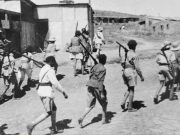
When Rwanda and Uganda supported the RCD militia in 1998, the Congolese government reacted by backing local Mai-Mai groups and the FDLR, which emerged from forces tied to the Rwandan genocide. This was already proxy warfare: using local armed actors and cross-border enemies to counter a foreign-backed rebellion.
2015–2020: The Rwanda-Congo non-linear alliance
Between 2015 and 2020, Congo and Rwanda used NDC–R, a Congolese militia, to tackle the FDLR. This flipped previous alliances and confirmed a core Congolese strategy: subcontracting state responsibilities to armed groups, even when it means turning yesterday’s enemy into today’s tool.
2021 onwards: M23 returns, proxy warfare expands
M23’s return to active fighting in November 2021 triggered a new era of proxy warfare. The proxy approach grew wider and messier: armed groups, private contractors, foreign troops, and irregular forces all operating in overlapping spaces with overlapping interests.
Wazalendo is not an exception. It is the culmination.
Wazalendo: Nationalism, Money, and Immunity in One Label
Wazalendo is a label, not a single organization. Many groups that now fall under it existed long before the name became popular. Some fought each other. Their motivations are mixed:
-
A real sense of nationalism in the face of invasion narratives
-
Access to funding, weapons, and supplies
-
The promise of integration into the national army
-
The hope of securing impunity for past crimes
-
Local power, local revenge, local land politics
This diversity is exactly why coordination becomes hard and why violence becomes unpredictable. When you gather many armed actors under one patriotic umbrella, you do not dissolve their internal interests. You simply place those interests closer to state resources.
Militia Contempt for the Army
Coalitions work when partners respect the command structure. When armed allies openly ridicule the national army, you get:
-
refusals to retreat when necessary
-
punishments of soldiers perceived as cowards
-
vigilantism inside a supposed alliance
-
competing claims to who is the “real” defender of the nation
In that environment, a frontline does not break only because the enemy is strong. It breaks because your own camp cannot agree on what retreat means, what discipline means, and who has authority.
“Magic” Protection and the Politics of Invulnerability
Some Wazalendo factions have been reported to rely on “magical” protection, fighting with knives, axes, slingshots, and sometimes guns, believing themselves invulnerable to bullets.
This matters for two reasons.
First, it shapes tactics: bold assaults, high casualty tolerance, and symbolic warfare that prioritizes fearlessness over maneuver, intelligence, and logistics.
Second, it creates a recruitment myth. Invulnerability stories are not only spiritual beliefs. They are mobilization tools, especially in communities where the state is absent and survival is already a lottery.
The Arsenal Problem: When Distribution Becomes Destiny
There have been massive ammunition transfers to Wazalendo-linked forces over a short period, alongside reports and images showing combatants with advanced weapons.
Consequently, weapons and ammunition have flooded into irregular networks.
That is not a temporary security measure. It is a future governance crisis.
Because every weapon distributed without strong, enforceable demobilization plans becomes a political actor later. It becomes a tool for road taxation, mine control, local intimidation, election bargaining, and revenge killings.
A society awash with weapons does not easily return to civilian logic.
Why Their Wins Don’t Last: The Coordination Problem
In late 2023, some Wazalendo-associated forces briefly reconquered strategic locations such as Kitchanga. Yet those gains were short-lived, undermined by:
-
squabbles over Army supplies
-
overlapping and competing chains of command
-
the proliferation of Congolese Army allies with competing agendas, including foreign troops and other armed groups
This is a key point: the more proxies you add, the less coherent your war becomes.
M23 fights like a unit. The anti-M23 camp often fights like a marketplace.
The Political Economy: Markets, Mines, and “Taxation”
Proxy warfare changes the economy of daily life.
Wazalendo factions became entrenched in local markets and mines. Road taxation increased on key routes, and harassment became so severe that traders periodically halted the supply of certain goods, including vital agricultural production.
This is how proxy war becomes civilian punishment without needing mass battles.
A checkpoint can starve a village as effectively as a siege. A road tax can collapse a local economy as effectively as a bombing campaign. And because the actors are “allies,” accountability becomes impossible. Civilians cannot even clearly name who is abusing them without risking retaliation.
Identity Politics: The Tutsi Factor and the Xenophobia Trap
Invasion narratives do not remain military. They become social.
There is rising nationalist, sometimes xenophobic sentiment against communities cast as foreigners, especially Tutsi, Banyamulenge, Hema, and the broader Kinyarwanda-speaking population. Both sides of the conflict feed populist identity politics, creating the broader landscape in which Wazalendo thrives.
This is the most dangerous long-term consequence: militarized identity.
When armed mobilization maps onto ethnic categories, the war becomes portable. Even if the frontlines shift, the fear remains inside communities. The conflict then reproduces itself through rumors, revenge cycles, and political entrepreneurs who win power by offering “protection.”
The Sanctions Paradox: Warlords in the Palace
One of the most surreal features of this era, is how certain Wazalendo-linked leaders with sanctions histories or arrest warrants still appear in official meetings and national media.
This is a signal to every armed actor watching: force opens doors.
And once armed power becomes a route to legitimacy, demobilization becomes irrational. Why disarm when guns are your invitation letter to the capital?
Elections and Armed Groups: The Campaigning Frontier
Beginning in 2023, politicians from government and opposition began reaching out to armed groups to secure access for campaigning.
That should chill every Congolese democrat.
Because when politicians negotiate access with armed groups, they normalize the idea that territory is owned by the gun. It tells civilians that citizenship is conditional. It tells armed actors that ballots are simply another market for bargaining.
The Hefty Mortgage Congo Has Taken On
This is the core argument: Wazalendo is both a military tactic and a political mortgage.
It further militarizes society, deepens the humanitarian crisis, entrenches war economies, and increases the chance of future conflict between armed groups, especially given ethnic recruitment patterns and historic rivalries.
Even if M23 vanished tomorrow, the armed landscape created in response would remain.
And the state would face a brutal question: how do you reassert monopoly over violence after you have officially invited violence into your own house?
The Questions Congo Cannot Avoid
If Congo continues down this road, the country will have to answer hard questions that no decree can soften:
-
Who commands when the battlefield is a coalition, not an army?
-
What happens when “patriots” become political brokers?
-
How do you demobilize men you have legalized, armed, and praised?
-
How do you rebuild social trust after war is mapped onto identity?
-
How do you reform Congo’s Army when the shortcut keeps rewarding avoidance?
Wazalendo was conceived in fear, formalized in Pinga, legalized by policy, amplified by elections, and sustained by a war economy. That is why it is so powerful. That is also why it is so dangerous.
Because a proxy war can be launched quickly.
But it takes generations to put it back in the bottle.