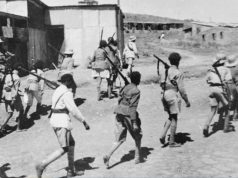















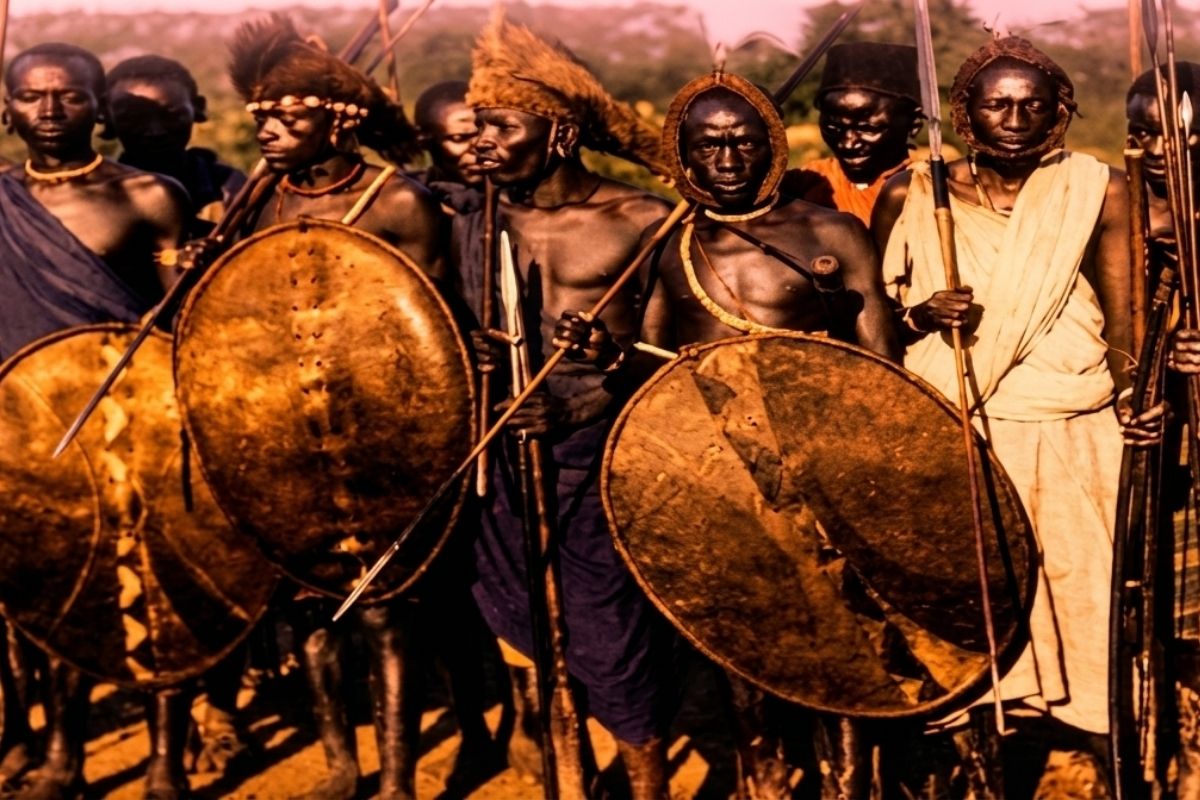
Imagine a crowd moving through the bush of southern Tanganyika in 1905, carrying spears, bows, a few old rifles, and a new kind of certainty. Not the calm certainty of strategy, but the electric certainty of a story that makes fear smaller. A spirit medium has said the Germans can be defeated. A “medicine” has been shared. Bullets, they are told, will turn to water.
That word, maji, was never just liquid. It was a language: the language of the powerless deciding they are done being managed.
In Tanzania today, another kind of maji is being passed around. Not in gourds, but in phones and whispers, livestreams and WhatsApp groups, in the stubborn decision to show up again after you have been dispersed once. And the question is the same as it was then: when you finally stand up, what makes you unstoppable, and what makes you vulnerable?
A Snapshot of Majimaji
The Majimaji Rebellion (1905–1907) was one of the most sweeping anti-colonial uprisings in German East Africa, centered largely in the south and southeast of what is now Tanzania. It did not begin as a neat nationalist campaign with one flag and one command center. It began as something older and more dangerous to empires: many communities discovering, almost at the same time, that German rule had turned life into a conveyor belt of extraction.
German colonial policy pressed hard on ordinary people: forced labor, punitive discipline, taxation, and, crucially, coercive cotton production designed to feed export markets. Cotton became a timetable imposed on African bodies, an order that said: your seasons are no longer yours.
Majimaji became “interethnic” in a way that startled the colonizers. Communities with their own histories and rivalries found common cause against a single machine. That breadth mattered. It meant the rebellion was not simply a local grievance. It was a regional refusal.
And then came the spiritual glue.
A spirit medium, widely identified in accounts as Kinjikitile Ngwale, preached a war medicine that would protect fighters, famously associated with the claim that German bullets would become water. The “maji” belief was not only superstition; it was also mass psychology and political technology. It gave strangers a shared code. It turned scattered anger into coordinated courage.
But belief, once it becomes the engine of a war, can also become its steering wheel.
When Belief Becomes Strategy
Majimaji’s early momentum carried the power and the risk of a miracle. When people believe they cannot be harmed, they charge positions they should outflank. When people believe history is on their side, they underestimate an opponent’s capacity for brutality.
The Germans did not win because they were morally stronger. They won because they were structurally stronger: better weapons, tighter logistics, and a colonial state willing to burn the future in order to keep the present. After months of fighting, German counterinsurgency leaned heavily on scorched-earth tactics that devastated food supplies and livelihoods.
The horror of Majimaji is that so many died not in a single decisive battle, but in the collapsing aftermath. Estimates commonly cited range from about 75,000 to 300,000 deaths, with famine and disease accounting for the majority. Even if you argue over the number, the lesson does not change: the empire made survival itself a battlefield.
That is how empires break movements. Not only by defeating fighters, but by starving the social base that keeps fighters human.
The Movement in Tanzania Today: Different Tools, Same Pressure Points
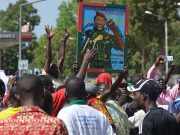
Fast-forward to Tanzania in late 2025. The terrain is different, the enemy is not a European governor, and the language is not cotton quotas. But the pressure points feel familiar: young people squeezed by joblessness and underpaying work, citizens insisting on political dignity, and a state responding with massacre, force, arrests, and a hard warning about what protest will cost.
In the wake of the October 2025 election, Tanzania has faced intense unrest and a severe crackdown, including curfews, mass detentions, and calls for investigations into killings. CHADEMA, the country’s main opposition has rejected the credibility of the vote and called for major political remedies, including constitutional reforms and broader national dialogue pathways. Inside Tanzania, the unrest has also been widely framed as youth-driven, fueled by frustrations about elections, unemployment, and the cost of living, with Gen Z organizing and communicating differently.
This is not a perfect parallel to Majimaji. But it rhymes in one crucial way: when a system closes normal doors, people start testing the walls.
What Majimaji Got Right
Majimaji’s first gift to the present is unity as an active practice, not a slogan.
It was not one tribe or one district. It spread across communities and territories, proving that solidarity can be built faster than colonial administrators assume. For a modern movement, the translation is simple and difficult: avoid being trapped in narrow identities. A coalition that is only one region, one class, one party, or one urban demographic can be isolated and caricatured. A coalition that looks like the nation is harder to criminalize without the state criminalizing the nation itself.
Majimaji also demonstrates the power of a shared story. The “maji” idea, however flawed as battlefield protection, did something strategic: it created morale, discipline, and a sense of sacred responsibility. Today, movements still need story. Not propaganda, not rumor, not magical thinking, but a clear moral narrative people can repeat without a script: “We deserve a Tanzania where life is not humiliation.”
A line worth carrying like a banner:
A movement survives on organization, but it is born from meaning.
Where Majimaji Broke
Majimaji’s most painful lesson is the danger of mistaking inspiration for immunity.
When the “maji” promise became literal battlefield expectation, it encouraged tactics that could not withstand machine guns and disciplined colonial units. A modern movement must watch for its own versions of “maji”: the seductive belief that numbers alone guarantee victory, that viral videos automatically equal leverage, that the world will intervene because injustice is obvious, or that the state will hesitate because it fears bad optics.
Majimaji also shows what happens when a movement cannot protect its civilian lifelines. The scorched-earth response wrecked farms, granaries, and food systems, turning communities into collateral damage. Today, the equivalent is not only physical destruction. It can be economic suffocation, fear campaigns, targeted arrests, internet restrictions, or the slow exhaustion that makes people choose silence to keep a job.
Majimaji teaches this hard sentence:
If the state cannot defeat your message, it will try to defeat your stamina.
Lessons for Tanzania’s Current Movement: Inspiration Without Illusion
First, build unity that outlives any single protest date.
Majimaji shows the potency of a wide alliance. But wide alliances require shared rules: nonviolence discipline (if that is the chosen path), clear demands, clear spokespeople, and a way to resolve internal conflict before the state exploits it. The most effective unity is not emotional. It is procedural.
Second, treat belief as fuel, not as a plan.
Let songs, faith, and symbolism carry courage. But let strategy be built from reality: legal defense networks, rapid response to arrests, medical readiness, documentation protocols, secure communications, and local community caretaking. When inspiration replaces planning, you do not get a revolution. You get a tragedy with a soundtrack.
Third, protect the base.
Majimaji’s famine-era devastation is a warning about what happens when ordinary survival is disrupted. A movement that wants to endure should think like a community infrastructure project: how do people stay fed, safe, informed, and emotionally supported through pressure? How do you prevent burnout? How do you keep families from paying the highest price for political courage?
Fourth, aim beyond the spectacle.
Majimaji was massive, but it was not able to translate mass courage into durable negotiating power, in part because the colonial state could simply refuse negotiation and escalate. Modern Tanzania is not German East Africa. There are institutions, courts, parliaments, civil society nodes, regional diplomacy, and international scrutiny. Movements gain leverage when they can move from protest to policy, from anger to a concrete transition pathway that ordinary people can imagine and elites cannot easily dismiss.
The Closing Torch
Majimaji should not be romanticized as a sacred script. It should be honored as an ancestral alarm bell.
It shows what happens when people refuse to be reduced to labor and silence. It shows the power of unity across communities. It shows the danger of letting myth do the work of strategy. And it shows the terrible creativity of a state, when challenged, to punish not only rebels but the future itself.
To the people of Africa as a whole and Tanzania in particular, let Majimaji be your torch, not your blueprint. Let its courage inspire you, and let its pain educate you.
djbwakali@gmail.com