














The first time I stood in Cairo, in 2005, I was in my twenties and working with the United Nations Environment Programme as the Africa Environment Outlook for Youth Regional Coordinator. I had come to meet national coordinators for a project that would eventually produce UNEP’s first youth authored publication. But the work, important as it was, kept getting interrupted by the city itself.
Cairo has a way of doing that.
It overwhelms you with scale, with history, with the sensation that you are walking through a place that has been central to human imagination longer than most nations have existed. I remember being astonished by its sheer size and grandeur. I remember Nile cruises where the water moved like a calm, ancient witness. I remember deep conversations with Egyptian friends who carried their country’s confidence like something inherited.
Back then, if you had asked me which country feels like a capital, I might have said Egypt. Not because it is perfect, but because it has that capital feeling: the weight of permanence.
Two decades later in January 2026, I was watching IShowSpeed’s livestream, when I heard him exlaim, ‘Kenya is the capital of Africa!’
I found myself nodding, even as I acknowledged that numerous other African cuontries would beg to differ, because to them, their respective countries were the unofficial capitals of Africa. These are the kind of debates that can keep social media conversatons going on for months.
So let me ask the question without hiding behind polite diplomacy.
If Africa had a capital, which country would deserve that crown?
And is Kenya actually a serious contender, or was that comment simply the adrenaline of the Nairobi moment turned into a headline?
To answer, we first have to define the phrase “capital of Africa.” We are not talking about a headquarters or a ceremonial seat. We are talking about influence. Gravitas. The place the continent’s story keeps orbiting around.
A capital is where decisions get shaped, where culture gets exported, where money moves, where armies matter, where demographics create destiny, where resources determine leverage, where confidence becomes contagious.
That is the standard. And it is merciless.
Kenya’s argument is not size. It is momentum.
Kenya does not have Nigeria’s demographic scale. It does not have South Africa’s corporate infrastructure. It does not have Egypt’s military depth. It does not have Congo’s mineral vault. If we judged this contest only by those cold measurements, Kenya would probably not finish first or second.
But Kenya is playing a different game.
Kenya’s case is momentum and presence, the confidence of a country that keeps acting like it belongs on the main stage until the world begins to treat it that way. Nairobi does not shrink. Nairobi performs. Nairobi is a city where the continent’s future has meetings, the kind of place where NGOs, startups, embassies, activists, investors, creatives, and policy people bump into each other and leave changed.
There is also something that is hard to chart and easy to feel.
National self belief.
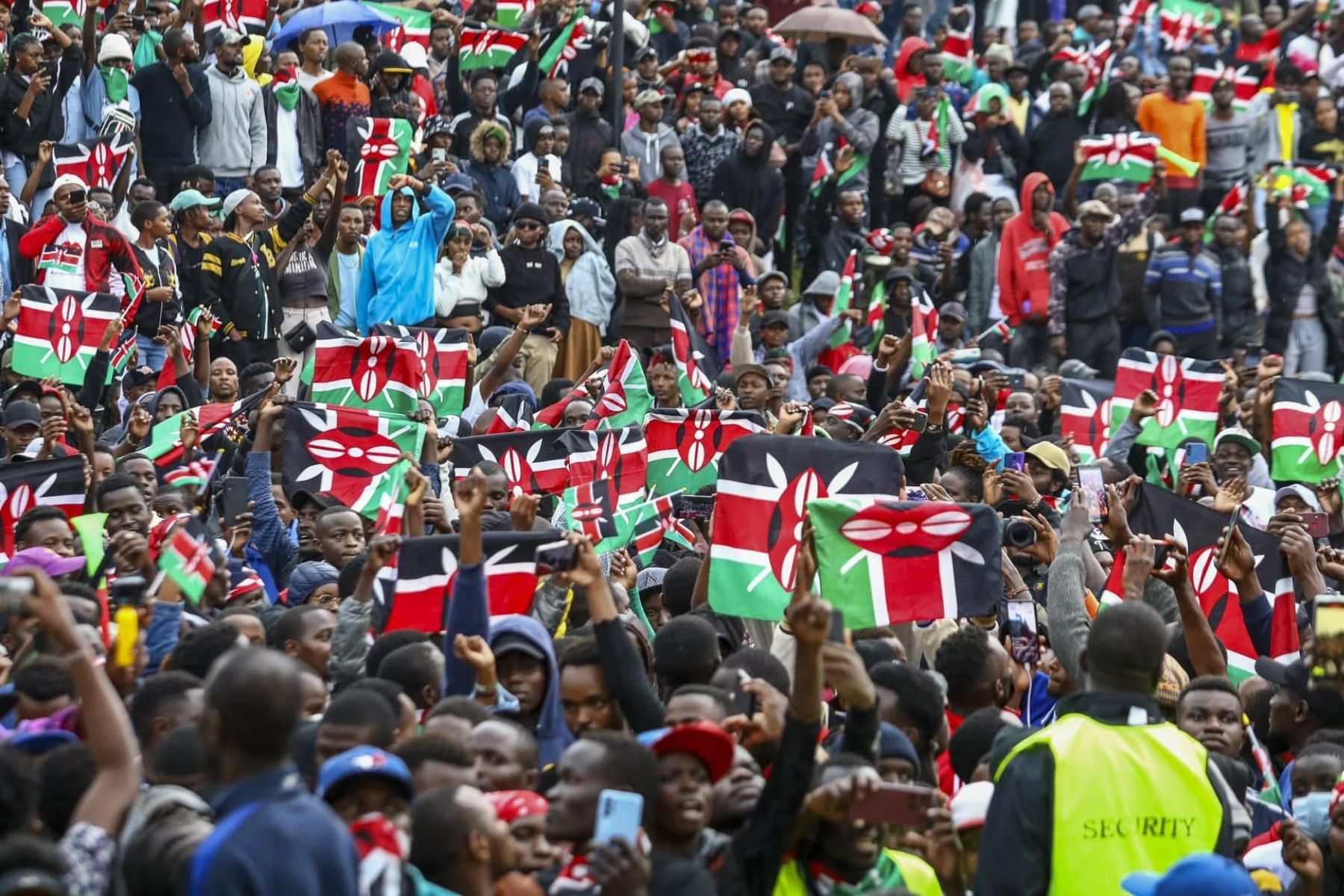
When a people believe they are number one, they behave differently. They build differently. They take risks differently. They speak differently. Kenya’s gutsiness is not an aesthetic. It is a political mood. You see it in how the country occupies the spotlight. You see it in the way its youth can confront power and bend the national story, as Gen Z did when they challenged the Finance Bill 2024 and forced President Ruto to retreat.
Kenya’s argument, in other words, is psychological. And psychology shapes history.
If “capital” means the place where Africa’s modern image is being remixed in real time, Kenya is not a joke. Kenya is a contender.
Nigeria is the continent’s demographic thunder
The first time I visited Nigeria was in the early 2010s. I was there doing field research for two memoirs I was writing, and the country introduced itself the way Nigeria always does: loudly, abundantly, unapologetically.
I travelled through Lagos, Port Harcourt, Benin City in Edo State, and other places. Everywhere I went, I felt a force that is difficult to describe if you have not been inside it. Nigeria is not simply big. Nigeria is crowded with life. It is a subcontinent inside the continent.
One of the men I was researching was Dr. Awoture Eleyae (OON), a legendary Nigerian sports leader, athlete, and administrator who helped shape modern sports development in Nigeria, serving as the first Principal of the National Institute for Sports, Director of Sports, and Secretary General of the Supreme Council for Sports in Africa. He pioneered training systems, built programs, and expanded pathways like scholarships that opened international opportunities for athletes. He passed in 2023, but the country’s sporting institutions still carry his fingerprints.
The other memoir was for Mummy Jane Ogbuigwe, a pioneering civil society and women empowerment leader whose work, like so much of Nigeria’s best activism, is driven by moral urgency and community rooted courage.
Nigeria’s case for “capital” begins with demographics. When you have that many people, you have a market. When you have a market, you have leverage. When you have leverage, the world listens, even when it does not want to.
Culturally, Nigeria exports more than entertainment. It exports language, rhythm, attitude, aspiration. It turns local slang into international speech and local artists into global icons. Economically, it sits in the top tier because scale itself is an engine. Militarily, it remains strategically significant, shaped by its role in West Africa and by the demands of its own internal security battles. In resources, its energy story has given it geopolitical relevance even when governance has prevented that relevance from translating into broad prosperity.
If Africa is a crowd, Nigeria is the loudest voice.
But a capital is not only volume. A capital is coordination. A capital is stability. A capital is the ability to lead without constantly wrestling yourself in public. Nigeria too often fights itself, and the internal struggle blurs the clarity of the leadership aura it could project.
Still, Nigeria is always in the final conversation.
South Africa feels like the boardroom
The first time I travelled to South Africa was in the mid 2000s, when I flew to Johannesburg for a youth meeting organized by the South African Youth Council. I carved out time to visit the University of Johannesburg, Soweto Campus, where I met student leaders. The conversations I had there were not only about policy. They were about identity, power, and what it means to inherit a complicated history and still insist on shaping the future.
South Africa’s claim to “capital” is institutional. It is systems and markets, corporate networks and financial gravity. It is the language of contracts, stock exchanges, boardrooms, and established business infrastructure that pulls in continental flows.
It has military capability, and it has historically had a defence industry profile, but its deepest influence comes from the way its institutions connect to global systems. It is a country that can make Africa legible to global capital, which is both a strength and a danger.
South Africa’s problem is that power alone does not make you a capital in a continent that also needs emotional belonging. South Africa can feel like a separate world. Xenophobia stains its moral authority. A capital cannot lead a family while insulting its relatives.
South Africa remains a top tier contender, but it competes in the language of institutions more than the language of continental intimacy.
Egypt has the weight of history and the confidence of statehood
When I think back to Cairo, what strikes me is not only the monuments, but the feeling of statehood. Egypt is anchored by a sense of itself that is ancient and continuous. Its strategic geography, including the Suez Canal, gives it leverage that is not theoretical. Its military depth and state capacity speak the old language of power.
Yet Egypt faces the emotional question that keeps returning in any debate about Africa’s “capital.”
Is Egypt seen as central to sub Saharan Africa’s identity?
And equally important, does Egypt itself consistently choose to embrace that identity? Many Egyptians readily say that they are not African.
A capital is not only a throne. It is a relationship.
Congo is the future that keeps being postponed
A few months after my Johannesburg trip, I landed at the airport in Kinshasa for a few hours, en route to Congo Brazzaville. Even in that brief stop, you could sense something immense nearby, not fully expressed, not fully organized, but undeniably present.
The Democratic Republic of Congo is the continent’s most painful paradox. It is a vault of strategic minerals central to modern industry and future technology. Its demographic scale gives it future labor and future markets. Yet its wealth has too often been converted into extraction and conflict, not development and dignity.
Congo’s military picture is complicated by armed groups and internal wars that undermine state authority. That weakens a traditional “capital” claim. But the underlying truth remains: if Congo stabilized and built real institutions, Congo would not merely become Africa’s strongest contender. It would become one of the most powerful countries on Earth.
Congo is the country the future keeps pointing at.
So is Kenya the capital of Africa?
Kenya is an interesting contender because it is not trying to win by being the biggest. Kenya is trying to win by being the clearest symbol of modern Africa in motion. By narrative dominance. By turning attention into identity.
Kenya’s biggest weapon is not a tank.
It is a story.
And in our century, stories travel faster than armies.
If you define “capital of Africa” as raw power, Kenya is not the final answer.
If you define it as the place where Africa’s image is being shaped in real time, where the continent is learning how to be seen without flinching, Kenya becomes a serious contender.
But I do not think the most important answer is Kenya, or Nigeria, or South Africa, or Egypt, or Congo.
I think the real question is whether Africa needs one capital at all.
Because this debate can turn toxic if we start fighting each other for a crown that was never meant to unite us.
Africa’s problem is not that we lack a capital.
Africa’s problem is that we lack unity that is practical.
Unity that can be lived. Unity that can be traveled. Unity that can be traded. Unity that can be worked. Unity that can be built.
Imagine an Africa where a Ghanaian can move to Nairobi easily and work without a permit maze. Imagine an Africa where a Nigerian trader can sell in Cape Town without being punished by paperwork and gatekeeping. Imagine an Africa where a Congolese entrepreneur can set up shop in Dakar without bureaucratic sabotage. Imagine borders that treat Africans like citizens of a shared destiny, not like intruders.
That Africa would be unstoppable.
And in that Africa, the question “Which country is the capital of Africa?” becomes less urgent, because every major city becomes shared ground.
Nairobi belongs to Angolans as much as Dar es Salaam belongs to Malians. Ouagadougou belongs to Kenyans as much as Cairo belongs to Congolese. Kinshasa belongs to Chadians as much as Algiers belongs to Ethiopians.
That is the Africa that scares the world.
Not because Africa would be violent.
Because Africa would be efficient.
Africa would be united.
Africa would be confident.
Africa would stop exporting raw materials and start exporting power.
At the end of the day, the real capital of Africa is not a country.
It is unity.
Real unity.
Practical unity.
Africa is for Africans.