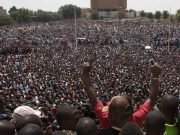


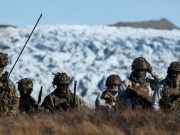








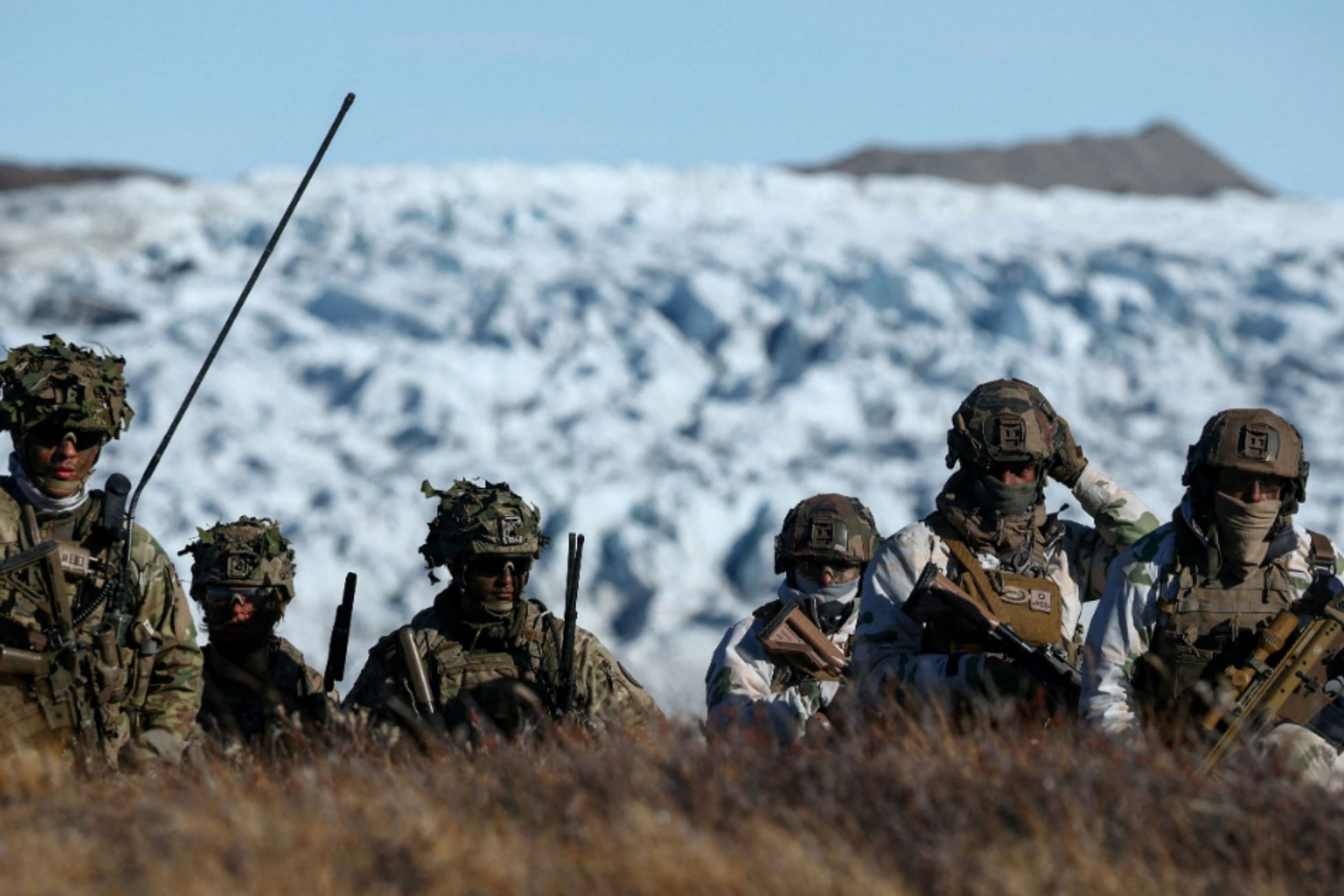
In Europe, the people paid to imagine the worst are speaking out loud. NATO’s Secretary General Mark Rutte, has warned about the risk of wider conflict and the need for readiness. In November 2025, General Fabien Mandon, the Head of France’s Armed Forces, delivered a blunt message about preparedness, sacrifice, and the possibility of confrontation within the next few years. He went as far as warning that, “We have to accept losing our children.”
When Western leaders talk like this, Africa should treat it as an early warning system. Major war in Europe and the Americas rarely stays there. It spreads through shipping lanes, commodity prices, financial markets, cyber networks, alliances, and recruitment pipelines. Africa can feel the shock even when the bombs fall elsewhere. And history has shown something even more painful: Africa can be pulled into other people’s wars through uniforms, orders, and promises that evaporate after the last gun goes silent.
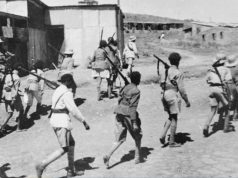
Thousands of Africans Fought and Died in World War 1 Plus World War 2
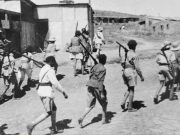
In the First World War, Africa was turned into a human pipeline. Roughly 2,350,000 Africans were mobilized when you count both soldiers and the vast army of porters and military labourers who carried the war on their backs. More than 250,000 of them died. Those numbers are not abstractions. They are bodies lost to bullets, disease, exhaustion, and neglect, in campaigns and trenches that served imperial rivalries rather than African futures.
In the Second World War, the pattern repeated with a cleaner uniform and the same old logic. Over 500,000 African troops served under British command alone, and historians estimate nearly 1,000,000 Africans fought across the war in total. Even by conservative counts, around 15,000 African soldiers in British forces died, and broader estimates put total African troop deaths above 50,000, with the true number likely higher because record keeping for African lives was often thin. Africa bled again, and when the victory parades ended, the continent was left with graves abroad and trauma at home.
That is the first lesson. In a global war system, Africa is often drafted as capacity, with very little control over the mission.
My Grandfather Came Back, Carrying a War He Never Chose
This is where history stops being a textbook for me.
My paternal grandfather fought, alongside several of my great uncles, in the First and Second World Wars. He returned home alive, yet the war returned with him. The nightmares, the quiet rages, the sudden silences, the heavy distance that trauma can put between a man and his family, all of it lived in our village without a name. Today we would call it PTSD. Back then, it was treated as character, weakness, bad temper, a strange darkness. No one treated it, because no system was designed to heal an African soldier after an empire had spent him.
One of my great uncles never returned. He was stationed in Italy, and his story ends there, without a grave my family can visit, without closure that makes sense.
That is the second lesson. When Africa gets pulled into global war, Africa pays twice, first in blood, then in lifelong aftermath.
The New Recruitment Trap Is Already Here
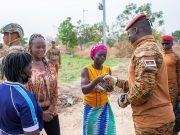
Even today, Africans have been lured into fighting in the Russia Ukraine war, drawn by money, misinformation, coercion, and the cruel arithmetic of poverty. This is not a footnote. It is a signal. When large wars expand, the demand for manpower spreads outward, looking for countries where young people feel disposable to their own economies.
Mary, a South African mother whose name has been changed to protect her family, has not heard from her son since 27 August 2025. Back then, he called saying he feared he was being sent to the frontline in Russia’s war on Ukraine. Since then, she says she has suffered anxiety attacks, hospital visits, palpitations, headaches, dizziness, and relentless worry. Her son is among 17 South Africans and two Botswanan men who, according to multiple lawsuits, were tricked into fighting for Russia, with allegations pointing to Duduzile Zuma Sambudla, daughter of former president Jacob Zuma, and two alleged associates. They were promised opportunity and training: some were told it was bodyguard preparation linked to the MK party, others were sold personal development, Russian university access, and even citizenship, all rushed under urgent pressure and thin paperwork.
WhatsApp messages and family accounts suggest the men ended up tied to a Russian mercenary pipeline, with claims they were with the Wagner group in eastern Ukraine, and at least one man forced to sign a Russian contract he did not understand. South Africa’s presidency confirmed distress calls and said such recruitment is illegal. Ukraine’s foreign minister has claimed that about 1,400 Africans from three dozen countries fight with Russian forces.
That is the third lesson. Recruitment follows vulnerability. Wherever livelihoods are fragile, foreign wars find willing bodies.
How an Escalated Global War Hits Africa, Even Without Bombs Falling Here
An expanded war in Europe or the Americas would touch Africa through five main pressure points.
Food, fuel, fertilizer, and shipping shocks
War reshapes trade routes, raises shipping insurance, spikes fuel prices, and disrupts fertilizer supply. Africa’s food systems are especially exposed because fertilizer costs directly hit yields, then food prices, then political stability. Supply chain stress also raises the price of spare parts, medicines, and industrial inputs. Even small interruptions can become big inflation.
Debt stress and financial turbulence
In global panic, capital runs toward safe havens. That often means weaker currencies for many African countries, more expensive imports, and higher costs to borrow or refinance debt. The same war that pushes prices up can also shrink access to affordable credit. Governments then get trapped between debt payments and social stability.
Security spillovers and arms circulation
War zones pump weapons into illicit markets. Armed groups learn new tactics. Mercenary networks grow bolder. Terror cells exploit distraction. Borders become more combustible. A world at war creates a world where opportunists thrive.
Diplomatic coercion and sanctions pressure
In major war, big powers demand alignment. They use incentives and punishments, aid, trade access, visas, intelligence sharing, military support, and sanctions threats. Neutrality becomes harder to maintain because pressure arrives through many doors at once.
Cyber and information warfare
Hybrid conflict travels through social media and critical infrastructure. Disinformation can inflame elections and protests. Cyberattacks can hit banks, power systems, ports, hospitals, and media houses. When big powers fight, the digital battlefield expands, and African institutions often have thinner defenses.
How Africa Can Prepare, and How Africa Can Protect Itself
Preparation is not panic. Preparation is sovereignty with a plan.
Build a continental posture of strategic autonomy
Africa needs a coordinated position that protects room to manoeuvre. The goal is bargaining power. That means African states speaking early, together, and clearly at the African Union, in regional blocs, and at the UN. It also means resisting any drift toward becoming a staging ground for proxy conflict.
A practical starting point is a shared AU doctrine on great power confrontation: red lines on foreign military recruitment, rules on foreign bases, standards for arms deals, and a united response to sanctions pressure. Unity here functions like insurance.
Secure food systems as a national security priority
In global war, food becomes politics, then politics becomes survival. Africa can reduce vulnerability by treating fertilizer, seed systems, irrigation, storage, and regional grain reserves as strategic infrastructure. Local fertilizer blending, regional procurement, and smarter subsidy design matter more in wartime economics than in peacetime debates.
When food prices spike, instability spreads fast. The best defense is producing more of what people eat, closer to home, with fewer import choke points.
Protect energy access and reduce import fragility
Fuel price spikes are a war tax on everyone. Africa can prepare by expanding strategic fuel reserves, accelerating regional power pools, scaling renewables where they lower import bills, and improving refinery and storage capacity where viable. The objective is resilience, so that a shipping disruption does not become a national emergency.
Strengthen financial defenses and payment resilience
Central banks and treasuries can prepare for turbulence by strengthening reserve strategies, widening local currency bond markets, improving tax collection without crushing the poor, and using regional trade settlement systems to reduce exposure to hard currency shortages. AfCFTA can become more than a slogan in a crisis if African trade corridors and payment rails work under stress.
Shut down recruitment pipelines and protect young people
African governments should treat foreign war recruitment like a national emergency, because it bleeds human capital and imports trauma. That requires criminalizing fraudulent recruitment, tightening labor export oversight, monitoring private security firms, and providing real domestic employment pathways. It also requires public awareness campaigns that tell the truth about these wars, including the long-term human cost.
This is where my grandfather’s story becomes policy. Trauma is part of the bill, even for those who return.
Build cyber resilience and information defense
War in the modern world targets minds and networks. Africa can harden its systems through basic, disciplined upgrades: national cyber incident response teams, security standards for ports and banks, protection of election systems, and rapid response networks for misinformation that threatens public safety. Independent media and credible public communication become strategic assets in a crisis.
Keep Africa out of base politics that invite retaliation
When great powers fight, bases become targets, and host countries inherit risks they did not author. Africa can pursue security partnerships that build capacity without turning territory into a chess square. This is delicate work, yet the principle is simple: partnerships should increase sovereignty, not outsource it.
The One Mistake Africa Must Not Repeat
Africa has already lived the consequences of other people’s wars, in graves abroad, in families that waited for letters that never came, in men who returned home carrying a storm inside them. That past is alive in my lineage, in my grandfather’s untreated PTSD, in my great uncle’s disappearance in Italy, in the quiet reality that an African can lose years of life to a conflict that never asked Africa’s permission.
The drumbeats in Europe and the Americas are rising. Africa’s answer has to be readiness anchored in sovereignty: food security, energy resilience, financial defenses, cyber preparedness, disciplined diplomacy, and a continental refusal to become a recruitment pool for foreign battlefields.
Because the most dangerous lie Africa can tell itself is that global war stays global, and far away.