
















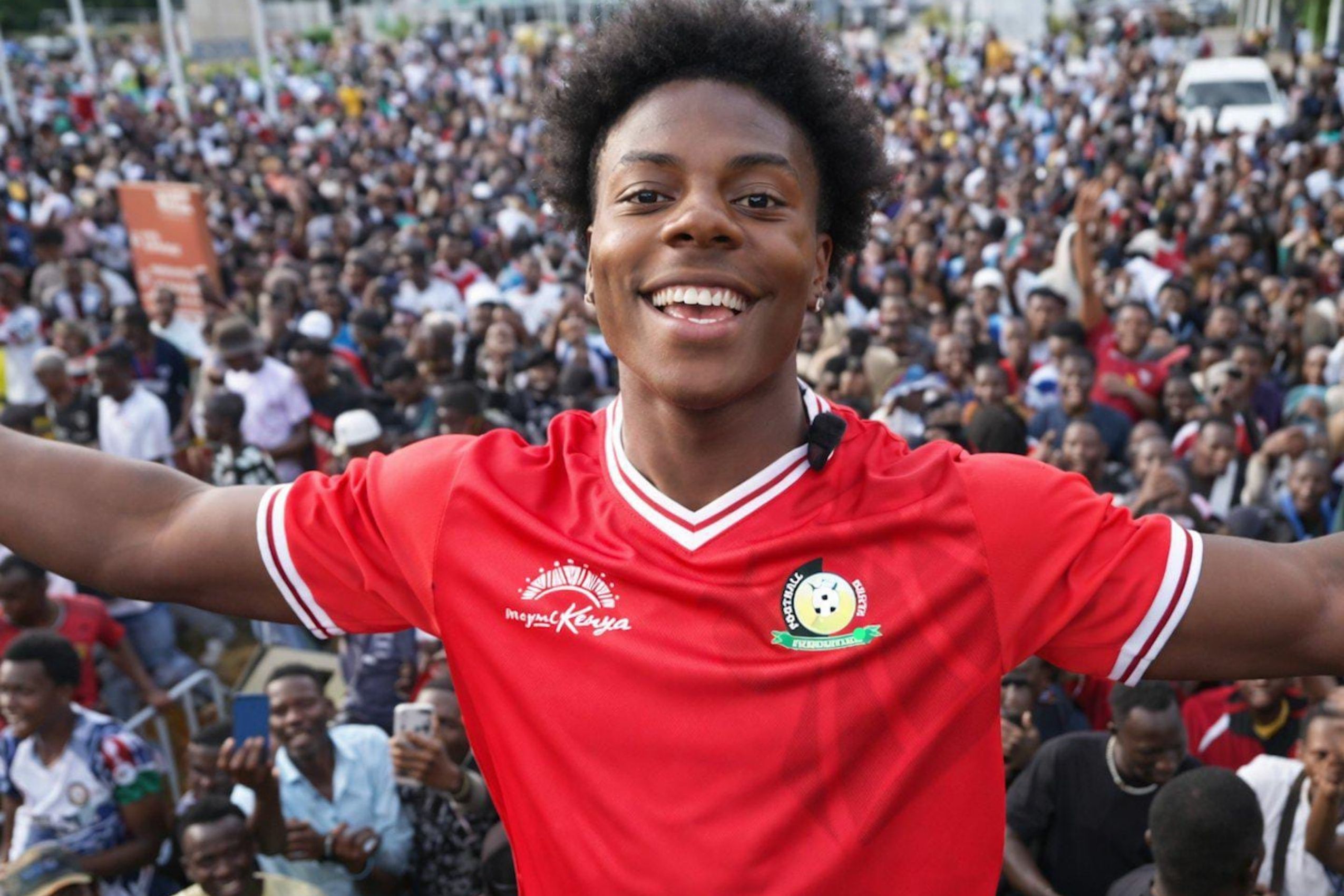
When iShowSpeed went live in Nairobi, Kenya set a digital record that felt bigger than entertainment. Within about five hours, Speed gained 360,000 subscribers and hit 48 million subscribers. Before leaving, he said Kenya was number one. In less than 24 hours, the Kenya YouTube livestream sat at about nine million views.
That is more than a viral moment. It is a case study in narrative power.
For decades, Africa has been introduced to the world through a narrow lens. Crisis footage travels faster than culture. Conflict headlines travel faster than human stories. A continent of 1.4 billion people gets flattened into a single mood. Then Nairobi happened on a livestream, and millions watched an Africa that moved, laughed, flexed, welcomed, and created its own spotlight.
The deeper question is simple. What exactly did Speed trigger across Africa and the diaspora, and what does it teach us about making the algorithm work for Africa instead of against it?
The Nairobi moment was a narrative pivot
Speed showcased Nairobi’s beauty with an aerial chopper ride, then he grounded the story in the streets and in the people. The city looked stunning from above. The culture looked magnetic on the ground. The energy felt unscripted, and that authenticity created a sense of immediacy. Viewers did not feel like they were watching a packaged campaign. They felt like they were inside a living place.
This matters because online attention behaves like gravity. It pulls more attention. When a moment feels real, people watch longer, share faster, comment more, and bring friends into the stream. Those signals matter on platforms like YouTube because recommendation systems learn from audience behavior. They lean into content that holds attention and sparks engagement.
Nairobi did not simply trend. Nairobi performed.
“Speed Does Africa” became Pan Africanism in motion
Before Kenya, Speed visited African countries that included South Africa, Botswana, Zimbabwe, Zambia, Angola, and Rwanda. Across the tour, he did something powerful with very simple ingredients: curiosity, high energy, and constant interaction with everyday people.
Pan Africanism often gets framed as conferences, manifestos, and political speeches. Those spaces matter, yet culture can unite faster than policy. A tour like this creates shared excitement across borders. People in one country start watching another country with interest. Diaspora audiences see a continent they rarely get to meet in real time. African youth see themselves reflected on a global stage, then begin reflecting on each other.
That is how Pan Africanism spreads in the livestream era. It spreads through shared attention and shared pride.
He cast African countries in a positive light without losing the truth
The strongest part of the tour is how it humanized Africa. It highlighted laughter, spontaneity, street style, humor, music, hustle, warmth, and boldness. It showed modern cities and vibrant youth culture. It also exposed frictions that Africans live with every day.
A good example is the moment about not being able to buy diamonds in Botswana. On the surface, it looks like a simple travel frustration. Underneath, it points to deeper questions about ownership, access, and who controls value chains. Botswana is globally associated with diamonds, yet the pathways to purchase and profit often run through regulated systems shaped by global markets. The moment becomes a window into how extraction economies can leave ordinary people distant from the wealth beneath their feet.
So the tour offered celebration and also offered a glimpse of structural reality. That blend is important for Africa’s story. Pride that ignores systems becomes a performance. Systems without pride become despair. Africa needs both truth and glow.
Why the algorithm often works against Africa’s narrative
If Nairobi can explode like that, why does so much African content still struggle to travel globally?
Because the algorithm is not neutral. It is a set of systems trained on past behavior, shaped by business incentives, and reinforced by unequal attention economies. Several patterns tend to work against African narratives.
1) Crisis content is rewarded by existing viewing habits
Many global audiences have been trained to click Africa when the story looks like danger, disaster, scandal, or suffering. Platforms respond to what people click and watch. Over time, this can create a feedback loop where negative frames outperform nuanced stories, simply because the audience has been conditioned.
2) Location, language, and context affect distribution
Platforms infer what content is “relevant” to viewers based on language, location signals, and historical engagement. If a viewer in Europe mainly watches Africa related content during crises, the system learns that is the “Africa category” they respond to. If African creators publish in languages and contexts that the platform models do not understand well, discovery can suffer.
3) Advertising markets shape visibility
Ad revenue influences the platform economy. Regions with higher advertising spend can attract more creator investment, more production budgets, and more marketing. African creators often compete inside a weaker ad market, which affects funding, consistency, and scale. The algorithm may not directly punish Africa here, yet the ecosystem becomes uneven.
4) Trust and safety systems can be blunt
Automated moderation and safety classifiers sometimes struggle with context, slang, political nuance, and local references. Content from places stereotyped as “high risk” can face extra friction through demonetization, reduced recommendations, or limited reach.
5) Weak network effects across the continent
The algorithm loves networks. It amplifies clusters of creators who collaborate, reference each other, and keep viewers inside a category. Africa has brilliant creators, yet continental collaboration is still smaller than it could be, partly due to language divides, travel costs, and fragmented markets. Without dense networks, discovery grows slower.
All of this means Africa can end up getting recommended as a problem to solve, instead of a world to explore.
How this can change so the algorithm becomes Africa’s ally
The key insight is this: recommendation systems follow audience behavior. Africa can influence that behavior by building habits, networks, and formats that generate stronger signals. Nairobi showed what happens when the signals become undeniable.
Here is how Africa turns the algorithm into an ally, at three levels: creators, ecosystem, and platforms.
Level 1: What creators can do right now
Build for retention, then let the culture carry it.
The algorithm rewards watch time and satisfaction signals. A strong hook matters, yet so does structure. African creators can treat each video like a journey: set stakes early, move fast through scenes, use pattern interrupts, end segments with curiosity, and deliver payoffs.
Package Africa as an experience, not as an explanation.
Many creators feel pressure to “educate the world” about Africa. Education is important, yet storytelling travels farther. Speed did not lecture about Nairobi. He experienced Nairobi. Creators can lead with lived moments, then weave in context.
Use series formats that train viewers to return.
The algorithm learns from repeat viewing. A continent wide travel series, street culture series, business innovation series, music scenes series, and diaspora roots series can build returning audiences. Returning audiences tell the system that this category deserves more distribution.
Activate the diaspora as a distribution engine.
Diaspora viewers often have strong internet access, strong sharing networks, and high social media presence. When diaspora audiences comment, share, and create reactions, they feed the signals that push content outward. Creators should intentionally design moments that diaspora audiences want to quote and repost.
Invest in collaboration across borders.
Collabs generate network effects. A Kenyan creator collaborating with a Zambian creator, an Angolan creator, a Rwandan creator, then doing cross uploads and shared playlists increases the chances of pan African discovery.
Make metadata work for Africa.
Titles, thumbnails, and descriptions help the system understand the video. Use clear country and city naming. Use consistent keywords across a series. Add chapters. Add subtitles. Use pinned comments that prompt meaningful discussion. These small moves can raise discoverability.
Level 2: What the African digital ecosystem must build
Create African creator guilds and cross promotion pipelines.
Africa needs structured collaboration. Think of regional creator alliances that share calendars, themes, and repost cycles. When multiple creators cover the same topic week after week, the algorithm sees momentum.
Build reaction and commentary layers around African moments.
A viral livestream should trigger an ecosystem response. Recaps, explainers, cultural breakdowns, language translations, music remixes, and behind the scenes analysis. Each layer expands the audience and strengthens the signal cluster around African content.
Strengthen local and continental platforms for amplification.
Media houses, influencers, radio stations, podcasts, and community pages can act like launchpads. When they embed and cite African creator content, the algorithm detects external traffic and wider interest.
Support production funding and creator sustainability.
Consistency is a superpower. Many African creators struggle with data costs, gear, editing time, travel, and monetization barriers. Brands, funds, and institutions can sponsor series that build Africa’s narrative at scale, with creator independence protected.
Level 3: What platforms should be pushed to improve
Better language and context support.
Platforms can invest more in African languages, dialects, and cultural context so their systems understand content accurately and recommend it fairly.
More transparent moderation and monetization for African creators.
Creators need clearer pathways to resolve demonetization and reach issues, with support teams that understand local realities.
Regional creator programs that build long term communities.
Platforms already run creator initiatives. Africa needs more sustained programs that prioritize collaboration, training, and cross border discovery, not only one off grants.
This is not charity. It is good business. Africa is the youngest continent. Africa is an attention frontier. Platforms that help Africa tell its story will grow with Africa’s growth.
Nairobi showed the blueprint: attention can become unity, then become leverage
Speed’s tour did not invent African beauty. It helped reveal it at scale. It did not manufacture African culture. It gave it a high volume speaker. It did not create Pan Africanism. It reminded millions that shared pride can travel faster than borders.
The real opportunity begins after the trend.
If African Gen Z can move the algorithm once, they can move it again. They can do it with creator networks, series formats, diaspora distribution, collaboration across borders, and a disciplined focus on retention and storytelling.
Africa already has the stories. Africa already has the talent. Africa already has the energy.
Now it needs repetition, structure, and solidarity.
The rallying call is simple.
Gen Z, rise. Create at scale. Collaborate across borders. Build narratives that travel. Build businesses that last. Build institutions that protect value. Turn attention into leverage. Turn leverage into transformation.
Africa is already number one in culture. The next step is making Africa number one in ownership, in systems, and in outcomes.