










Sadio Mané has a habit of stepping into the fire when everyone else is running away from it.
On Sunday 18th January 2026, Senegal’s Africa Cup of Nations final against Morocco teetered on the edge of collapse. A Senegal goal was disallowed. A late VAR review produced a penalty for Morocco. Senegal’s players walked off in protest. The match stalled in chaotic scenes, and African football’s reputation hung in the balance.
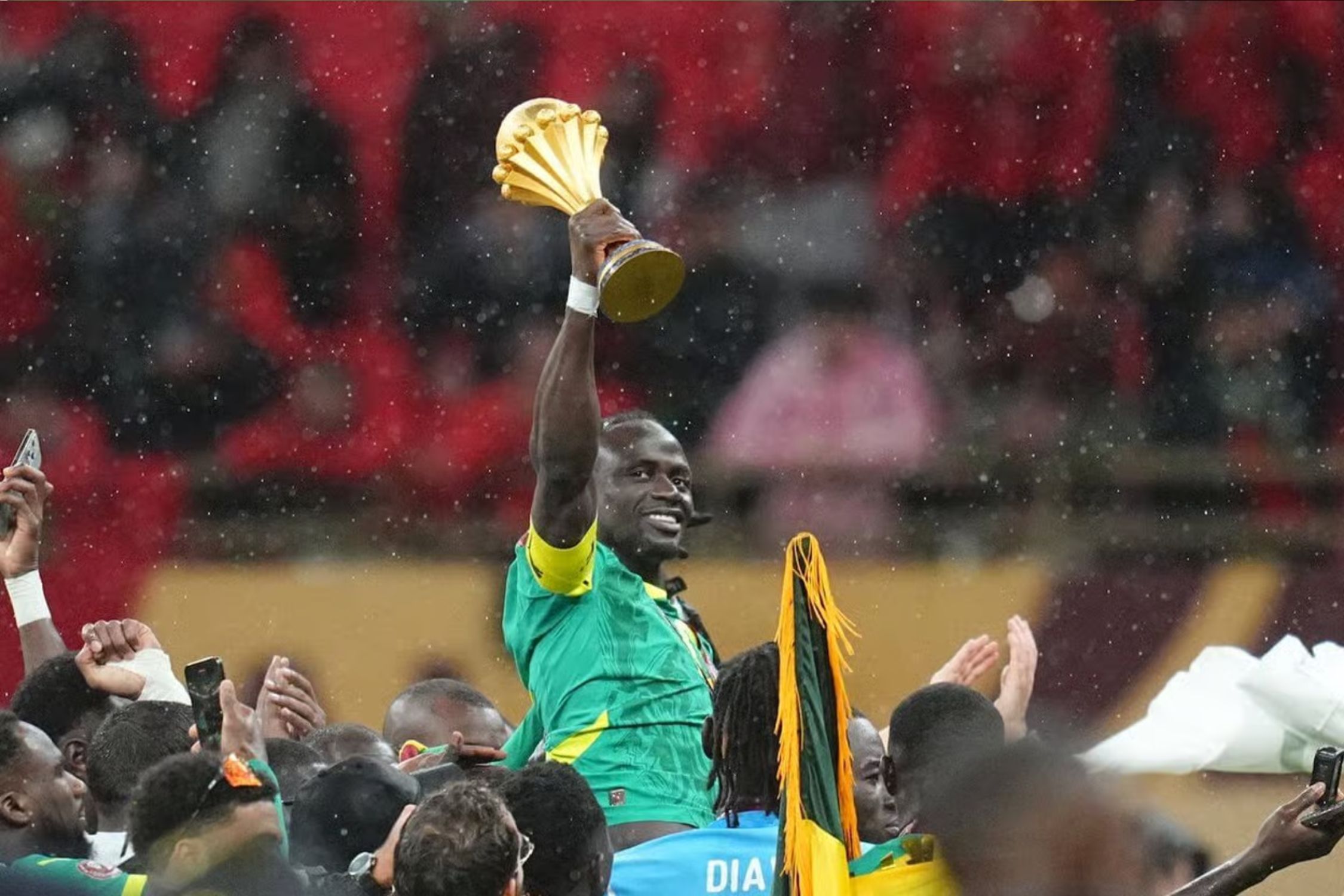
Mané pulled his teammates back onto the pitch and insisted on finishing the game with composure. Morocco missed the penalty. Senegal regrouped, fought through extra time, and won the title. Mané left the AFCON stage as champion and Player of the Tournament, with Senegal claiming their second AFCON crown in three editions.
That moment captures what drives him.
Mané is powered by a very specific kind of hunger: the desire to rise without losing himself, to win without becoming numb, to carry his people without turning them into a branding exercise. He has repeatedly signaled that legacy matters to him beyond medals. His story keeps circling back to one simple ambition: be remembered as a great human being, then let the football explain the rest.
The making of Mané
You cannot understand Mané’s mentality without Bambali.
He grew up in a small village in southern Senegal, in a strict religious home where chasing a football dream looked like a distraction from real life. He played barefoot on dusty ground, improvising a ball when he had none, earning the nickname “Ballonbuwa,” the ball wizard, because on the football pitch, he could make something out of nothing.
Then came the wound that never quite closes. Mané lost his father as a child, a tragedy he has linked to the lack of adequate healthcare near home. When a child learns that distance to a clinic can decide whether a parent lives, “development” stops being a political slogan. It becomes personal.
At fifteen, he ran away to Dakar to pursue football, returned home, then negotiated a deal to complete one more year of school before fully committing to the sport. That blend of defiance and discipline shows up everywhere in his career: he takes the risk, then does the work.
The trophies are loud, the character is louder
Mané’s medals tell one story. His choices tell the deeper one.
At club level, he has won a UEFA Champions League title with Liverpool, a Premier League title, domestic cups, and international trophies like the UEFA Super Cup and FIFA Club World Cup. He later won the Bundesliga with Bayern Munich.
With Senegal, he helped deliver the nation’s first AFCON title in 2021, where he scored and assisted through the tournament, then converted the decisive shootout kick in the final against Egypt and was named Player of the Tournament. In 2026, he did it again: captaining Senegal through chaos to another AFCON title, then leaving the tournament on top.
Add the individual recognition and you begin to see why his name belongs in the same room as Africa’s most impactful footballers of all time. He has won CAF African Footballer of the Year twice, and his Champions League plus AFCON combination sits in the very top tier of Africa’s football greats.
This is the part many people miss: Mané’s greatness is not only in what he won. It is in how consistently he showed up in the matches that define a generation, and how often he carried the psychological weight of a whole nation while still playing like a forward who never forgot dust and hunger.
Why he left Liverpool
Mané left Liverpool in 2022 at the height of his powers, and the most honest explanation is also the simplest: he wanted a new challenge.
Reports around the time made clear that he felt the moment was right for a fresh experience after six seasons, and he intended to tell Liverpool he wanted to move. Mané himself later framed it as a need to keep challenging himself, describing his life as a chain of challenges and his personality as someone who seeks the next one rather than settling into comfort.
There is also a practical layer. He had one year left on his contract, and Liverpool were entering the next phase of their forward line. When a club is transitioning and a player senses the story approaching its natural closing chapter, leaving becomes a way of protecting the relationship: exit while the love is intact, while the performances still sing, while you can walk out as a legend rather than as a regret.
He did exactly that.
Mané’s old striking partner Mohamed Salah chose the opposite path: he stayed, kept carrying Liverpool through title pushes, and even committed his future with a new deal, yet he has still found himself in a cold-hot war with the club’s leadership. In recent months he has publicly hinted at a breakdown in trust, at one point accusing the club of betrayal and describing his relationship with Arne Slot as fractured, a messy situation for a player who has given Liverpool some of its greatest modern triumphs, including Champions League glory and Premier League titles.
Bayern Munich: the rough chapter that explains the next move
Bayern signed him in June 2022 on a three-year deal, and the expectations were enormous. The season that followed was complicated. He suffered an injury just before the World Cup, which robbed him of a tournament he had earned for Senegal. Bayern themselves later acknowledged the year had been difficult and described the decision to move on as a mutual choice for a fresh start.
His Bayern chapter hit a breaking point in April 2023 after the Champions League loss at Manchester City. Tensions that had simmered for weeks, a new coach, shifting roles, and Mané struggling to impose himself, boiled over into a dressing-room confrontation with Leroy Sané that reportedly began as an argument about what happened on the pitch. The incident became public because it crossed a line: Mané struck Sané, and Bayern responded immediately by fining him and suspending him for one match, framing it as punishment for “misconduct.” What made it so damaging was not just the discipline, but the symbolism: this was a club built on control and unity, suddenly exposed as fractured at the exact moment it needed calm leadership, and it reinforced the sense that Mané’s Munich spell, instead of becoming a reinvention, had turned into a heavy, ill-fitting chapter.
This matters because it reveals another side of Mané: he is human. He can suffer a bad fit. He can lose his footing. He can react badly in a high-pressure environment. The difference is what comes next. Great athletes are often defined by their response to the chapter they would rather erase.
Mané chose movement over stagnation. He chose reset over bitterness.
Why he moved to Saudi Arabia while still in his prime
In August 2023, he joined Al Nassr in Saudi Arabia, signing a four-year contract, with media reports placing the fee around €40 million.
The lazy reading of this move reduces everything to money. The more accurate reading holds several truths at once.
First, it was an escape hatch from a Bayern situation that had become heavy, after injury disruption and dressing-room tension. Bayern explicitly framed it as a “new chapter” and a “fresh start.”
Second, it placed him inside a rapidly globalizing league that was attracting elite players and broadcasting itself as a serious competition. Mané has spoken publicly about being happy there, calling the Saudi league “very good” and widely watched, while dismissing the idea that a footballer only matters when he plays in Europe. He has also argued that the league’s rising competitiveness benefits Senegal, given the growing number of Senegalese internationals playing there.
Third, Mané’s entire public life points to a man who thinks in terms of impact. His philanthropy is not a random side project. It is a consistent theme, funded by his earnings and driven by memory.
What he builds says what he believes
Mané’s investments in Bambali read like a manifesto disguised as charity.
He has funded a school, contributed toward a hospital, helped finance a petrol station and a post office, and supported internet connectivity and equipment for the community. He also provides a monthly stipend to families in his hometown.
People can debate the politics of philanthropy forever. Still, there is a moral clarity in what he chose to build. He did not start with statues or grand speeches. He started with the basic pillars that keep a community alive: health, education, connectivity, dignity.
The footballer who lost his father because healthcare was too far away grows up and builds a hospital. That is not public relations. That is the very essence of his life.
How his titles rank him among Africa’s greats
African football history is crowded with icons, and comparisons can turn childish fast. The serious way to rank greatness is to look at three things: peak level, big-game influence, and legacy beyond the self.
On peak level, Mané has been among the best forwards in the world, finishing high in Ballon d’Or voting during his Liverpool years and consistently delivering goals and pressing intensity at the top of European football.
On big-game influence, he has a Champions League title and multiple finals with Liverpool, plus decisive AFCON moments for Senegal that changed the country’s football history.
On legacy beyond the self, his community work and his public stance on wealth, humility, and service have created a cultural footprint that travels further than highlights.
That trio is why, when modern African legends are named, Mané’s name belongs there without argument.
The leadership lessons Africa can steal from Mané
Mané’s leadership is not about volume. It is about timing.
He leads by calming a crisis, as he did in the 2026 AFCON final. He leads by returning home again and again, keeping himself accountable to the faces that knew him before the cameras. He leads by choosing discipline when emotion would feel more satisfying. He leads by showing that humility is not weakness, it is strategy. It keeps you teachable. It keeps you grounded. It keeps you trusted.
Most of all, he leads with what I call “scarcity memory.” He remembers what it feels like when life is thin, when opportunity is rare, when the basics are missing. Leaders with scarcity memory build hospitals instead of mansions. They protect public money because they can still taste what hunger feels like. They govern like the people are real, because the people have always been real to them.
That is what drives Sadio Mané.
And that is why Africa keeps searching, in politics and beyond, for presidents who carry the same attributes: courage under pressure, discipline in chaos, humility with power, and a reflex to empower rather than exploit.