











A Baby in Flight and the Truth Behind a Signature
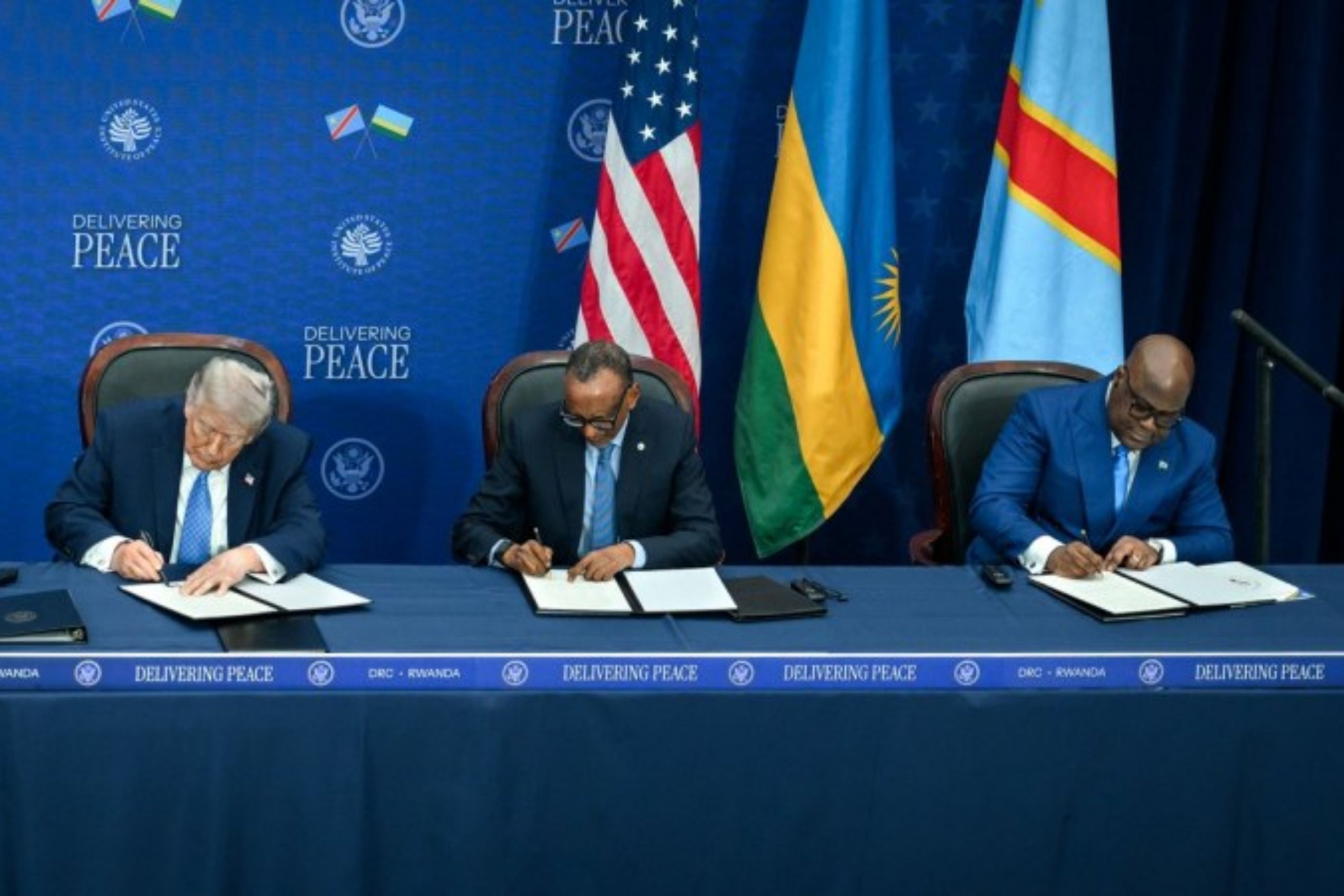
In the first week of December, as three presidents smiled for cameras in Washington, a young mother named Aline Sambuka was running for her life in South Kivu. She clutched her newborn child as bombs fell on Katogota, Luvungi and Kamanyola. Her voice captured a reality that the world too often ignores. She said she wanted the authorities to end the war. She wanted to go home. She wanted to live like everyone else.
Her plea is a powerful entry point into a much bigger question. What does it mean when political elites sign a peace deal at the very moment civilians are still fleeing? And why does the Democratic Republic of Congo remain locked in a cycle of conflict despite decades of negotiations, summits and declarations of peace?
The answers lie in history, geopolitics and economics, and none of them are comfortable.
The Washington Agreement and the Politics of Performance
The so-called peace deal between Presidents Félix Tshisekedi and Paul Kagame, brokered by Donald Trump, was celebrated in diplomatic circles as a turning point. It was advertised as a breakthrough after thirty painful years of conflict. Yet on the ground, the war continued. On December 2, M23 dropped bombs on Katogota. On December 3, the bombardment shifted to Luvungi. On December 4, as final preparations for the Washington handshake were underway, families were digging shallow graves and crouching in banana plantations for safety.
By December 6, fierce fighting had erupted around the Ruzizi plains. Dozens lay dead. Thousands fled. The gap between performance and reality could not be wider.
This gap exposes a larger truth. The Washington deal was not a peace agreement rooted in the lived experience of Congolese civilians. It was a geopolitical event crafted for cameras. It offered global optics of stability while the soil of South Kivu remained soaked with blood.
Only when peace is felt in the daily lives of people like Aline can any agreement be taken seriously.
The Political Economy of Endless War
The war in Congo is not simply violence. It is an economy. It is a system. It is an industry built on the extraction of minerals that power the global economy.
Beneath the soil of South Kivu lies gold, coltan, tungsten and tin. These minerals are essential for smartphones, laptops and electric vehicles. Whenever fighting erupts, minerals move. Whenever minerals move, profits flow. As a result, war creates opportunity for actors who benefit from instability. Peace threatens those interests.
This cycle helps explain why three decades of peace talks have rarely produced meaningful transformation. The incentives around conflict are deeply entrenched. Armed groups control mines. Militias guard transport routes. Political elites in the region depend on mineral flows for revenue and influence. International corporations benefit from cheap access to raw materials.
If Congo’s minerals dried up today, the violence would likely stop tomorrow. This is an uncomfortable but necessary truth.
The Human Cost: What It Means to Flee With a Newborn
The geopolitics of resource extraction often overshadow the lived experience of civilians. Aline’s story brings the human cost back into focus.
Imagine holding a baby whose neck muscles are not yet strong. Imagine running barefoot because the ground is safer than staying still. Imagine breastfeeding when your stomach is empty and your breastmilk is drying. Imagine fleeing through forests and plantations as bombs explode nearby. This is what thousands of Congolese face daily while political leaders declare peace from distant capitals.
Peace announced in Washington does not extinguish bombs in Katogota. It does not silence gunfire in Luvungi. And it does not bring safety to a mother running with her child. The distance between the signatures on paper and the screams on the ground is measured in blood.
Why Traditional Peace Deals Keep Failing
Congo’s conflict persists because agreements tend to focus on political elites rather than structural issues. They rarely address the mineral economy that fuels the violence. They seldom empower local communities or genuine peacebuilders. They often exclude civil society, women and displaced populations.
These deals also rely heavily on foreign mediation. Yet external actors have their own interests. The United States, European Union and regional powers are deeply invested in supply chains that rely on Congolese minerals. This creates a contradiction. The same stakeholders who publicly support peace may quietly benefit from instability.
Until the incentives change, violence will continue to erupt even as signatures are being inked.
The Question of Power: Who Are “The Authorities”?
Aline’s statement offers a profound insight. When she asked the authorities to end the war, she did not name presidents. She spoke of authority in a broader sense. She referred to the people. Sovereignty in any nation rests with the citizens. Presidents are servants, not rulers.
Yet across Africa, citizens frequently allow those in power to behave as if they are unaccountable. The result is a culture where leaders act as kings while civilians bear the consequences of their decisions.
Ending the war in Congo requires a shift in this power dynamic. Only organized people can challenge entrenched systems. Only citizens can dismantle the structures that protect the political economy of conflict.
The Role of the Diaspora and the Global Public
Africans in the diaspora have an important role in shaping global narratives about Congo. When African communities in New York, London, Paris and the Caribbean raise their voices, global media take notice. When diaspora networks apply pressure to political leaders, doors open in foreign capitals.
Diaspora activism helped pressure governments during anti-colonial movements. It played a role in the fights against apartheid and military dictatorships. The same energy can be mobilized today to demand accountability for the violence in Congo.
Silence is not neutrality. Silence is complicity.
What Real Peace Requires
Real peace in Congo requires more than documents and declarations. It demands concrete steps that disrupt the system of violence. These include:
• A verifiable and enforceable ceasefire
• Humanitarian access for displaced people
• An immediate halt to aerial bombardment
• Independent investigations into atrocities
• Exposure of all entities profiting from mineral-fueled war
• Transparency in global supply chains
• African-led peace enforcement mechanisms
These steps are not quick fixes. They require political courage, international pressure and grassroots engagement.
Peace must be built, not announced.
Returning to Aline: A Symbol of What Is at Stake
Aline is not a political analyst. She is not a soldier. She is not a negotiator. She is a young African mother who wants the simplest of human rights: safety, dignity and a chance to raise her child.
Her words cut through the noise. She wants authorities to end the war. She wants to go home. She wants to live like everyone else.
Her voice is a reminder that conflicts are not abstractions. They are lived realities. She represents millions of Congolese who have fled their homes for decades. She represents the cost of political failures and geopolitical greed.
Her story should force us to ask ourselves whether we will turn her pain into action or allow it to fade into silence.
Conclusion: The Responsibility of African People
Congo’s war will not end because leaders sign documents in Washington or Addis Ababa. It will not end because of press releases or televised handshakes. It will end when African people decide that enough is enough.
When citizens challenge the systems that profit from instability. When they demand transparency. When they refuse to look away from suffering. When they reject the idea that minerals are more valuable than human lives.
Aline is waiting. Her baby is waiting. Congo is waiting. Africa is watching.
The question is whether Africans everywhere are ready to answer.