













Entrepreneur Jenifer “Niffer” Jovin and Pan Africanist Mika Chavala walked free on December 3, 2025, after treason charges against them were suddenly withdrawn by the Director of Public Prosecutions. Their release has been framed as a routine prosecutorial decision, but anyone reflecting deeply on Tanzania’s constitutional principles, criminal procedure, and the political climate understands that something far more profound occurred. What unfolded was a moment where constitutional rights, state overreach, political machinations, and widespread citizen resistance collided to produce an unmistakable outcome: people power forced open the doors of justice.
A Symbolic Release in a Disturbed Nation
Niffer and Chavala were among the many young Tanzanians caught in the sweeping arrests that followed the country’s post-election massacre. Treason, one of the most serious charges within Tanzania’s legal system, was applied to young voices whose most significant “offense” was speaking openly, questioning leadership, or supporting peaceful demonstrations. Their cases came to embody the tension between a state eager to establish control and a generation determined to assert its dignity. Now, their release has become a symbolic counterpoint: a reminder that a frightened government cannot indefinitely suppress a rising civic consciousness.
The Constitutional Framework: What the Law Actually Says
Tanzania’s Constitution of 1977 outlines a rights-based framework that leaves little room for the type of detention inflicted on these two. Articles 12 and 13 guarantee equality before the law and prohibit discriminatory treatment. Article 15 protects the right to personal freedom and expressly forbids arbitrary arrest and detention. Article 18 protects freedom of expression, including the right to hold opinions and communicate ideas. Article 20 affirms the right to freely associate and participate in peaceful public movements. Article 29 requires that any limit placed on a constitutional right must be reasonable, lawful, and strictly necessary in a democratic society. Finally, Article 30 provides the High Court with the authority to remedy constitutional violations, including through compensation.
These provisions are not ornamental. They represent binding obligations. And in the case of Niffer and Chavala, each one was placed under extraordinary strain.
Were Their Rights Violated? A Legal Assessment
The charge of treason made against these young citizens fails every constitutional test. Treason is intended for acts that attempt to overthrow the government through violent force. There is no evidence that either Niffer or Chavala engaged in violence, organised armed rebellion, or attempted to overthrow the state. Their activities were peaceful expressions of political concern, which fall squarely under the protection of Article 18. Charging them with treason, therefore, amounted to a deliberate attempt to silence critics through intimidation rather than a lawful attempt to preserve national security.
The arrests also violated their right to personal liberty under Article 15 since depriving a person of freedom must be based on necessity and proportionality. Arresting peaceful critics under the guise of treason bears none of these hallmarks. The state further violated constitutional limits on its authority by imposing restrictions on expression and movement that were neither reasonable nor justified in a democratic society. Due process concerns also emerge when examining how these cases were handled, including questions regarding timely disclosure of evidence, immediate access to legal counsel, and whether they were presented promptly before a magistrate. The abrupt withdrawal of charges adds weight to the argument that the cases were weak from the beginning.
International Law and Tanzania’s Obligations
Beyond the Constitution, Tanzania is bound by international human rights norms, including the International Covenant on Civil and Political Rights and the African Charter on Human and Peoples’ Rights. Both instruments prohibit arbitrary arrest, uphold the right to fair trial, and protect freedom of expression and peaceful assembly. The actions taken against Niffer and Chavala run contrary to these obligations and reaffirm that their arrests did not meet the standards expected of a state that has committed itself to international law.
Were These Arbitrary, Political Arrests?
When treason charges are deployed immediately after contested elections, targeted primarily at outspoken youth and digital influencers, and then quietly abandoned without explanation, the conclusion becomes inescapable: these were politically motivated arrests. The timing, the nature of the accusations, the profile of those targeted, and the sudden withdrawal all point toward a use of law as a political weapon rather than an instrument of justice. Their detention did not arise from a genuine security threat but from a desire to suppress dissent during a politically sensitive moment.
Do They Deserve Compensation?
The Constitution itself offers a clear path toward compensation. Article 30 empowers the High Court to issue remedies, including payment of damages, when state actions violate constitutional rights. Given the violations of liberty, expression, due process, and proportionality, both Niffer and Chavala have a strong legal basis to argue that they were subjected to unlawful arrest and malicious prosecution. Under Tanzanian tort law, they may also claim damages for reputational harm, emotional distress, and loss of livelihood. In essence, the law entitles them not only to freedom, but to redress for the injustice they endured.
People Power as the Force Behind Their Freedom
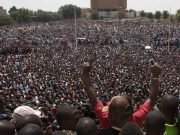
Although the DPP’s statement did not include an explanation, the real pressure came from outside the courtroom. Citizens inside Tanzania and across the continent consistently demanded transparency, fairness, and the release of the young detainees. The diaspora mobilised. Journalists highlighted the injustice. Communities refused to let the story fade. Digital platforms amplified the pressure every day. Whatever negotiations happened behind closed doors, it is clear that public pressure created an atmosphere in which continuing the treason cases would have been politically unsustainable.
A Nation at a Democratic Crossroads
This moment reveals a country undergoing a profound democratic stress test. The ease with which treason charges were weaponised speaks to the fragility of essential institutions. The swelling public outrage, however, demonstrates a citizenry increasingly unwilling to tolerate abuse. Tanzania now faces a reckoning: if its leadership seeks legitimacy, it must rebuild trust through accountability, respect for constitutional rights, and a commitment to ending the criminalisation of peaceful dissent.
Conclusion: A Victory Written by the People and a Warning to the State
The release of Jenifer “Niffer” Jovin and Mika Chavala is not merely the end of two legal cases. It is a landmark illustration of how constitutional rights, when violated, can still find defenders in the collective strength of the people. The arrests were arbitrary. They were political. And they violated both the letter and spirit of Tanzania’s Constitution and international human rights law. The young people released today have the legal right to seek compensation, but beyond that, they stand as symbols of a generation that refuses to be silenced.
This moment reminds Tanzania and the entire contient, that people power is not a whisper. It is a roar. And when it rises, even the most entrenched systems must yield.