









Africa’s ten largest countries are Algeria, the Democratic Republic of Congo, Sudan, Libya, Chad, Niger, Angola, Mali, South Africa, and Ethiopia. But these are not just countries on a list. They are continental worlds. Algeria is bigger than France, Spain, Germany, Italy, and the United Kingdom combined. The Democratic Republic of Congo is bigger than Texas, California, Alaska, Montana, and New Mexico combined. Sudan is larger than Western Europe’s old imperial imagination of Africa. Libya is almost the size of Iran. Chad, Niger, Angola, Mali, and South Africa each stretch across more than one million square kilometres. Ethiopia, the tenth largest, is still nearly twice the size of France. These are not ordinary states. They are vast political universes, each containing multiple climates, ethnic nations, resource frontiers, historical wounds, and borderlands that can sit hundreds or even thousands of kilometres away from the capital city.
Sudan contains deserts, river valleys, gold fields, broken cities, old kingdoms, and wounded peripheries. Libya stretches from the Mediterranean into the Sahara. Chad, Niger, Angola, Mali, South Africa, and Ethiopia are not countries in the small European sense. They are vast historical theatres.
And here is the disturbing pattern: most of them are either at war, emerging from war, living with armed insurgency, facing violent non-state actors, or struggling with deep internal fracture.
So the question must be asked plainly.
Are most of Africa’s biggest countries too big to handle?
The answer is yes and no.
No, they are not too big to exist.
But yes, many of them are too big for the kind of state they inherited, centralized, militarized, and failed to transform.
Their problem is not size alone. Their problem is unimaginative statecraft inside gigantic borders.
The Conflict Snapshots
In the Democratic Republic of Congo, the state is still fighting to impose authority over its eastern frontier. The Rwanda-backed M23 has expanded its control in eastern DRC, while other armed groups, regional armies, mining networks, and local militias continue to turn the east into a battlefield of minerals, identity, revenge, and foreign interference. The International Rescue Committee warned that conflict in eastern DRC is worsening despite a 2025 peace deal with Rwanda, with M23 exploiting rare earth and gold mining areas. Human Rights Watch also noted that M23 expanded territorial control while both rebel and state forces committed abuses.
In Sudan, the state has almost eaten itself. The war between the Sudanese Armed Forces and the Rapid Support Forces is not merely a power struggle between two armed men. It is the collapse of a political model that outsourced violence to militias, neglected peripheries, and treated the nation as property to be seized. The war has spilled across borders, including into Chad, and Sudan remains one of Africa’s gravest crises in 2026.
In Libya, the fall of Muammar Gaddafi did not produce democracy. It produced a country where rival governments, militias, oil interests, smugglers, and foreign sponsors compete over the shell of the state. The UN Security Council Report noted in April 2026 that Libya’s prolonged stalemate between rival governments has persisted since the postponed 2021 elections. Crisis Group has also warned that Libya’s fuel-smuggling economy helps keep bargains among rival elites while draining the state.
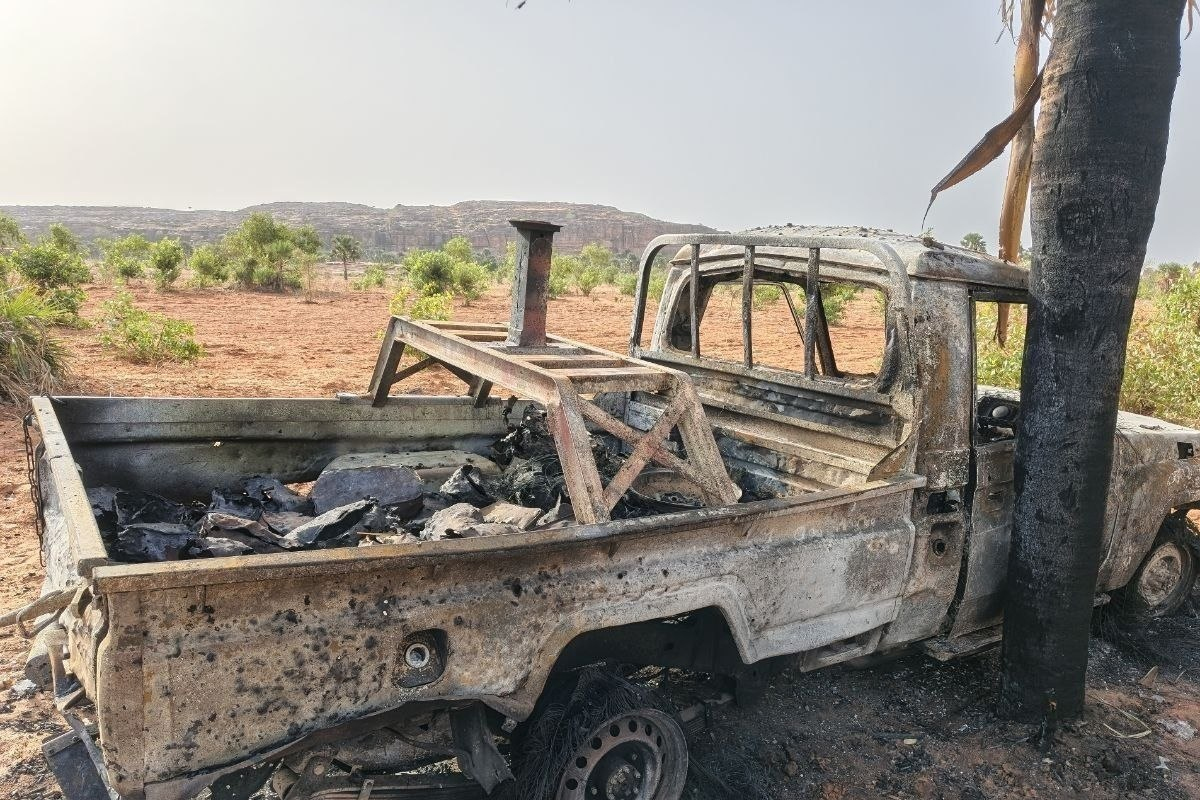
In Mali, the state is fighting jihadists, separatists, and the consequences of decades of northern alienation. The latest escalation is severe: coordinated attacks by al-Qaeda-linked militants and Tuareg separatists exposed the growing reach of armed groups in the Sahel. Militants have expanded across a corridor stretching roughly 3,000 kilometers from western Mali toward Chad.
The alliance between JNIM and the Azawad Liberation Front marked Mali’s largest coordinated attack in more than a decade.
In Niger, the story echoes Mali but with its own geography of pain. Jihadist violence, borderland insecurity, military rule, and regional spillover have turned parts of Niger into contested territory.
Mali, Burkina Faso, and Niger are the core of a regional jihadist insurgency that began in Mali in 2012 and has widened across the central Sahel.
In Chad, the state has long been militarized, presidential, and fragile beneath its surface. It faces pressure from Sudan’s war, refugee flows, local resource conflict, and insecurity around Lake Chad. Recently, clashes over water access killed at least 42 people in eastern Chad, in an area strained by Sudanese refugee inflows. That single incident tells a bigger story: in fragile states, water can become a battlefield.
In Ethiopia, the guns did not fall silent after the Pretoria Agreement. That agreement, signed in South Africa’s capital in November 2022, was meant to end the brutal two-year war between Ethiopia’s federal government and the Tigray People’s Liberation Front by providing for a permanent cessation of hostilities, disarmament, restoration of services, humanitarian access, and the reintegration of Tigray into Ethiopia’s constitutional order.
Tigray remains tense. Amhara has seen insurgent violence. Oromia remains unsettled. Ethiopia is one of Africa’s great civilizational states, but it is also a country where the relationship between ethnicity, federalism, memory, and central power remains dangerously unresolved. Crisis Group notes that the federal government and the TPLF remain at loggerheads while Amhara and Oromia have witnessed continued insurgent violence. CFR warned in February 2026 that rising Tigray tensions could reignite conflict involving Ethiopia and Eritrea.
Then there are the partial exceptions.
Algeria is not in a major civil war today, but its modern state was shaped by a brutal war of independence, a devastating 1990s civil war, deep military influence, and persistent security concerns in the Sahara and along its borders.
Algeria’s 1990s civil war gradually ended through a mix of military pressure, insurgent exhaustion, political amnesty, and state-led reconciliation. The army weakened Islamist armed groups through relentless counterinsurgency, while internal splits among the rebels reduced their capacity to fight. President Abdelaziz Bouteflika then offered amnesty through the 1999 Civil Concord Law and the 2005 Charter for Peace and National Reconciliation, encouraging many fighters to surrender. By the early 2000s, large-scale violence had sharply declined, although some militant remnants later evolved into groups linked to al-Qaeda in the Islamic Maghreb.
Angola is not currently a major war zone, but its long civil war left scars on the state, economy, land, political culture, and national imagination.
South Africa is not fighting an insurgency, but it is fighting something less conventional and still dangerous: organized crime, violent inequality, xenophobic flare-ups, service-delivery unrest, political assassinations in some provinces, infrastructure sabotage, and a slow crisis of state capacity.
So yes, most of Africa’s largest countries are either burning, smouldering, recovering from fire, or sitting beside dry grass with matches nearby.
The Lazy Answer: They Are Too Big
The lazy answer is that these countries should simply be broken up.
It sounds clean. It is also dangerous.
Africa does not need another century of border surgery performed by angry elites, foreign powers, armed entrepreneurs, and ethnic opportunists. Partition can sometimes solve one problem while birthing five others. South Sudan’s independence did not automatically produce peace. Eritrea’s independence did not magically settle the politics of the Horn. Somalia’s fragmentation has not delivered stable governance.
The real issue is not that these countries are too big.
The real issue is that many of them are governed as if they were small.
A huge country cannot be governed from one capital city by one narrow elite, one presidential palace, one military command, one revenue pipeline, and one official story of nationhood.
That is not government.
That is cartographic fantasy.
The Common Causes
1. The Periphery Is Too Far From the Flag
In many of these countries, the state exists strongly in the capital and symbolically in the borderlands. There is a flag, a district office, a police post, perhaps a military camp. But there may be no reliable court, no decent road, no functioning school, no fair land registry, no trusted tax system, no respected local authority, and no sense that citizenship delivers protection.
This is where armed groups enter.
They do not always begin by defeating the state militarily. Sometimes they begin by replacing the state socially. They settle disputes. They punish thieves. They tax traders. They offer identity. They exploit grievance. They marry into communities. They learn the roads better than the army. They become government without a constitution.
2. Colonial Borders Created Large States Without Deep Contracts
Many of Africa’s largest states were not built as negotiated political communities. They were assembled as colonial administrative spaces.
After independence, African leaders inherited the map but not always the social contract needed to govern it. The postcolonial state often kept the colonial habit: rule the capital, extract resources, discipline the periphery, and call it unity.
But unity without justice becomes silence before the explosion.
3. Resources Make the State Worth Capturing
Gold in Mali. Uranium in Niger. Oil in Libya, Angola, Chad, and Sudan. Cobalt, gold, coltan, and rare earth minerals in DRC. These resources should be blessings. Too often, they become war magnets.
Resource wealth creates three temptations.
First, elites fight to capture the state because the state controls the resource gate.
Second, armed groups fight to control mines, routes, and taxation points.
Third, foreign powers sponsor their preferred local actors, then pretend to be neutral diplomats.
This is why many African conflicts are not just internal. They are local wars with international bank accounts.
4. The State Responds to Political Problems With Military Tools
Many governments treat every armed rebellion as if it fell from the sky. But insurgencies often grow from old grievances: land exclusion, ethnic humiliation, stolen elections, unpaid soldiers, extractive mining, abusive security forces, abandoned pastoralists, or communities that feel ruled but not represented.
Of course the state must protect civilians. Of course armed groups that kill civilians must be confronted. But when the state only sends soldiers and never sends justice, it may win battles while manufacturing the next rebellion.
5. Climate Stress Is Now a Conflict Multiplier
Across the Sahel, the Horn, and parts of Central Africa, climate stress is no longer background noise. It is a political actor.
Water scarcity, shrinking grazing routes, crop failure, desertification, and displacement are intensifying competition between farmers, herders, fishing communities, and urban populations. In places like Chad, Mali, Niger, Sudan, and Ethiopia, climate pressure does not automatically create war. But it makes every unresolved grievance hotter.
6. Borders Are Lines on Paper, But Conflict Moves Like Smoke
Armed groups do not respect colonial borders. Smugglers do not. Mercenaries do not. Cattle raiders do not. Gold traffickers do not. Refugee flows do not. Weapons networks do not.
Yet many African governments still respond nationally to transnational crises.
That is why insecurity can move from Mali into Niger and Burkina Faso. That is why Sudan’s war pressures Chad. That is why eastern Congo cannot be understood without Rwanda, Uganda, Burundi, and the wider Great Lakes economy. That is why Libya’s collapse affected the Sahel.
Africa’s biggest countries are not isolated containers. They are open systems.
The Unique Causes
But we must be careful. Not every large African country is unstable for the same reason.
DR Congo’s crisis is inseparable from the legacy of Mobutu-era state decay, the Congo wars, eastern mineral militarization, regional intervention, and the failure to build a state that can match the scale of the Congo basin.
Sudan’s tragedy comes from a long history of military rule, center-periphery domination, militia politics, Darfur’s unresolved wounds, and the fatal decision to let parallel armies grow inside one state.
Libya’s crisis is rooted in the destruction of centralized authoritarian rule without the construction of a legitimate replacement. Its oil wealth funds rivalry instead of nationhood.
Mali’s crisis combines jihadist expansion, Tuareg grievances, military coups, foreign military competition, desert geography, weak services, and the collapse of trust between Bamako and the north.
Niger’s crisis is tied to Sahelian jihadism, military rule, borderland poverty, uranium politics, and the vulnerability of communities caught between armed groups and state suspicion.
Chad’s crisis reflects militarized governance, fragile succession politics, climate pressure, refugee burdens, and cross-border instability from Sudan and the Lake Chad basin.
Ethiopia’s crisis is more about the unfinished argument between empire, ethnicity, federalism, and national identity. It is not simply a security crisis. It is a constitutional and historical crisis with guns attached.
Angola shows that a large country can impose order after war, but also that peace without deep democratization can leave power centralized and inequality entrenched.
Algeria shows the strength of a security state, but also the limits of a model where stability can become a substitute for democratic renewal.
South Africa shows that even without civil war, a big country can face internal fracture when inequality, corruption, unemployment, crime, and failing services hollow out public trust.
So, Are They Too Big to Handle?
They are too big for shallow centralization.
Too big for one-city government.
Too big for extractive capitalism.
Too big for armies without legitimacy.
Too big for flags without services.
Too big for presidents who confuse national unity with personal control.
But they are not too big for imagination.
China is huge. India is huge. Brazil is huge. The United States is huge. Indonesia is huge. Large countries can work when institutions are designed for scale, diversity, mobility, and local power.
Africa’s largest countries need a new governing doctrine.
Not break-up.
Not blind centralization.
But intelligent continental-scale statecraft.
Revolutionary Solutions
1. Build Borderland Governments, Not Just Border Posts
Africa must stop treating borderlands as security margins. Borderlands should become special governance zones jointly managed by neighboring states, local communities, traders, pastoralists, and security institutions.
Imagine a Mali-Niger-Burkina borderland compact. Or a Sudan-Chad humanitarian-security compact. Or a DRC-Rwanda-Uganda mineral transparency and border justice authority.
Not just soldiers at the border.
Courts. Markets. schools. veterinary services. mobile clinics. shared intelligence. climate adaptation. legal trade routes. community peace councils.
The border must stop being a wound. It must become an institution.
2. Create Mobile Statehood
Pastoralists move. Traders move. Refugees move. Armed groups move. But the African state often sits still.
That must change.
Large countries need mobile courts, mobile clinics, mobile land registries, mobile ID units, mobile schools, mobile veterinary services, and mobile conflict-resolution teams.
If citizens cannot reach the state, the state must reach citizens.
A government that only exists in buildings will lose to armed groups that exist on motorcycles, radios, pickup trucks, and footpaths.
3. Turn Resource Regions Into Shareholders
Resource-producing regions must see direct, visible benefits from the wealth beneath their soil.
Not vague promises. Not trickle-down speeches. Not corporate social responsibility boreholes with big logos.
There should be constitutional resource sovereignty pacts guaranteeing producing regions a fixed share of revenues for schools, hospitals, roads, water systems, youth employment, and ecological repair.
When communities watch gold, oil, cobalt, uranium, and diamonds leave while poverty remains, rebellion begins to sound like accounting.
4. Build Pan-African Peace Corridors
Africa needs peace corridors that combine security, infrastructure, climate adaptation, and trade.
A Sahel peace corridor should not only chase jihadists. It should build roads, solar grids, water systems, livestock corridors, grain reserves, schools, and digital connectivity.
A Great Lakes peace corridor should not only monitor rebels. It should track minerals, protect civilians, formalize cross-border trade, and punish external sponsors of armed groups.
Peace cannot be an army operation alone. Peace must become a development geography.
5. Separate Criminal War Economies From Political Grievances
Not all armed actors are the same.
Some are ideological extremists. Some are criminal profiteers. Some are community defence groups. Some are rebels with political grievances. Some are smugglers wearing political clothes.
A serious state must separate them.
Offer negotiated reintegration to communities with legitimate grievances. Create political pathways for local autonomy and representation. But isolate and prosecute predatory commanders who profit from kidnapping, trafficking, massacres, and mineral theft.
If everyone is treated as the same enemy, the state will create alliances among people who should have been separated.
6. Create Youth Civic Service Corps for Fragile Regions
Every large African country should create a national civic service corps that sends trained young people into neglected regions to build, teach, digitize, repair, plant, document, and serve.
Not as propaganda.
As state repair.
Young engineers can help map water points. Young teachers can support rural schools. Young medics can run outreach clinics. Young digital workers can help people obtain IDs, register land, access services, and report corruption.
The state becomes real when a young citizen meets another young citizen and says, “I am here to serve you.”
7. Criminalize Proxy Warfare at the African Union Level
Africa must develop stronger continental rules against foreign sponsorship of armed factions, mercenary destabilization, illicit mineral supply chains, and proxy warfare.
The AU should maintain a public proxy-war index naming states, companies, networks, and armed movements that fuel African conflicts.
Sunlight is not enough. But darkness is where these wars breathe.
8. Replace Militarized Unity With Negotiated Nationhood
Many African states fear honest national dialogue because they think it will weaken unity.
Wrong.
Silence weakens unity. Denial weakens unity. Brutality weakens unity.
Large countries must regularly renegotiate nationhood through constitutional conferences, local assemblies, fiscal federalism, cultural recognition, land reform, and credible elections.
A nation is not a prison. It is a conversation that must be renewed.
The Final Word
Africa’s biggest countries are not doomed by geography.
They are endangered by bad political architecture.
Their size can be a curse when the state is predatory, centralized, militarized, and absent. But that same size can become a blessing when the state is devolved, mobile, democratic, imaginative, and present.
The answer is not to cut Africa’s giants into smaller pieces.
The answer is to teach the giants how to walk.
Because when Congo walks, Central Africa changes.
When Sudan heals, the Nile breathes differently.
When Mali stabilizes, the Sahel exhales.
When Ethiopia finds a just national compact, the Horn stands taller.
When South Africa rebuilds its public institutions, the continent remembers that liberation must deliver.
Africa’s largest countries are not too big to handle.
They are too big for small thinking.