


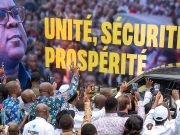






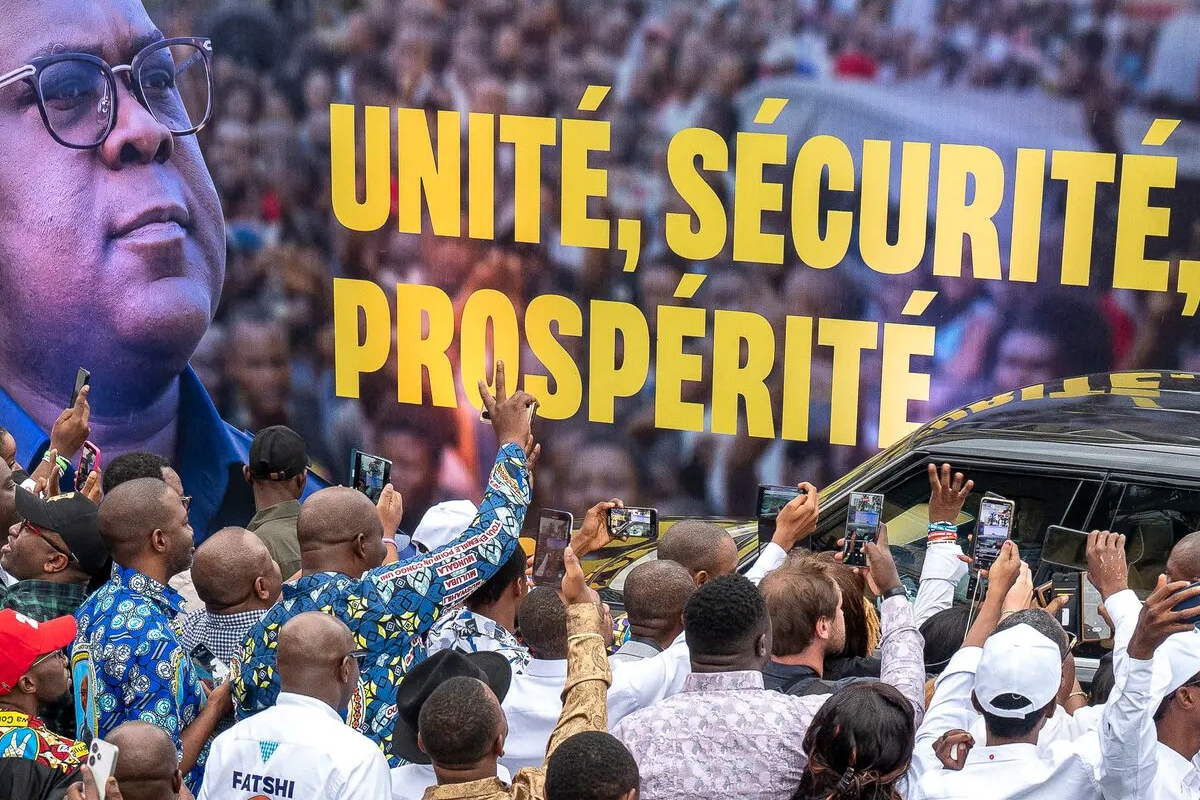
Félix Tshisekedi may have opened the door to a third term. Congo’s constitutional debate must now be about power for its people and not a reset button for its president.
The Democratic Republic of the Congo is not short of crises. It is not short of natural wealth. It is not short of citizens who have paid the price whenever power has become more important than principle.
What it cannot afford now is a constitutional debate designed around the political future of one man.
President Félix Tshisekedi’s second and final term under the current Constitution runs to 2028. Yet a new conversation has emerged in Kinshasa: constitutional reform, a referendum, a possible new constitutional order and, increasingly, the possibility that Tshisekedi could seek another presidential term under that new order.
That possibility must be confronted honestly.
Congo may indeed need constitutional reform. A country as vast, rich, wounded and structurally unequal as the DRC should never be afraid to examine whether its institutions are delivering justice, peace and development. But a constitution is not supposed to be a ladder for an incumbent president. It is supposed to be a contract that limits power, protects citizens and distributes national wealth fairly.
The question is therefore not simply whether Congo needs a new constitution.
The question is: Who would that new constitution serve?
Would it serve the mother in North Kivu whose children have grown up amid displacement and gunfire? Would it serve the mining communities whose soil produces minerals for the world, yet whose schools, clinics, roads and water systems remain broken? Would it serve the provinces that have constitutional autonomy on paper but too often wait for Kinshasa to release resources?
Or would it serve the political ambitions of the man currently occupying the presidency?
“If the People Want It, I Will Accept”
On 6 May 2026, during a press conference in Kinshasa, President Tshisekedi said he had not asked for a third term. Then he added words that changed the political temperature of the country:
“I have not asked for a third term, but if the people want me to have a third term, I will accept.”
It was not a formal declaration of candidacy. But neither was it a refusal.
A president who intends to leave office after the final term permitted by the Constitution does not need to leave such a door open. He can close it. He can say clearly that the Constitution is bigger than him, that alternation is healthy, and that the Congo must learn to build institutions that survive any individual.
Tshisekedi did not say that.
Instead, he suggested that popular desire could justify another term. But democracy is not simply whatever an incumbent can persuade a majority to approve in a referendum. Democracy also rests on constitutional restraints designed to protect the future from the appetite of the present.
The Congolese Constitution already speaks clearly. The presidency is a five-year mandate renewable only once. More importantly, the Constitution expressly protects the number and duration of presidential terms from amendment.
That safeguard exists for a reason.
It exists because African history has shown repeatedly that once leaders begin rewriting constitutional rules around themselves, the state slowly becomes weaker, the opposition becomes more fearful, and citizens become less certain that elections can ever produce real change.
The Campaign Is Already Underway
President Tshisekedi has argued that the calls by some supporters for constitutional change should be understood as part of ordinary democratic debate. That is a reasonable position in principle. Citizens and political parties are entitled to argue for reform.
But the political context matters.
On 20 June, the Action des Patriotes pour l’Émergence du Congo, or APEC, the political party associated with Mines Minister Louis Watum Kabamba, publicly declared its support for any action aimed at revising or changing the Constitution. The statement was made by the party’s acting national president at a political gathering in Lubumbashi.
The language was carefully framed around “the people,” the referendum and constitutional sovereignty. But it was also explicit in its political alignment: the party stated that it stood behind President Tshisekedi and would support constitutional revision or change.
That is precisely why many Congolese fear that constitutional reform is becoming an organised political project whose unstated destination is a third term.
The concern is not irrational.
A new constitution can be presented as the birth of a new republic. A new republic can then be used to argue that prior presidential mandates should not count. In that argument, Tshisekedi’s two current terms would be treated as belonging to an old constitutional order, while a new constitution would supposedly create a fresh political clock.
That is not merely a technical legal argument. It is a political strategy with consequences.
And it is the kind of strategy that has destabilised African countries before.
The Referendum Law and the Constitutional Shortcut
Parliament has now moved the country closer to a referendum pathway.
The National Assembly adopted the proposed referendum law in June. The Senate followed on 15 June, with all 89 senators present voting in favour. After a joint parliamentary process resolved differences between the two chambers, the final text was prepared for transmission to President Tshisekedi for promulgation.
Supporters say the law merely fills a legal gap. They argue that Article 5 of the Constitution already recognises the people’s right to exercise sovereignty through referendum and that Congo needs an updated legal framework for organising such votes.
That argument has merit. A democracy should have clear laws governing referendums.
But the details of the proposed law have created deep concern.
The reported text gives the President significant authority to initiate a referendum process. It also creates a route through which an “Assemblée constituante” could consider constitutional changes following a referendum on matters described as being of “fundamental importance to the life of the nation.”
That wording is dangerously broad.
A referendum on a matter of “fundamental importance” can sound harmless. Almost anything can be described that way: security, electoral reform, decentralisation, mineral governance, citizenship, institutions, territorial administration—or presidential eligibility.
The deeper legal problem is even clearer. A law passed by Parliament cannot outrank the Constitution. The Constitution itself provides a procedure for revision. It states who may initiate revision, how Parliament must approve it, when a referendum may be held, and what subjects are permanently protected from amendment.
The number and duration of presidential terms are among those protected subjects.
A referendum cannot become a magic eraser. A new constitution cannot become a legal costume that allows leaders to evade rules they swore to uphold.
If Congo wants to discuss constitutional renewal, it must do so transparently, peacefully and within the spirit of constitutionalism not through a process that looks like a workaround for Article 220.
Africa Has Seen This Film Before
The continent has watched leaders alter constitutions, reset clocks and appeal to “the people” in order to remain in office. The results have rarely strengthened democracy. More often, they have weakened institutions and postponed national problems.
Uganda: Removing Limits Did Not Build Stronger Democracy
In 2005, Uganda removed presidential term limits, allowing President Yoweri Museveni to seek office indefinitely. In 2017, Parliament also removed the presidential age limit.
The constitutional changes preserved one leader’s political future. They did not create a stronger culture of alternation. They did not make Ugandan institutions more independent. Instead, they entrenched the idea that constitutional limits are negotiable when they become inconvenient for those in power.
The deeper indictment is simple: years after the removal of term limits, a strong majority of Ugandans still say they want those limits restored.
A constitution changed to keep one leader in office does not settle a country’s democratic future. It merely delays the reckoning.
Guinea: A Third Term Ended in a Coup
In 2020, President Alpha Condé changed Guinea’s Constitution through a controversial referendum and then sought a third term.
His supporters spoke about a new constitutional order. His opponents called it a constitutional coup. Protests were deadly. Political divisions deepened. Less than a year after Condé began his disputed third term, he was removed in a military coup.
Guinea did not emerge stronger. Its institutions did not become more trusted. Its mineral wealth did not suddenly translate into justice for ordinary people.
The constitutional reset did not solve the country’s problems. It added a political crisis to them.
Republic of Congo: More Time Did Not Mean More Dignity
In neighbouring Republic of Congo, Denis Sassou Nguesso changed the Constitution in 2015, removing presidential term and age limits. He continued to rule.
Today, after decades in power, the country still faces deep poverty, weak public services, corruption allegations and a political environment in which opposition space remains severely constrained.
More time in office did not produce a stronger state. It produced a more permanent presidency.
That is the warning Congo must hear.
Constitutions designed to extend the life of an incumbent often produce political survival for leaders but no comparable improvement in the lives of citizens.
Congo’s Crisis Is Not a Shortage of Presidential Time
A third Tshisekedi term would not solve Congo’s deepest problems.
It would not automatically defeat armed groups in eastern Congo. It would not restore state authority in North Kivu, South Kivu or Ituri. It would not professionalise the Armed Forces of the DRC. It would not end the predatory relationship between political power, mineral wealth and local poverty.
It would not guarantee that a family in Walikale, Masisi, Kalehe, Uvira or Lubero sees meaningful benefit from the minerals beneath its land.
Congo’s problem is not that presidents have too little time.
Its problem is that the state is too often too centralised, too extractive, too weak in its protection of citizens and too distant from the communities whose labour and land sustain the country.
A third term would risk turning a national constitutional debate into a personalised struggle over one presidency. That would divide the country precisely when Congo needs a broad national consensus around security, accountability and development.
The danger is especially acute because the constitutional debate is taking place while eastern Congo remains under immense pressure. Citizens in conflict zones are not asking whether a president should receive additional years in office. They are asking whether the state can protect them, whether their children can go to school safely, whether soldiers serve the Republic, and whether mineral wealth will ever become public good.
No president should use national insecurity as an argument for extending personal political tenure.
Security failure must not become a constitutional reward.
The Constitutional Debate Congo Should Be Having
If Congo is to reform its Constitution, it should reform it around the lives of Congolese people.
That means debating structural changes that alter who holds power, who controls wealth and who can hold the state accountable.
1. A Constitution That Makes the Army Serve Citizens
Articles 187 and 188 of the Constitution describe the Armed Forces as republican, apolitical and subject to civilian authority. Those are powerful principles. But Congo needs to give them practical force.
A revised Constitution should establish a binding Civic Security Covenant requiring the armed forces to protect civilians, defend territorial integrity and remain outside commercial interests, especially mining.
The Constitution should explicitly prohibit serving military officers and senior security officials from owning, controlling or benefiting from mining companies, mining concessions or security contracts linked to extractive projects.
It should also require:
-
Independent auditing of defence spending;
-
Regular parliamentary review of military procurement;
-
Public reporting on civilian protection and human-rights compliance;
-
A professional promotion system based on merit, training and integrity;
-
An independent military inspectorate with power to investigate corruption and abuses;
-
Legal protection for whistleblowers inside the security services.
Congo cannot defeat insecurity with an army that citizens fear, commanders can exploit and politicians can personalise.
The Congolese soldier must become the protector of the miner, the farmer, the trader, the schoolchild and the displaced family—not another actor in the competition for mineral wealth.
2. A Constitutional Right for Mining Communities to Benefit
The Constitution already states that all Congolese have the right to enjoy national wealth and that the state must redistribute it equitably.
But that promise remains too general.
Congo’s mining framework already allocates shares of mining royalties to provinces, decentralised territorial entities, the national government and a fund for future generations. Yet administrative allocation is not the same thing as community power.
A community near a mine does not become empowered simply because money is sent to an office somewhere in its territory.
Congo should therefore adopt a new constitutional provision establishing a Host Community Benefit Right.
This provision should guarantee that communities directly affected by large-scale mining have an enforceable entitlement to a defined share of mining royalties. That money should flow into publicly audited Community Benefit Funds governed by elected local representatives, women, youth, customary authorities and civil-society organisations.
These funds should not finance political campaigns, elite allowances or opaque projects. They should finance visible local priorities:
-
Safe water;
-
Schools;
-
Health facilities;
-
Roads;
-
Environmental restoration;
-
Youth employment;
-
Local business development;
-
Compensation for displacement and pollution.
Every major mining licence should also require a public community compact. Before extraction begins, the company, province and affected community should agree publicly on jobs, environmental protections, resettlement terms, local procurement and community investment.
Congo should not abandon national sovereignty over minerals. But national sovereignty must finally mean something for the people living above the mineral deposits.
The world cannot build its green transition on Congolese cobalt, copper, gold and coltan while Congolese mining communities remain poor, displaced and unheard.
3. Real Decentralisation, Not Autonomy on Paper
The Constitution says provinces and decentralised entities have legal personality, local organs and autonomy over their resources. It also provides that 40 percent of national revenue allocated to provinces should be retained at source.
That is a serious constitutional promise.
But promises mean little when provinces remain fiscally dependent, politically vulnerable and administratively constrained by Kinshasa.
A genuine constitutional reform should make provincial financing automatic and enforceable. Provinces should not have to negotiate annually for money already guaranteed to them.
The Constitution should require:
-
Automatic, traceable and time-bound transfers to provinces;
-
A right for provinces to challenge withheld funds before the Constitutional Court;
-
Public digital tracking of transfers from Kinshasa to provinces, territories and local entities;
-
Stronger provincial authority over local development planning;
-
Greater provincial participation in mining agreements affecting their territories;
-
Judicial safeguards before a provincial assembly can be dissolved;
-
Protection against arbitrary interference by the central government.
Congo does not need fragmentation. It needs a stronger union built from stronger provinces.
Kinshasa cannot understand every local reality better than the people of Kivu, Katanga, Kasai, Ituri, Equateur or Tanganyika. The Congo will become more stable when citizens see government working not only at the centre, but where they live.
4. Turn Transparency Into a Constitutional Duty
Congo also needs constitutional reform that makes corruption harder to hide.
The Court of Auditors already has authority to oversee public finances. But its role should be strengthened through a constitutional duty requiring regular public disclosure of mining revenues, security spending, provincial transfers, beneficial ownership and major public contracts.
Every Congolese citizen should be able to know:
-
Which company holds a mining concession;
-
Who ultimately owns it;
-
What it pays;
-
What the state receives;
-
What the province receives;
-
What the host community receives;
-
How the money is spent.
A constitution should not merely declare that wealth belongs to the people. It should make theft from the people difficult.
The Test of Tshisekedi’s Good Faith
President Tshisekedi now faces a simple test.
If he believes Congo needs constitutional reform for the benefit of future generations, he should say plainly:
“I will not seek another presidential term under any new constitution adopted during or after my presidency.”
That one sentence would change the national debate.
It would remove the suspicion that constitutional reform is a private political project. It would force the country to discuss the real issues: security, mining justice, decentralisation, corruption, provincial autonomy and national dignity.
It would also protect Tshisekedi’s own legacy. A leader who voluntarily limits himself can become bigger than his term. A leader who rewrites the rules around himself risks being remembered as another African president who mistook personal continuity for national progress.
Congo needs constitutional renewal.
But Congo does not need a constitution built around Félix Tshisekedi.
It needs a constitution built around the Congolese people: the displaced mother in Goma, the farmer in Ituri, the miner in Lualaba, the trader in Bukavu, the student in Kinshasa and the child in Kivu whose land enriches the world.
Congo’s constitution must not become a ladder to another term.
It must become a covenant of power, wealth and dignity flowing downward—to the people.