











By David John | African Awakening
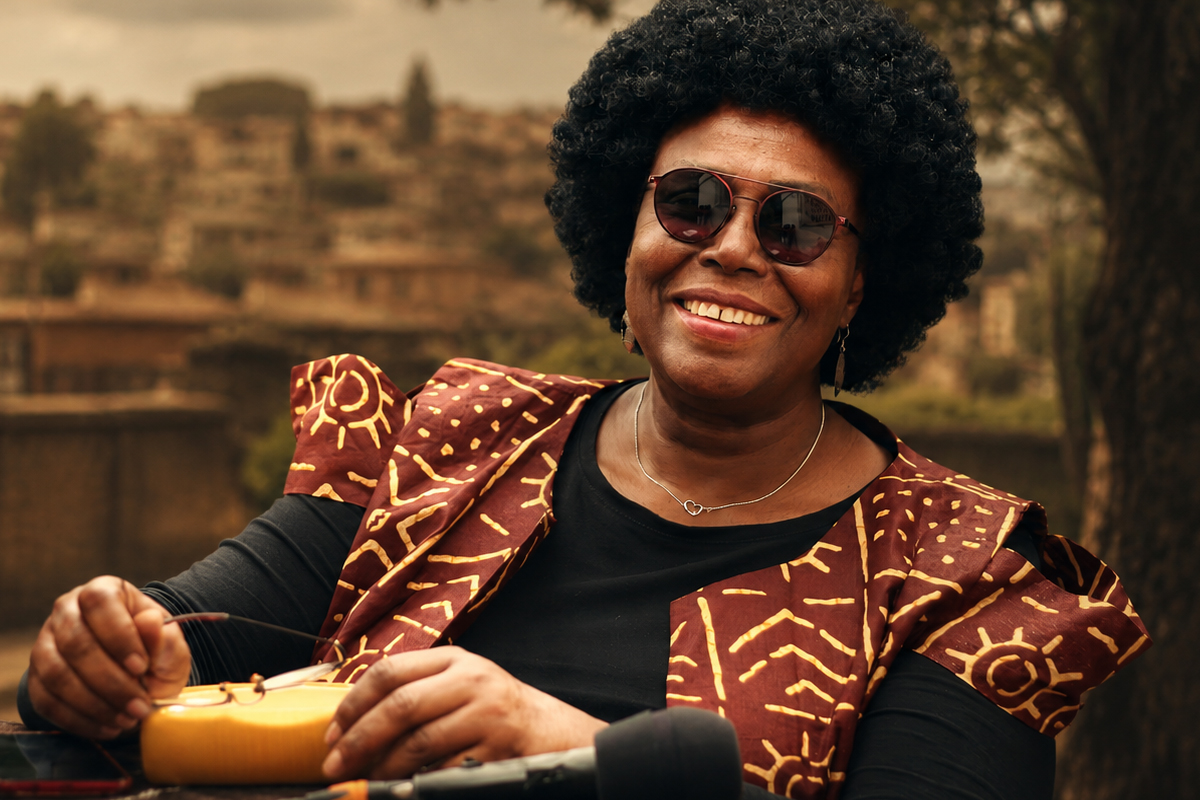
On 23 June 2026, a Tunisian appeals court upheld the eight-year prison sentence imposed on Saadia Mosbah, one of Tunisia’s most prominent Black human-rights defenders and a tireless campaigner against racism.
The state says Mosbah was convicted on financial-misconduct charges, including money laundering and illicit enrichment. Mosbah has denied wrongdoing. Her lawyers and leading human-rights organisations insist that the prosecution is unjust, disproportionate and inseparable from a wider campaign against Tunisian civil society organisations that defend migrants, refugees and Black citizens.
That is the heart of this story.
It is not merely about one woman in prison. It is about what happens when a country that once passed a landmark anti-racism law begins to treat those who expose racism as the problem.
Saadia Mosbah is not an outsider asking Tunisia to become something foreign. She is Tunisian. She is Black. She is African. And for more than a decade, she has insisted on a truth that too many people would rather avoid: Tunisia is part of Africa, Black Tunisians belong fully to Tunisia, and dignity cannot be rationed by skin colour.
A Sentence That Reaches Beyond One Woman
Mosbah was arrested in May 2024 amid a broader crackdown on organisations working with migrants and confronting discrimination. On 19 March 2026, the Tunis Court of First Instance sentenced her to eight years in prison, imposed a major fine, and handed prison terms to several of her colleagues at Mnemty, the anti-racism organisation she helped build.
Her appeal has now been rejected.
But the legal road may not be entirely closed.
Under Tunisia’s criminal procedure, a person convicted by a court of appeal may seek review before the Court of Cassation. This is not another full trial. It is a narrower legal challenge focused on whether the lower court lacked jurisdiction, exceeded its authority, violated the law, or applied it incorrectly. Tunisia’s Justice Ministry states that a cassation appeal in a criminal matter must generally be filed within ten days of the contested decision.
For Mosbah, this means the next possible domestic legal step is likely a cassation challenge. Her lawyers would need to identify errors in law or procedure rather than simply ask judges to reconsider the facts.
That legal avenue matters. But it is not enough to speak only in the cold language of procedure.
Mosbah has already spent roughly two years in detention. Human-rights groups have also raised serious concerns about allegations that she faced racist abuse and physical mistreatment while imprisoned. Those allegations deserve a prompt, independent and credible investigation. A country cannot prosecute a woman for defending human dignity while ignoring reports that her dignity has been violated behind prison walls.
The Woman Behind Mnemty
Saadia Mosbah’s life did not begin in courtrooms or prison cells.
She comes from a Tunis-based Mosbah family with roots linked to the southern region of Gabès and ancestral connections to Mali. Her family has long been associated with public voices challenging anti-Black prejudice in Tunisia. Her brother, Slah Mosbah, is a well-known musician, while her sister, Affet Mosbah, has also spoken publicly against racism.
Before becoming one of Tunisia’s most visible anti-racism activists, Saadia Mosbah worked for about three decades with Tunisair. After retirement, she gave much of her energy to the work that would define her public life: confronting racial discrimination that Tunisia had too often denied, minimised or buried beneath polite silence.
In 2013, after the revolution that toppled Zine el-Abidine Ben Ali, she helped found Mnemty, meaning “My Dream.” The name carried the moral echo of Martin Luther King Jr.’s declaration that justice requires not only anger at oppression, but a vision of a different society.
Mnemty became a space where Black Tunisians could name experiences that had long been made invisible: racist slurs, exclusion, humiliation, job discrimination, neighbourhood harassment, mistreatment in public spaces, and the constant pressure to explain that they are Tunisian in their own country.
Mosbah did not merely denounce racism. She helped turn it into a national question.
Her activism contributed to the public debate that helped produce Tunisia’s 2018 anti-racial-discrimination law. She also helped push Tunisia to establish 23 January as a national day commemorating the abolition of slavery.
That is why her imprisonment carries such a bitter irony.
A woman who helped Tunisia recognise racism is now being punished in a political climate where anti-Black rhetoric has been normalised again.
The Speech That Changed the Atmosphere
In February 2023, President Kais Saied delivered a statement that sent fear through migrant communities and Black Tunisian families alike.
He claimed that undocumented migrants from sub-Saharan Africa were part of a “criminal plan” to alter Tunisia’s demographic composition. He portrayed their presence as a threat to Tunisia’s Arab and Islamic identity and used language about “hordes” of migrants associated with violence, crime and disorder.
The statement triggered international outrage because it echoed the logic of the so-called “Great Replacement” conspiracy theory: the false idea that migration is an organised plot to erase a nation’s identity.
But the real danger was not merely rhetorical.
Words from a president do not remain words. They become permissions.
Following Saied’s remarks, rights organisations documented attacks, arbitrary arrests, evictions, job losses, harassment and violence targeting Black Africans in Tunisia. Migrants were driven from homes. Some lost work overnight. Others were pushed into hiding or toward dangerous border zones.
Black Tunisians were also caught in the storm.
Their citizenship did not always protect them from being profiled, questioned, insulted or assumed to be foreigners because of the colour of their skin. For a Black Tunisian, the demand to prove belonging can become a daily burden. You can carry a Tunisian identity card and still be treated as though your face requires an explanation.
This is what racism does. It turns appearance into suspicion. It turns Blackness into a border checkpoint.
Black Tunisians Are Not Migrants
One of the most damaging confusions in discussions about Tunisia is the tendency to merge Black Tunisian citizens with migrants from other African countries.
They are not the same.
Sub-Saharan migrants include students, workers, refugees, asylum seekers and people in transit from countries such as Mali, Côte d’Ivoire, Cameroon, Guinea, Sudan, Somalia and elsewhere. Their legal situations vary widely.
Black Tunisians are Tunisian citizens. Many were born in Tunisia. Their families have lived there for generations, in some cases for centuries.
Yet racism often collapses these distinctions.
A Black Tunisian may be treated as a migrant. A migrant may be treated as a criminal. A refugee may be treated as an invader. In each case, dark skin becomes the shortcut through which prejudice decides who belongs.
That is why Saadia Mosbah’s work mattered so deeply. She understood that anti-migrant hysteria does not stop neatly at the border of citizenship. It spreads through the social imagination. It makes all Black people vulnerable.
How Many Black Tunisians Are There?
The honest answer is that nobody knows precisely.
Tunisia does not collect comprehensive census data based on race or ethnicity. That absence makes it easier for the country to deny the scale of anti-Black racism, because what is not counted can be dismissed as marginal.
Estimates frequently cited by Black Tunisian activists and researchers place Black Tunisians at roughly 10 to 15 percent of the population. These figures should be treated carefully. They are not official census numbers, and the meaning of “Black” is itself shaped by history, culture and social perception.
Still, the estimate matters because it punctures a powerful myth: that Black people in Tunisia are a tiny, recent or foreign presence.
They are not.
Black Tunisians are one of the country’s largest minority communities. Their history is woven into Tunisia’s national story, even when that story has been edited to centre only Arabness, Mediterranean identity or proximity to Europe.
Tunisia’s African History Cannot Be Erased
Tunisia has always been in Africa. The Sahara has never been a wall separating North Africans from the rest of the continent. It has been a corridor of trade, culture, faith, migration, family ties and, tragically, exploitation.
Black communities in Tunisia emerged through multiple historical paths.
Some families trace their roots to migrations from West Africa, the Sahel and neighbouring regions. Some emerged from long-standing African communities in the south. Some have Amazigh roots. Others are descendants of people enslaved and brought into Tunisia through trans-Saharan networks.
Slavery was officially abolished in Tunisia in 1846, long before many other states moved against the institution. That achievement deserves recognition. But abolition did not erase the social hierarchy slavery created.
The stigma remained.
It survived in slurs. It survived in surnames connected to enslavement and emancipation. It survived in assumptions about status, work, beauty, marriage and belonging. It survived in the idea that Blackness must always be explained as foreign.
That is why reducing Black Tunisians only to descendants of enslaved people is also a form of erasure. It flattens a rich and complex African history into one wound.
Yes, slavery shaped Tunisia. But Black Tunisians are more than slavery’s descendants. They are citizens, workers, teachers, artists, parents, professionals, activists and inheritors of a much larger African story.
The Evidence of Structural Racism
Racism is not only a shouted insult. It is also a system of patterns.
It is visible when Black citizens report discrimination in employment and career advancement. It is visible when victims say police officers do not understand or properly apply anti-racism law. It is visible in underrepresentation in media, public life and political institutions. It is visible when Black children grow up in marginalised communities with weaker access to services and opportunity.
It is visible, too, in the daily humiliations that rarely become headlines: mockery on public transport, racist abuse from neighbours, workplace harassment, assumptions that Black Tunisians must be domestic workers, labourers or foreigners.
A United Nations anti-racism review in 2025 raised concerns about persistent discrimination against Black Tunisians in employment, public life and career progression. It also highlighted the enduring stigma attached to the legacy of slavery.
This is not simply a collection of isolated bad attitudes.
When a society repeatedly tells one community that it is less employable, less visible, less protected by police, less represented in public institutions and less entitled to dignity, that is structural racism.
Tunisia’s Law 50: A Historic Victory, an Incomplete Promise
In 2018, Tunisia passed Organic Law No. 50 on the elimination of all forms of racial discrimination. It was a historic achievement, the first law of its kind in the Middle East and North Africa.
The law criminalised racist discrimination, racist speech and incitement to hatred. It gave victims legal grounds to pursue redress. For activists such as Saadia Mosbah, it represented years of difficult organising finally translated into law.
But legislation is not liberation by itself.
A law can exist on paper while victims remain afraid to report abuse. A law can punish racism in theory while police officers fail to recognise racist offences. A law can promise justice while courts move slowly, institutions lack resources and public figures inflame prejudice.
The question is not whether Tunisia should be proud of Law 50. It should.
The question is whether Tunisia will enforce it with the courage that produced it.
A country cannot celebrate an anti-racism law while criminalising the people who fought to make it possible.
Saadia Mosbah’s Case Is Africa’s Test Too
Saadia Mosbah’s imprisonment is a Tunisian tragedy. But it is also a Pan-African warning.
For too long, Africa has been divided into false categories: Arab Africa and Black Africa, North Africa and sub-Saharan Africa, Mediterranean Africa and “real” Africa.
These categories have been used to weaken solidarity.
But the humiliation of a Black Tunisian woman defending African migrants is not somebody else’s problem. It is an African problem. The silence of African governments, institutions, journalists and citizens would not be neutrality. It would be abandonment.
Tunisia must protect the rights of Saadia Mosbah to pursue every available legal remedy, including a cassation challenge. It must investigate allegations of racist mistreatment in detention. It must ensure that anti-racism law is enforced not selectively, but seriously. And it must stop treating civil-society work as a crime simply because it embarrasses power.
African institutions must speak clearly. Human-rights bodies must monitor the case. African journalists must refuse lazy language that divides “North Africans” from “Africans.” Diaspora communities must amplify the names of people whose courage powerful institutions would prefer to erase.
And ordinary people must remember a simple truth:
No African country becomes stronger by making Blackness a suspicion.
No nation protects its identity by humiliating its own citizens.
No government earns respect by imprisoning those who insist that the dignity of African people is not negotiable.
Saadia Mosbah may be behind prison walls today. But the ideas she has spent her life defending cannot be locked away.
Tunisia is African.
Black Tunisians belong.
And the Sahara is not the border of African humanity.