






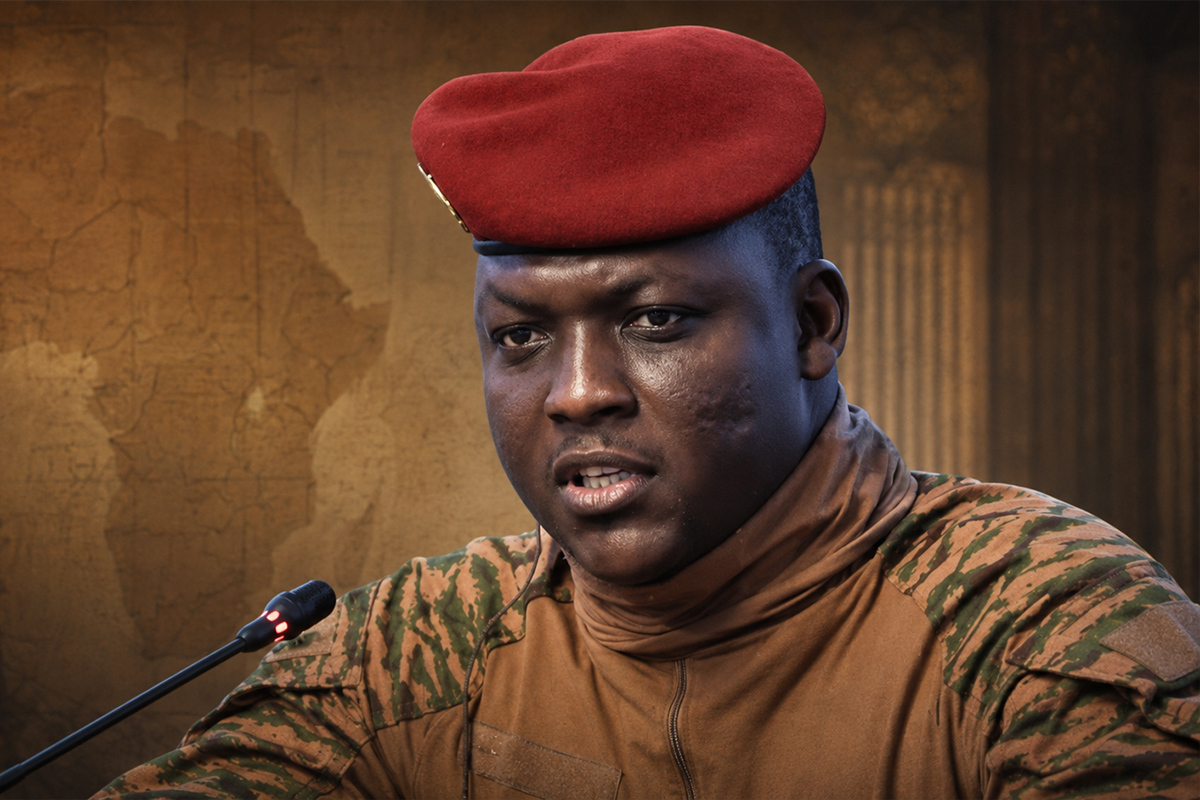
From Strasbourg to Ouagadougou, a European Parliament vote has opened a larger argument about sovereignty, security and who gets to judge Africa
On the morning of 22 June 2026, Burkina Faso’s Foreign Minister, Karamoko Jean Marie Traoré, summoned Philippe Bronchain, Head of the European Union Delegation in Ouagadougou, to deliver a message of outrage.
The immediate trigger was a resolution adopted four days earlier by the European Parliament in Strasbourg, France, titled “The continued crackdown on civic space and fundamental freedoms in Burkina Faso.” But the confrontation was about far more than one parliamentary vote.
For Minister Traoré, the resolution—and the speech by French Member of the European Parliament Christophe Gomart, a former military officer—was not an expression of principled concern. It was an act of condescension. He accused Gomart of speaking from inaccurate information, of commenting on a country he had not visited, and of ignoring the role of NATO in the destruction of Libya and the instability that subsequently flowed across the Sahel.
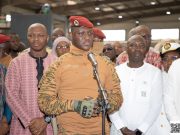
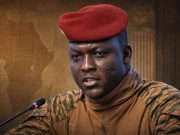
The government led by Captain Ibrahim Traoré sees Burkina Faso’s security struggle as inseparable from the wider battle being fought with Mali and Niger. Alongside Mali’s leader, Assimi Goïta, and Niger’s leader, Abdourahamane Tiani, Captain Traoré has positioned Burkina Faso within the Confederation of Sahel States, better known as the Alliance of Sahel States, or AES.
To Ouagadougou, Brussels cannot discuss the crisis in Burkina Faso while pretending that Europe’s own military, political and economic interventions in Africa never happened.
Yet the European Parliament’s resolution should not be dismissed as mere rhetoric either. It does not impose sanctions. It does not make law in Burkina Faso. It cannot order Captain Ibrahim Traoré’s government to change its domestic policy. But it can shape the political weather in Brussels, influence funding priorities, frame future EU debates and slowly alter how European institutions deal with Burkina Faso.
That is why this resolution matters.
What exactly happened in Strasbourg?
Between 15 and 18 June 2026, the European Parliament met in Strasbourg for one of its regular plenary sessions. On 18 June, Members of the European Parliament adopted the Burkina Faso resolution by 476 votes in favour, 11 against and 75 abstentions.
The text called on Burkina Faso’s authorities to protect freedom of association, assembly and expression. It urged the lifting of restrictions on journalists and media institutions, demanded investigations into allegations of abuses, criticised arbitrary detention and enforced disappearances, and called on Burkina Faso to reverse its decision to withdraw from the International Criminal Court in The Hague.
The resolution also raised concern about the growing influence of Russia in Burkina Faso following the departure of European military forces. It urged the European Union to deepen support for civil-society groups and humanitarian organisations working in the country.
Christophe Gomart’s intervention became the lightning rod for Burkina Faso’s anger. In response, Karamoko Jean Marie Traoré argued that the European Parliament was speaking about insecurity in the Sahel while ignoring the destabilising aftermath of NATO’s intervention in Libya in 2011.
That clash is important because it exposes two sharply different narratives.
From Strasbourg, the issue is civic space, democratic freedoms, media restrictions, accountability and human rights.
From Ouagadougou, the issue is sovereignty, historical double standards, foreign interference and Europe’s refusal to reckon with its own role in the Sahel’s destabilisation.
Both narratives now sit at the centre of Burkina Faso’s relationship with the European Union.
A political resolution, not a legal command
The first point must be made plainly: the European Parliament resolution is not legally binding on Burkina Faso.
The European Parliament cannot legislate for Ouagadougou. It cannot overrule Burkina Faso’s government, courts, constitution, military command or domestic-security policy. Nor can it, by passing one resolution, automatically cut off EU funding, impose visa bans, freeze assets or suspend diplomatic relations.
Those powers lie elsewhere.
Sanctions, for example, must be adopted by the Council of the European Union, where the governments of EU member states act unanimously. Development programmes, humanitarian funding, trade arrangements and security partnerships involve the European Commission, the European External Action Service, EU member states and the Council.
The European Parliament nevertheless matters because it is not a decorative institution. It shares power over the European Union’s budget, participates in legislation affecting trade, development and humanitarian assistance, and must give consent to many international agreements.
In other words, the resolution cannot command Burkina Faso. But it can pressure Brussels.
It becomes part of the official political record of the European Union. It gives MEPs, civil-society organisations, journalists, diplomats and policy advocates a formal document to cite when they ask why the European Commission, led by Ursula von der Leyen, or the European External Action Service, led by Kaja Kallas, should continue certain forms of cooperation with Burkina Faso.
That is the resolution’s real power.
Can the resolution shape future EU decisions on Burkina Faso?
Yes—but indirectly.
A resolution passed in Strasbourg does not create an automatic chain leading to sanctions or isolation. There is no conveyor belt from parliamentary criticism to punishment.
However, it can influence future decisions in Brussels in several ways.
First, it can deepen scrutiny of Burkina Faso inside the European Parliament’s foreign-affairs, human-rights and development-policy discussions. MEPs can call hearings, question EU officials, request reports and demand explanations from the European Commission and the European External Action Service.
Second, it can influence the way EU institutions frame future cooperation with Burkina Faso. When security, migration, humanitarian relief, development support or human-rights programming is discussed, the resolution can become a reference point.
Third, it can shape the political language used by EU diplomats. Officials working under Kaja Kallas may feel greater pressure to raise civic freedoms, media restrictions, detentions and humanitarian concerns in their dealings with Ouagadougou.
Fourth, it can influence the European Parliament’s approach to budgets. Parliament cannot directly control every euro spent in Burkina Faso, but it has genuine influence over the wider architecture of EU external spending.
The resolution is therefore not a hammer. It is a pressure system.
And pressure systems often grow stronger when they are repeated.
If future European Parliament debates, EU human-rights reports, civil-society findings and diplomatic statements echo the same concerns, Burkina Faso may find that a single resolution becomes part of a larger international narrative about its governance, security policy and strategic direction.
Could it affect funding and partnerships?
Not immediately. But potentially, yes.
The most likely short-term shift is not a dramatic suspension of all European assistance. The European Union has major humanitarian, development and civil-society interests in the Sahel, particularly in areas affected by displacement, food insecurity and violence.
What may change is the route through which support is delivered.
Rather than funding state institutions directly, the European Commission may increasingly prefer to channel assistance through humanitarian organisations, local civil-society groups, multilateral agencies and community-based programmes. That approach would reflect the resolution’s emphasis on civic space and humanitarian actors.
For Burkina Faso, this could create a difficult paradox.
European money may still enter the country, but the government in Ouagadougou may have less influence over how some of it is distributed. The state could interpret this as a political bypass—an attempt by Brussels to strengthen independent actors while weakening direct government-to-government cooperation.
That concern would fit comfortably into the sovereignty argument advanced by Karamoko Jean Marie Traoré.
But from Brussels, the argument would be different. EU institutions may say that support for humanitarian actors, journalists, rights defenders and community organisations is necessary precisely because public institutions and civic space are under pressure.
The struggle, then, is not simply over money.
It is over who speaks for Burkina Faso, who receives international support and who decides what accountability should look like.
What the resolution does not do
The resolution does not automatically impose sanctions on Captain Ibrahim Traoré, Karamoko Jean Marie Traoré, Christophe Gomart’s critics or any Burkinabè institution.
It does not remove Burkina Faso from international partnerships.
It does not compel the European Commission to end cooperation.
It does not authorise military intervention.
And it does not give the European Parliament any direct authority over the people of Burkina Faso.
That distinction should matter to both supporters and critics of the resolution.
Those who portray it as a European takeover of Burkina Faso are overstating its legal force.
Those who portray it as an empty gesture are understating its political influence.
The truth lies in between: it is non-binding, but it is not inconsequential.
Burkina Faso’s short-term risks
In the short term, the main consequences are likely to be diplomatic.
The meeting between Karamoko Jean Marie Traoré and Philippe Bronchain has already shown that Ouagadougou is prepared to publicly confront European institutions when it believes Burkina Faso’s sovereignty has been insulted.
The resolution may therefore lead to:
-
tougher diplomatic exchanges between the Government of Burkina Faso and the European Union Delegation in Ouagadougou;
-
more visible friction between Burkina Faso and EU institutions in Brussels and Strasbourg;
-
increased European scrutiny of civic space, media freedom and security operations;
-
stronger EU support for non-state humanitarian and civil-society actors;
-
more aggressive public messaging by Burkina Faso, Mali and Niger around sovereignty and foreign interference.
This political confrontation will also strengthen the wider AES narrative: that the Sahel must not allow its security agenda to be dictated from Paris, Brussels, Washington or any other foreign capital.
The longer-term stakes: reputation, investment and strategic realignment
The long-term implications may prove more consequential.
If the European Parliament’s concerns are reinforced by further reports, future resolutions or action by EU member states, Burkina Faso could face a gradual decline in political confidence among European partners.
That could affect development cooperation, security engagement, investment perceptions and diplomatic access.
European investors do not necessarily follow European Parliament resolutions line by line. But they pay attention to political risk, reputational concerns, sanctions discussions, security instability and the durability of partnerships. A country repeatedly framed in Brussels as hostile to civic freedoms or deeply exposed to conflict may become harder to sell as a long-term investment destination.
Burkina Faso may respond by intensifying its strategic turn toward alternative partners. Russia, China, Türkiye, the Gulf states and other non-Western actors may become even more important in mining, security, infrastructure, agriculture and diplomacy.
That would not be a sudden break. It would be an acceleration of a realignment that is already underway across the Sahel.
But Burkina Faso could also choose another path: demand a more equal relationship with Europe while maintaining channels of dialogue. It could insist that European institutions confront the legacy of Libya and neocolonialism, while still allowing legitimate questions about civic freedom, justice and citizen rights to be debated openly.
That would require maturity from both Ouagadougou and Brussels.
Does the African Union have an equivalent?
Yes, though not in one single institution.
The African Union, headquartered in Addis Ababa, Ethiopia, has several bodies that can issue resolutions, decisions, communiqués, findings and recommendations on governance, security, human rights and unconstitutional changes of government.
The key difference is that Africa’s mechanisms are spread across different institutions.
At the African Union Commission in Addis Ababa, the current Chairperson is Mahmoud Ali Youssouf of Djibouti. Within the Commission, Ambassador Bankole Adeoye of Nigeria heads the Department of Political Affairs, Peace and Security.
The most powerful AU body on security matters is the Peace and Security Council, also based in Addis Ababa. It has 15 member states and can issue communiqués, make decisions, recommend sanctions in cases of unconstitutional changes of government and coordinate peace and security responses across the continent.
The Pan-African Parliament, located in Midrand, South Africa, also passes resolutions and recommendations. Its current President is Fateh Boutbig. The Parliament provides a continental political platform, but it does not yet possess the same direct legislative force or budgetary influence as the European Parliament.
Then there is the African Commission on Human and Peoples’ Rights, whose secretariat is based in Banjul, The Gambia. It is currently chaired by Commissioner Idrissa Sow. The Commission can adopt resolutions, receive complaints, investigate rights concerns and make recommendations under the African Charter on Human and Peoples’ Rights.
The African Court on Human and Peoples’ Rights, based in Arusha, Tanzania, adds another layer to Africa’s accountability architecture.
So, yes: Africa has institutions capable of challenging African governments on human rights, democracy, security and constitutional order.
But Africa’s problem has never been the complete absence of institutions.
The problem has been uneven enforcement, inadequate funding, political hesitation and the difficulty of making continental decisions bite when powerful member states refuse to cooperate.
Does the Alliance of Sahel States have an equivalent?
Not yet in the same sense.
The AES began with the Liptako-Gourma Charter, signed on 16 September 2023 by Burkina Faso, Mali and Niger. Its central purpose was collective defence and mutual assistance.
On 6 July 2024, at the first AES summit in Niamey, Niger, the three governments elevated the alliance into the Confederation of Sahel States.
Its first pillars were clear: defence, diplomacy and development.
This is very different from the founding logic of the European Parliament or the African Commission on Human and Peoples’ Rights. The AES was not initially designed as an independent human-rights watchdog. It was created as a security and sovereignty project.
That said, the AES is developing parliamentary channels.
On 23 December 2025, in Bamako, Mali, the AES member states signed protocols relating to confederal parliamentary sessions. In May 2026, Burkina Faso’s Legislative Assembly of the People, led by Dr Ousmane Bougouma, approved legislation authorising ratification of those protocols.
The parliamentary structures of the three AES states have also begun holding joint consultations. Burkina Faso’s Legislative Assembly of the People, Mali’s National Transitional Council, and Niger’s Consultative Council for Refoundation are attempting to create a confederal parliamentary framework.
But that emerging structure is not yet equivalent to the European Parliament.
It is not a fully independent, directly elected regional legislature with established procedures for issuing country-specific resolutions against member governments. Nor does the AES currently have a human-rights commission equivalent to the African Commission in Banjul or a regional court comparable to the African Court in Arusha.
The AES does, however, issue political communiqués.
In March 2026, the Confederation of Sahel States publicly condemned another European Parliament resolution concerning the detention of former Nigerien President Mohamed Bazoum, describing it as unjust and interference in the internal affairs of a sovereign state.
That tells us something important.
The AES has developed a collective political voice. It can reject external criticism. It can coordinate diplomatic responses. It can defend the sovereignty of Burkina Faso, Mali and Niger.
What it has not yet built is a robust, independent internal mechanism through which Sahelian citizens can challenge their own governments at the confederal level.
Africa’s unfinished institutional task
Burkina Faso is right to insist that Europe does not have a monopoly on morality.
The governments of France, Britain and other NATO states cannot speak about the Sahel without confronting the consequences of Libya’s collapse. European institutions cannot condemn African restrictions on sovereignty while ignoring the long history of economic, military and political interference that has shaped African insecurity.
But sovereignty must mean more than the right of governments to reject criticism from abroad.
It must also mean the right of African citizens to speak freely, organise, question power, demand accountability and seek justice without fear.
That is why the debate between Ouagadougou and Strasbourg should not end with slogans.
The deeper question is whether Africa can strengthen institutions in Addis Ababa, Banjul, Arusha, Midrand, Bamako, Niamey and Ouagadougou that are credible enough to defend sovereignty from external interference while also protecting citizens from unchecked power at home.
That is the challenge before Mahmoud Ali Youssouf’s African Union.
That is the challenge before Fateh Boutbig’s Pan-African Parliament.
That is the challenge before Idrissa Sow’s African Commission on Human and Peoples’ Rights.
And, increasingly, that is the challenge before Captain Ibrahim Traoré, Assimi Goïta and Abdourahamane Tiani as they seek to turn the Alliance of Sahel States from a declaration of defiance into a durable African institution.