









Why M23’s Warning Should Terrify the Global Economy
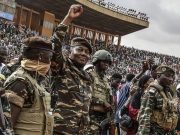
“Uvira est tombée. Nous mettons le cap sur le Katanga.”
That was the message attributed to M23 after they captured Uvira, a strategic town hugging Lake Tanganyika. To many Congolese, it sounded like just another threat in a war that has never really ended. To the global economy, however, it should have landed like a fire alarm.
Because Katanga is not just another Congolese region. Katanga is the engine room of the modern world.
If Eastern Congo is where wars are fought, Katanga is where the world’s future is manufactured. And if armed conflict ever seriously disrupts Katanga’s industrial mining belt, the shockwaves will not stop at Congo’s borders. They will hit electric vehicle supply chains, energy transitions, global manufacturing, and geopolitical balances of power.
This is why M23’s words matter. This is why the urgency must be understood now.
Katanga: Congo’s Industrial Heartbeat
Katanga was split into four regions: Lualaba, Haut-Katanga, Haut-Lomami and Tanganyika. These four are the most mineral-rich regions in the Democratic Republic of Congo, not in theory, but in scale, depth, and strategic consequence.
This is where the world’s cobalt comes from.
This is where some of the richest copper deposits on Earth sit beneath the soil.
This is where uranium once powered the atomic age.
This is where lithium, manganese, zinc and silver are increasingly being contested.
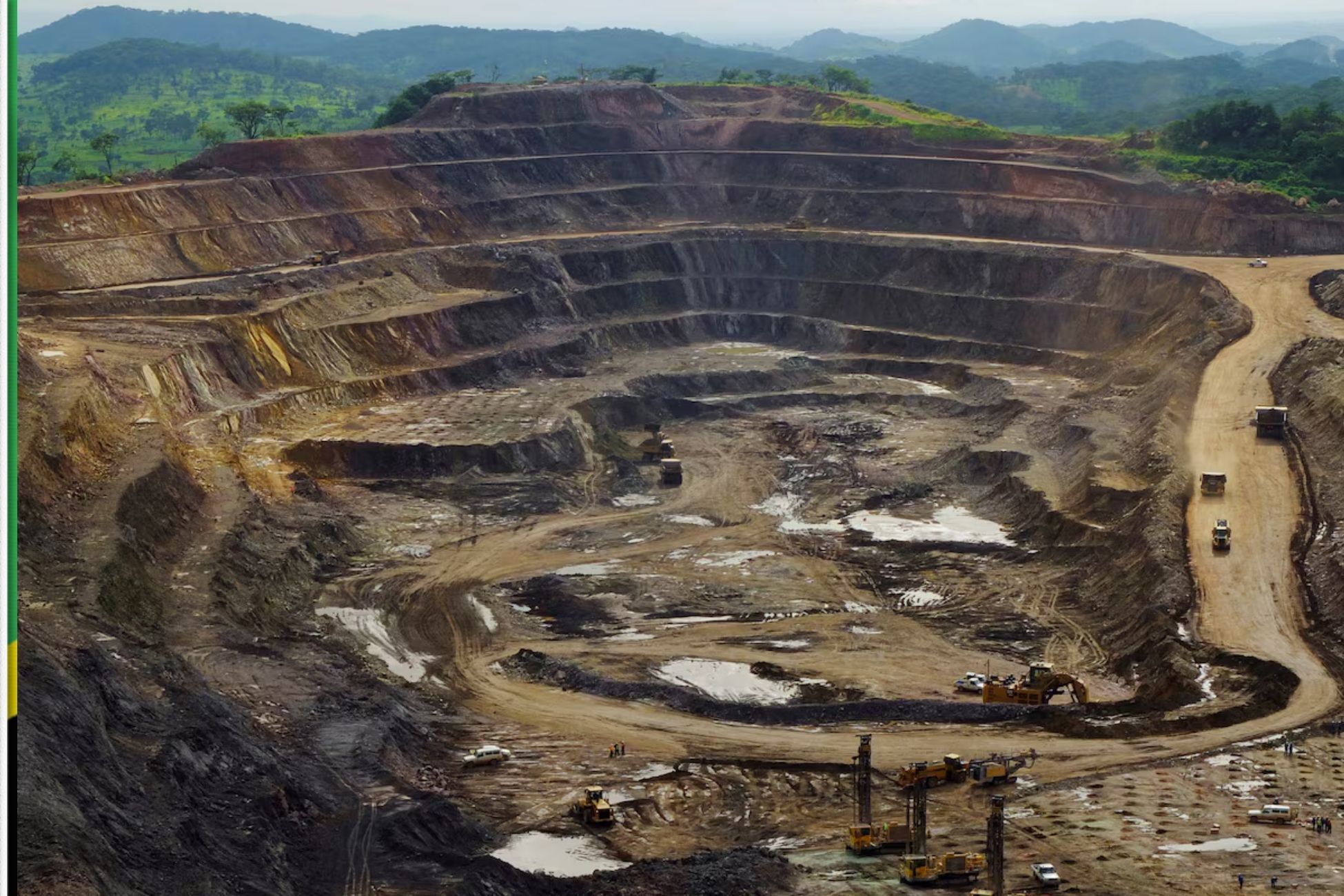
Katanga is not about artisanal pits and sacks carried on backs across borders. That’s what Eastern Congo thrives in. Katanga is about open-pit mega-mines, billion-dollar concessions, rail corridors, smelters, refineries, and long-term global contracts.
In simple terms: Katanga feeds the world’s machines.
And that is precisely why foreign interests are deeply embedded here.
China: The Gravity Center of Katanga’s Minerals
If one country has its hands deepest in Katanga’s subsoil, it is China.
Chinese firms dominate cobalt extraction in the DRC and sit at the center of the copper-cobalt belt that runs through Kolwezi, Likasi and Tenke. Major mines that once symbolized Western dominance have quietly shifted ownership, stakes, or operational control to Chinese companies.
But China’s real power is not just in mining. It is in what comes next.
Most Congolese cobalt does not become batteries in Congo. It leaves the country as concentrate, heads east, and is refined in China. By the time cobalt re-enters global markets, it does so as a Chinese-controlled product that feeds electric vehicles, smartphones, military technologies, and renewable energy systems.
This means that any disruption in Katanga is not simply a Congolese crisis. It is a China-global supply chain crisis.
That is why Katanga must never burn, from Beijing’s perspective.
Switzerland: Trading Power Without Flags
While China digs and refines, Switzerland trades.
Swiss-based commodity giants, most notably Glencore, remain central actors in Katanga’s mineral economy. They do not need armies or embassies. Their power lies in contracts, logistics, shipping, pricing mechanisms, and access to markets.
Swiss traders connect Congolese minerals to European industries, global exchanges, and financial markets. They often operate through joint ventures with Gécamines, the Congolese state mining company, embedding themselves directly into the state’s mineral architecture.
This is a quieter form of power. No speeches. No slogans. Just leverage.
And it explains why instability in Katanga triggers concern not only in Beijing, but also in Geneva, New York, and London.
The United States: Late, But Alarmed
For years, the United States watched Katanga from a distance, comfortable with the idea that Congo’s minerals would somehow remain accessible.
That comfort is gone.
Washington now openly recognizes that losing cobalt, copper and lithium supply chains to China is a strategic failure. Recent US engagement with the DRC, whether through infrastructure financing, security cooperation, or talk of preferential access to critical minerals, is not charity. It is damage control.
The fear in Washington is not M23 per se.
It is the idea that prolonged instability could further entrench Chinese dominance or force emergency rerouting of supply chains at enormous cost.
Katanga is now part of America’s energy security calculus.
Why Eastern Congo Burns and Katanga Must Not
To understand the urgency, one must grasp the distinction between Eastern Congo and Katanga.
Eastern Congo’s minerals, including gold, coltan, cassiterite, tungsten, are valuable because they are portable. They fit in pockets and sacks. They cross borders quietly. They finance militias quickly. This is why North Kivu, South Kivu and Ituri are perpetually at war.
Katanga is different.
You cannot smuggle an open-pit copper mine.
You cannot hide a cobalt processing plant in the forest.
You cannot run industrial mining under chaos for long.
Katanga requires stability. Roads. Rail. Power. Order.
This is why, historically, Congo’s wars orbit Katanga but rarely consume it.
And this is why M23’s statement changes the tone.
“Setting Sights on Katanga”: What That Really Signals
When M23 says it has its sights on Katanga, it is unlikely to mean tanks rolling into Kolwezi tomorrow. What it signals instead is escalatory ambition.
It tells foreign powers that Eastern Congo is no longer a contained crisis.
It tells mining companies that the firewall between war zones and industrial zones may be thinning.
It tells global markets that the unthinkable must now be modeled.
Even the perception of risk in Katanga can affect prices, insurance, contracts, and investment flows.
In a world already rattled by wars in Ukraine and the Middle East, Katanga represents one of the last stable anchors of the global energy transition. Touch it, and the entire system trembles.
Congo’s Tragedy: Wealth Without Sovereignty
Here lies the deepest tragedy.
Katanga’s minerals are globally strategic, yet Congolese sovereignty over them remains fragile. Decisions about extraction, refining, pricing and security are too often shaped in Beijing, Washington, Geneva, Dubai, or Kigali. Not Kinshasa, and certainly not Kolwezi.
The Congolese people bear the environmental costs.
Foreign powers capture the strategic value.
Armed groups exploit the gaps.
This is the political economy that makes a sentence like “Uvira has fallen, Katanga is next” echo far beyond South Kivu.
The Urgent Question the World Avoids
The real question is not whether Katanga is mineral-rich.
That is settled.
The question is this: Who is prepared to let Katanga burn, and who cannot afford to?
Because if the industrial heart of Congo ever becomes a battlefield, the global economy will discover that Africa’s wars are never just African.
They are global.
They are systemic.
And they are already knocking on Katanga’s door.
We must take unprecedented, innovative, pragmatic and revolutionary action to stop them.