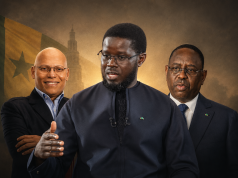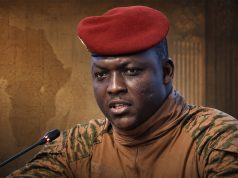
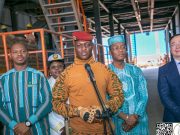

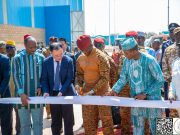










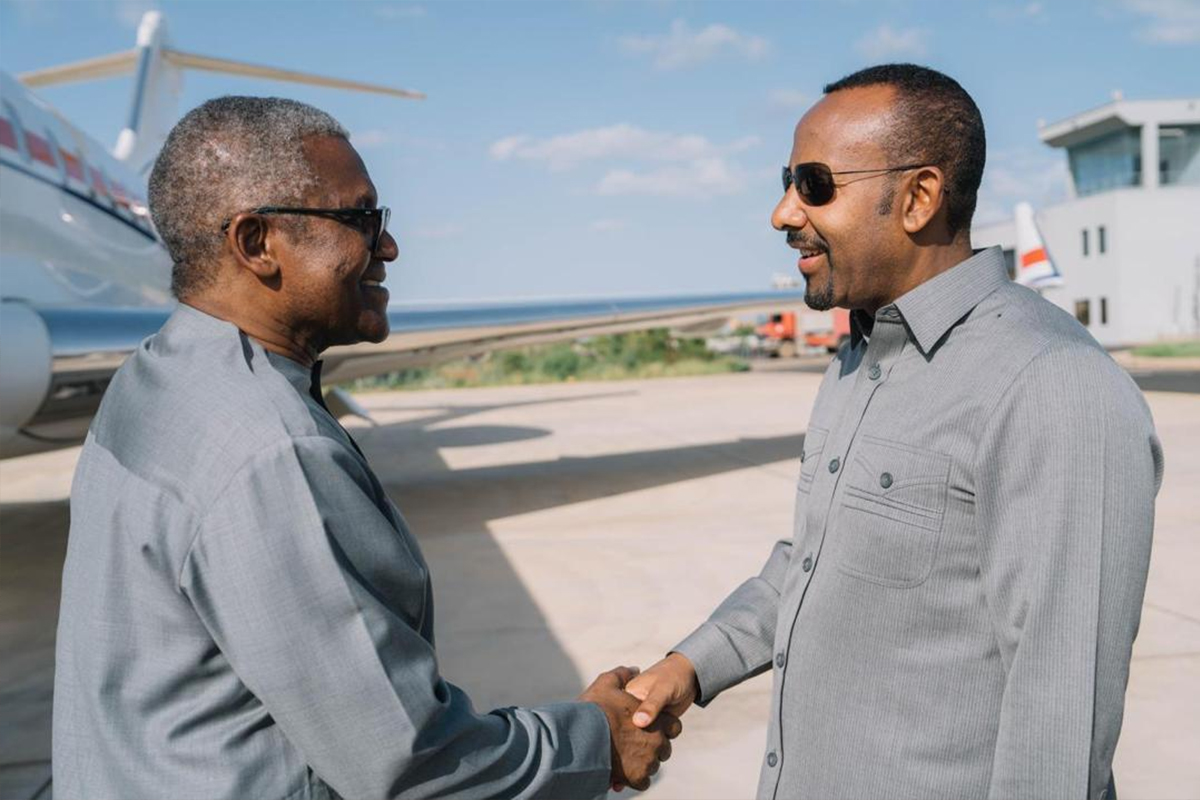
The image is simple, almost ordinary.
A plane lands at Addis Ababa Bole International Airport. Doors open. Protocol begins. Handshakes are exchanged. Cameras move closer. Officials smile with the practiced discipline of diplomacy.
But sometimes history does not arrive shouting. Sometimes it arrives through airport choreography.
In the space of one week, Ethiopia received two very different visitors. On Wednesday, May 13, 2026, French President Emmanuel Macron landed in Addis Ababa, where he was received by Prime Minister Abiy Ahmed before meetings involving the African Union, the United Nations, and questions of global governance. During that visit, a financing agreement worth about $63.9 million was announced for Ethiopia’s green energy and digitalization programme.
A few days later, Aliko Dangote, Africa’s richest businessman, arrived in Ethiopia amid announcements that his group’s investment in the country would rise dramatically, with reports placing the commitment at over $4 billion, including major fertilizer, power, pipeline, and industrial projects.
On the surface, these were routine high-level arrivals.
But beneath the surface, Addis Ababa had staged a quiet political drama.
One man arrived representing the old grammar of Africa’s development: loans, summits, diplomatic language, external financing, and European approval. The other arrived representing a more difficult but more necessary grammar: African capital, African industrial ambition, African production, and African risk-taking.
One arrival said: we can help you develop.
The other arrival said: we can build with you.
And that distinction is not small. It is civilizational.
The Airport as a Theatre of History
Airports are not neutral spaces. They are modern gates of sovereignty. They are where nations perform dignity before the world. Flags are arranged. Guards stand still. Red carpets are unrolled. Cameras capture who waits for whom, who bows slightly, who walks ahead, who speaks first, who is escorted, who is celebrated, who is tolerated.
That is why Bole International Airport matters.
This was not just any airport. This was Addis Ababa, the diplomatic capital of Africa, the home of the African Union, the city that still carries the memory of Adwa, the battlefield where Ethiopia defeated imperial Italy in 1896 and permanently wounded the mythology of white invincibility. It was Ethiopia, one of the few African countries that did not pass through the ordinary machinery of European colonial rule.
And yet even in Ethiopia, the old global order still arrives with paperwork.
A loan agreement.
A development package.
A financing framework.
The language is polite. The structure is familiar. The psychology is ancient.
Because the modern loan is not merely a financial instrument. In Africa, it often arrives carrying an older memory: the missionary school, the colonial administrator, the structural adjustment officer, the foreign consultant, the ambassador who speaks softly but sits at the head of the table.
This does not mean every loan is evil. That would be lazy thinking. Development finance can build roads, power stations, schools, hospitals, digital infrastructure. African states often need capital, and partnerships can be useful.
But the question is not whether money is useful.
The deeper question is: what kind of relationship does the money create?
Does it create capacity or dependency?
Does it expand sovereignty or quietly mortgage it?
Does it build African productive power, or does it merely keep African governments moving from one financing ceremony to another, applauding their own managed insufficiency?
This is why the contrast with Dangote is so striking.
Dangote did not arrive as a donor. He did not arrive as the representative of a former colonial power. He arrived as an African industrialist seeking to produce fertilizer, power, infrastructure, and supply chains inside Africa. His Ethiopia fertilizer project is a major industrial venture in Gode, designed to strengthen agricultural output and reduce import dependence. Dangote is building a $2.5 billion nitrogen fertilizer plant. He has boosted this to additional investment worth over $4 billion.
That is not charity.
That is not pity.
That is not a seminar.
That is production.
The Loan and the Factory
The difference between a loan and a factory is the difference between an oxygen cylinder and healthy lungs.
A loan can help you breathe today.
A factory helps you breathe today, tomorrow and the day after tomorrow.
A loan can patch a shortage.
A factory changes the architecture of shortage itself.
Africa has lived too long inside the politics of oxygen tanks. Every crisis is answered with a new facility, a new agreement, a new donor conference, a new pledge, a new delegation, a new report. And because the immediate need is real, the arrangement becomes morally difficult to criticize. How do you criticize financing for green energy? How do you criticize money for digitalization? How do you criticize partnership when people need roads, power, jobs, irrigation, broadband, and electricity?
You criticize it not because help is always wrong.
You criticize it because a continent cannot borrow its way into dignity if it refuses to produce its way into power.
That is the deeper lesson of the two arrivals.
Macron’s visit came wrapped in the language of global reform. He spoke about Africa’s place in international governance and the need for a more inclusive global order. Those are valid issues. Africa’s exclusion from permanent power in the United Nations Security Council is a structural insult to the modern world. But here is the problem: Europe has mastered the art of speaking about African inclusion while preserving African dependency.
Africa is invited into conversations about reform.
Africa is applauded for its demographic future.
Africa is praised for its youth.
Africa is described as a partner.
And yet, in the material structure of the global economy, Africa is still too often positioned as a borrower, supplier, consumer, security problem, migration threat, carbon sink, mineral warehouse, or diplomatic constituency.
The words change faster than the system.
That is why the Dangote arrival matters. Not because Dangote is a saint. He is a businessman, not a prophet. His investments must be scrutinized. His projects must respect workers, communities, land, environmental standards, and fair competition. African capital can also exploit Africa. We must never replace foreign dependency with local oligarchy and call it liberation.
But still, the substance and symbolism matters.
Because an African billionaire investing billions in African production challenges the old psychological order. It says Africa is not merely a destination for aid. Africa is a source of capital. Africa is not merely a patient. Africa can be a surgeon. Africa is not merely the site of development. Africa can be the author of development.
That is the mental revolution.
Ethiopia and the Moral Background of the Dam
The setting becomes even more powerful when we remember Ethiopia’s Grand Ethiopian Renaissance Dam.
The GERD is a national statement poured across the Blue Nile.
Construction began in 2011. The project has been largely financed through Ethiopian domestic sources, including public contributions and state financing. The dam is Africa’s largest hydroelectric project, with a capacity of over 5,000 megawatts and a reservoir holding about 74 billion cubic meters of water.
That matters because Ethiopia did something psychologically dangerous to the old world order.
It built something enormous without asking for permission in the expected tone.
It mobilized national sacrifice.
It turned development into civic identity.
It told ordinary Ethiopians that sovereignty is not an abstract flag, but a dam, a turbine, a power line, a future.
That is why GERD has always been bigger than electricity. It is a confrontation with the colonial management of African rivers, African borders, African ambition, and African destiny. Egypt’s objections are serious and cannot be dismissed casually, because Nile water is existential to Egypt. Sudan’s concerns also matter. But the old Nile order was shaped by colonial-era arrangements that privileged downstream claims while minimizing the sovereign development rights of upstream African states. The dam controversy therefore carries legal, ecological, historical, and psychological weight all at once.
So when Macron arrives with a loan, and Dangote arrives with industrial investment, in the same Ethiopia that built the GERD, the symbolism becomes impossible to ignore.
Ethiopia becomes a mirror.
It asks Africa: do you want to finance your future as a dependent client, or build it as a sovereign producer?
The Psychology of External Power
Power rarely reveals itself honestly in speeches.
Speeches are edited.
Diplomacy is polished.
Communiqués are disinfected.
Power reveals itself in instinct.
It reveals itself in what it assumes before the meeting begins. It reveals itself in who feels entitled to advise, who feels authorized to correct, who feels comfortable arriving with conditions, who speaks the language of partnership while sitting inside the architecture of hierarchy.
France’s relationship with Africa has long been trapped inside this contradiction. The official vocabulary is partnership. The historical memory is domination. Even when France speaks correctly, many Africans hear echoes. They hear the CFA franc. They hear military bases. They hear uranium. They hear coups. They hear Paris deciding which African leaders are acceptable, which rebellions are tolerable, which governments are legitimate, which policies are responsible.
This does not mean every French official today is a colonial administrator in modern clothing. That would be too crude. France is a complex society. Many French citizens oppose imperial arrogance. Some French officials genuinely believe in a new relationship with Africa. Many African leaders themselves invite dependency because it protects them from accountability at home. The problem is not reducible to one man, one country, or one visit.
The problem is structural.
The old system trained Europe to see Africa as a space to be managed.
And it trained African elites to see external validation as a substitute for internal legitimacy.
That is the deeper sickness.
When European leaders arrive, many African governments still perform seriousness through proximity to foreign power. A handshake becomes an achievement. A loan becomes a headline. A summit becomes evidence of relevance. A photograph becomes policy.
But the citizen sees through this more clearly now.
The young African watching from Nairobi, Lagos, Addis Ababa, Kinshasa, Accra, Dakar, or Johannesburg is asking a different question: after the handshake, who owns the factory? Who controls the data? Who processes the minerals? Who manufactures the fertilizer? Who builds the dam? Who captures the value?
That is the new political consciousness.
It is less impressed by ceremonial access.
It wants material sovereignty.
The Body Language of Development
There is a body politics to development.
The borrower’s body is trained to lean forward.
The lender’s body is trained to lean back.
The borrower explains.
The lender evaluates.
The borrower submits documents.
The lender releases tranches.
The borrower promises reform.
The lender monitors compliance.
Even when the language is respectful, the posture is unequal.
This is what makes African industrial investment psychologically disruptive. When Dangote arrives, the body language changes. He is not arriving with charity. He is arriving with appetite. He is looking at Ethiopia not as a basket case, but as a market, a production base, a strategic industrial location, a nation of more than 100 million people with agricultural demand, energy ambition, and regional significance.
That gaze matters.
Because to be developed by another is one thing.
To be seen as investable by your own is another.
And to invest in yourself is the beginning of sovereignty.
This is also why the fertilizer project is symbolically powerful. Fertilizer is not glamorous. It does not produce the emotional spectacle of apps, summits, or slogans. But fertilizer sits at the base of civilization. Food security begins in soil. Sovereignty begins in the ability to feed your people. A country that cannot nourish its farmers becomes vulnerable long before it becomes poor on paper.
So the question becomes: which is more revolutionary for Africa?
Another development speech?
Or a fertilizer plant?
Another diplomatic pledge?
Or the capacity to feed millions?
Another loan agreement?
Or the industrial infrastructure that reduces the need for loans in the first place?
The Irony of Addis Ababa
The irony is almost too rich.
Addis Ababa is the city of African diplomacy. It is the place where Africa speaks of unity, sovereignty, integration, and collective destiny. The African Union sits there like a promise that has not yet fully become a machine. The continent gathers there to declare what it wants to be, while too often leaving unchanged the economic structures that prevent it from becoming that thing.
So in Addis, the two arrivals become a continental parable.
Macron’s plane represents the world Africa knows too well: Europe arrives, consults, funds, advises, praises, and manages.
Dangote’s plane represents the world Africa has not yet fully built: Africans mobilizing capital across borders to solve African production problems at scale.
And GERD stands in the background like a monument whispering: it can be done.
But the lesson is not that Africa should reject all foreign financing. That would be emotional politics, not strategic politics. Africa needs global capital. Africa needs technology partnerships. Africa needs trade. Africa needs diplomacy. Africa needs friends.
But friendship without power is dependency wearing perfume.
Partnership without production is performance.
Inclusion without ownership is decoration.
Africa must learn to distinguish between money that builds capacity and money that manages weakness. Between investment that transfers power and finance that extends dependency. Between partnership that respects African agency and partnership that merely updates colonial etiquette.
The Deeper Conflict: Who Gets to Imagine Africa’s Future?
At the center of this story is a profound question: who has the right to imagine Africa’s future?
For centuries, others imagined Africa for Africans.
Colonial powers imagined Africa as territory.
Missionaries imagined Africa as a soul to be saved.
Anthropologists imagined Africa as a subject to be studied.
Mining companies imagined Africa as geology.
Cold War powers imagined Africa as alignment.
Development agencies imagined Africa as poverty.
Security agencies imagined Africa as instability.
NGOs imagined Africa as suffering.
Consultants imagined Africa as reform.
But now Africans must imagine Africa as power.
Not rhetorical power. Not flag-waving power. Not conference power. Productive power. Institutional power. Technological power. Agricultural power. Industrial power. Cultural power. Financial power. The power to make, feed, process, build, code, refine, educate, heal, transport, insure, finance, and defend.
This is why the story of two arrivals at Bole International Airport is not small.
It reveals a battle between two imaginations.
One imagination sees Africa as a continent to be helped into development.
The other sees Africa as a continent that must manufacture its own destiny.
The Moral Responsibility of African Elites
But we must be honest.
Africa’s dependency is not only imposed from outside. It is also maintained from inside.
Foreign powers exploit weakness, yes. But African elites often organize that weakness. They borrow irresponsibly. They steal publicly. They negotiate badly. They celebrate loans as if debt were achievement. They weaken local industry through corruption, policy inconsistency, poor infrastructure, political patronage, and contempt for ordinary producers.
An African government that cannot protect its farmers should not blame only Europe.
An African state that imports what it can produce has betrayed its people.
An African elite that sends its children abroad, stores wealth abroad, treats hospitals abroad, buys homes abroad, and then lectures citizens about patriotism has no moral authority to speak of sovereignty.
This is where Pan-Africanism must mature.
It must stop being merely anti-Western and become pro-capacity.
It must stop measuring liberation by how loudly we condemn outsiders and start measuring it by how seriously we build institutions, industries, farms, schools, power grids, research centers, courts, ports, railways, and ethical states.
The enemy is not simply the foreigner.
The enemy is the structure that makes Africa permanently dependent, whether that structure is operated from Paris, Washington, Beijing, Dubai, London, or from an African presidential office.
The Larger Lesson for Africa
So what did those two arrivals teach us?
They taught us that Africa is standing at a fork in history.
One road is familiar. It is paved with loans, summits, declarations, donor frameworks, externally validated reforms, and polite applause. It does not always look humiliating. Sometimes it looks sophisticated. Sometimes it comes with digital language and green language and inclusive language. But if it does not change ownership, production, and power, it leaves the old hierarchy intact.
The other road is harder. It requires African capital to take African risks. It requires African governments to create serious policy environments. It requires African entrepreneurs to think beyond national borders. It requires African citizens to demand production, not just promises. It requires the continent to move from being a marketplace for others to becoming a workshop for itself.
This is the meaning of Ethiopia in this moment.
A country that built the Grand Ethiopian Renaissance Dam with national sacrifice is now receiving two different models of development at the same airport. One model lends. Another builds. One speaks in financing agreements. Another speaks in factories. One manages the present. Another contests the future.
Africa must not be childish about this. We should not romanticize Dangote merely because he is African. We should not demonize every European loan merely because it is European. But we must be awake enough to see the pattern.
Because nations are not destroyed only by invasion.
Sometimes they are destroyed by habits.
The habit of waiting.
The habit of borrowing.
The habit of applauding outsiders for believing in us.
The habit of treating foreign approval as development.
The habit of mistaking access for power.
The habit of confusing diplomacy with destiny.
At Bole International Airport, two planes landed.
But symbolically, two Africas landed with them.
One Africa still negotiating its place in systems designed by others.
Another Africa beginning, imperfectly but unmistakably, to build systems of its own.
And the question now is not what Macron will do for Africa.
The question is not even what Dangote will do for Africa.
The question is what Africa will do for itself.
Because dignity is not announced in a communiqué.
Sovereignty is not signed into existence by a visitor.
Freedom is not delivered at the airport.
It is built, financed, defended, and disciplined into reality by a people who have finally decided that they are not poor because they lack friends, but because they have not yet fully organized their own power.
And when Africa understands that, the next plane landing in Addis Ababa will not be carrying permission.
It will be carrying partnership between equals.